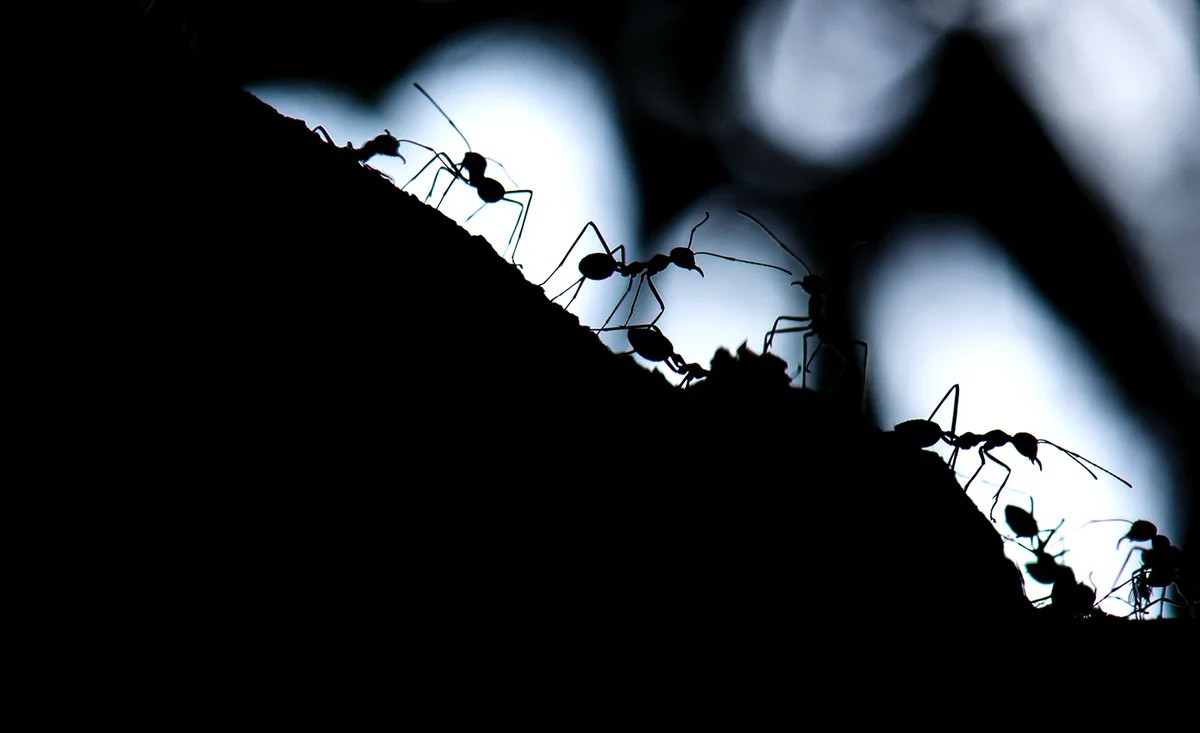
The sun drops. The world gets dark. But the ants? They are just waking up.
Millions of them. Ready to eat. Nocturnal foragers know the drill, nest to food and back. Most stick to scent trails. Chemical breadcrumbs left in the dirt. Bull ants, however, are different. They don’t care much for smell. Scientists thought they had to leave the nest early. Before the light died out. They assumed the bull ant needed that last sliver of daylight to set its internal compass.
They were wrong.
A new study says the insects keep moving after dusk. They use a lunar compass. Innate. Built-in. While day-dwelling ants track the sun’s steady arc, these bull ants have adapted to the moon’s shifting dance. The research, out in Current Biology, shows them using “time compensation.” Sounds technical, isn’t it? It’s just clockwork. The ant notes when it leaves. It calculates how long it’s been walking. From that, it figures out where the moon should be in the sky. Early humans did something similar with Polaris. Just smarter legs.
Cody Freas, the lead author at University of Toulouse, admits the field was blurry until now. These ants don’t rely on one trick. They use everything. Light, terrain, memory. Redundancy.
It helps them when one cue fails.
Here is the proof. Researchers grabbed ants mid-march. They locked a group in dark boxes. No windows. No way to know how much time passed. Just darkness. They put other ants in clear boxes for control. Then they released both groups far from home. Watched them try to get to food.
The results were sharp.
The dark-box ants went astray. Their moon position guess was off because they had lost track of time. When the moon moves but you can’t see it move, your brain gets confused. Even theirs.
“This is just a little bonkers,” Rodolfo da Silva Probst at UC Davis says. He wasn’t in the lab, but he knows insects. He doesn’t know how to do the math they’re doing either. “I mean, I don’t know how to do that.”
Other creatures try moon navigation. Moths. Sand hoppers. Rough guidance only. But these bull ants? This is intricate. Linked to time. Plus, they mix in solar cues at dawn and dusk. The moon isn’t always bright, obviously. So they switch inputs. A toolkit rather than a single tool.
Over 12,000 species of ants roam the Earth. They all tweak the game plan. Understanding how this one niche specialist handles the dark might explain the rest. Probst suggests looking at other night-creeping ants. Maybe there are hidden mechanisms waiting.
Who knows?
The moon hangs there anyway. The ants keep walking. We’re just now realizing they have a map we didn’t see coming.