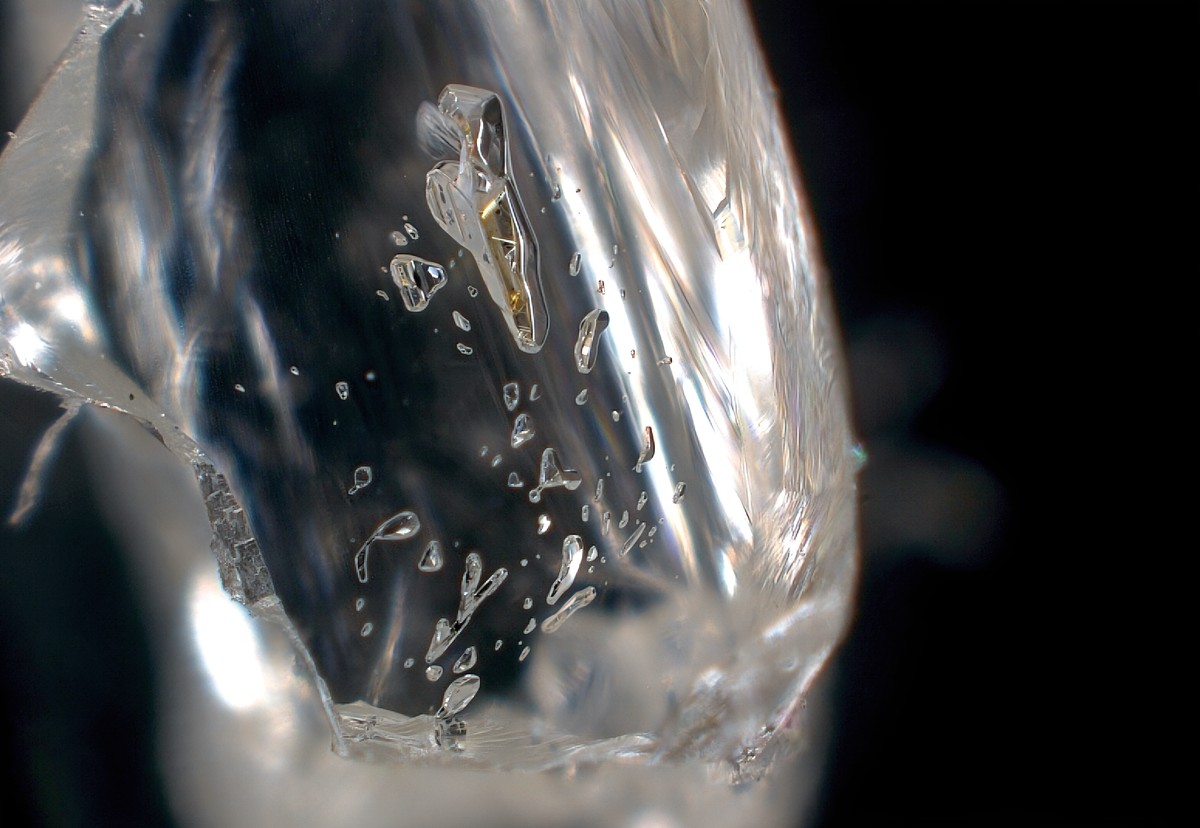
Nester Korolev turns a knob. The microscope clicks. There it is. A tiny speck of mineral, formed hundreds of kilometers down, stares back. He has never seen this specific thing before. Neither has anyone else. Usually, this deep-Earth stuff breaks apart on the way up. But diamonds are tough. They trap these minerals. Keep their structure safe.
This isn’t just a lucky find. New lasers and X-rays have changed the game. Geologists like Korolev at the American Museum of Natural history are peering into places they couldn’t touch before. One researcher calls it an “explosion” of new finds from the mantle. That layer of creeping rock between the crust and the core.
We’re seeing stuff like breyite and goldschmidtite. Names given to leading scientists, naturally. Each one adds a puzzle piece. Rocks transform under heat and pressure. This changes how we guess the volume of stuff like carbon or hydrogen stored inside the planet.
Take bernwoodite. The crystal under Korolev’s lens. It’s one of two new finds by him and his adviser Kate Kiseeva. The International Mineralogical Association has officially recognized them. Though, they haven’t announced bernwoodite yet. Maybe they’re still typing the memo.
What do these tiny flecks tell us? Everything.
Chemical differences prove material moves efficiently. From the surface to the deep dark, and back again. Earth is a mixing machine. Without it, the mantle would be boringly uniform. Instead, we have variety.
Consider kopylovite. Found in an American diamond from a dead Wyoming mine. It lives in the upper mantle. A few dozen kilometers down? Sure. Up to two hundred? Possibly. It has titanium and potassium. Those elements hang out in crust rocks. So Kopylovite probably forms when sediments get sucked into the mantle during subduction. Seismologists know slabs go deep. But do the sediments ride the elevator down? “You need a lot of sediments,” Korolev says. He thinks they survive. At least that far.
A small detail. Kopylovite is rare in another way. Only three percent of known minerals are named after women. This one honors Maya G. Kopylova. Her father, a Russian poet and physicist named Gerzen, is in there too.
Bernwoodite goes deeper. It comes from a Brazilian diamond. It forms when another mineral, davemaoite, breaks down as it rises into the transition zone. That’s 410 to 660 kilometers down. Atoms rearrange violently. Pressure spikes. The presence of aluminum suggests crust material got involved all the way in the lower mantle.
Is that possible?
“More variety than believed,” says Oliver Tschauner from UNLV. He wasn’t on the research team but he knows his minerals. They were overlooked. Now we see them.
Kiseeva is already working. She has more diamond candidates. More flecks waiting. “We carry on,” she says.