


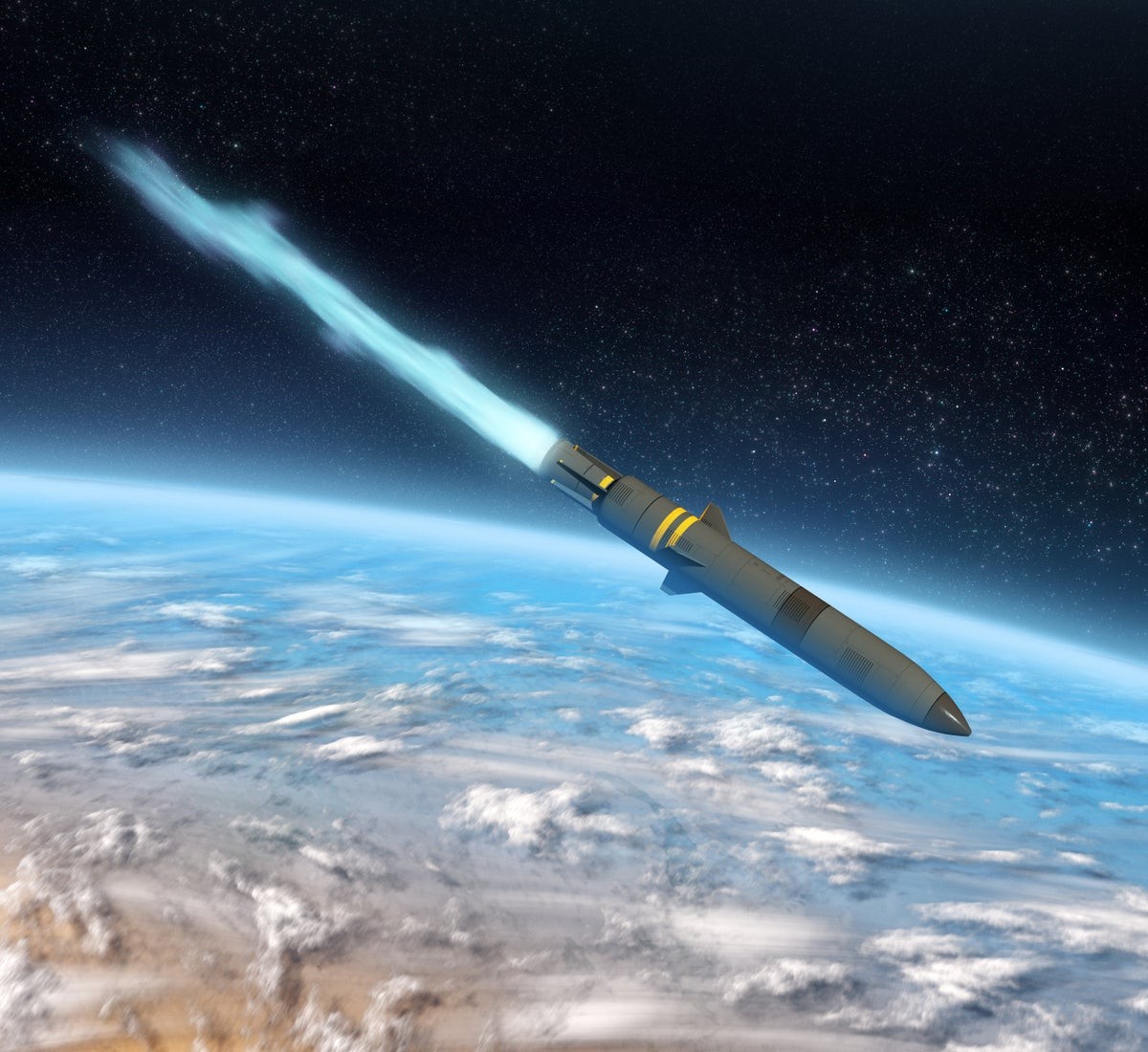
Outer Space doesn’t have cops. Not really. For nearly six decades, the big powers promised not to park nuclear warheads in orbit. It was called the Outer Space Treaty, signed in 1967 while the US and USSR stared each other down over Berlin.
It’s a gentleman’s agreement. And gentlemen are rare in geopolitics.
“It’s effectively a gentleman’s agreement.”
That’s the problem. The honor system works until it doesn’t. Now it’s wobbling. Russia is getting jittery about US space dominance. The US runs its military on satellites. Russia wants to turn those satellites off. How do you turn off thousands of Starlink dishes at once? You nuke them. Small ones. Up here.
Jeffrey Lewis knows the vibe. He says the US leans too hard on space power, and Moscow is exploring how to snatch it away. Detonating a few weapons in low orbit would kill the satellites. It would also probably fry Russia’s own hardware, sure. But maybe Russia prefers a world where nobody flies than one where the Americans fly better.
The Threat Shift
We stopped worrying about space nukes hitting cities. That was 1968 thinking. Intercontinental ballistic missiles work fine for that now.
The fear has changed. Now we fear weapons targeting other satellites.
Kosmos 25 enter the chat. Launched in February 2022, this Russian satellite claims to be a radar tool. Washington says it’s a testbed for a nuclear antisatellite warhead. Then it started spinning. It died in April 2023. Still dead.
Experts sweat anyway. Without verification, who’s to say it wasn’t just a prototype? Who’s to say the next one isn’t loaded?
Enter Areg Danagoulian. He’s a nuclear physicist at MIT. He published a paper in Nature this Wednesday that might save our bacon, or at least give us a clue when we’re doomed.
His idea: detect the ghost particles left behind by hidden uranium.
Space isn’t empty. It’s a pinball machine of high-energy protons. When a proton smashes into uranium atoms—common in warheads—it knocks off neutrons. This is spallation.
“If you detect those neutrons… it’s most likely to be nuclear weapons,” Danagoulian notes.
Simple theory. Brutal practice.
Low Earth Orbit is loud. Electrons, protons, gamma rays—they’re screaming past. The neutron signal is a whisper in a hurricane. Plus, the further you are, the fainter the signal gets.
Danagoulian thinks we can build a ear strong enough to hear it.
He proposes a satellite packed with detectors. Each detector pixel is covered in diamonds.
Wait. Diamonds.
Diamonds are great at seeing charged particles but transparent to neutrons. If a neutron passes through the diamond, it hits an internal sensor. If it’s just background radiation, the diamond filters it out.
But where did that neutron come from? Space is full of neutrons bouncing off Earth. We need directionality.
Enter the neutron scatter camera. It tracks the path of a neutron in fractions of a second. It traces the line back to the source. Like finding the shooter in a crowd.
Lewis is skeptical. Or at least, practical.
Danagoulian’s detector needs to get close. Really close.
To be sure it’s weapons-grade uranium, the sensor must be within 4 kilometers. Two and a half miles. In space terms? That’s basically sharing a coffee cup.
The detector also has to hover there for a week. Just staring. Taking readings.
Can we fly a spy satellite right next to a Russian nuclear weapon and watch it for seven days?
Probably not. Not without starting a war before the weapon even fires. It’s logistical hell. It’s political suicide.
Lewis points this out sharply. Shadowing a weapon creates friction on Earth. Geopolitics hates ambiguity, and close-orbit espionage is pure ambiguity.
But Danagoulian isn’t done. He says people “on the other side of the fence”—national security types—think his math holds up. They see value in it.
“We hope people with classified research can modify this,” he says.
Maybe they will. Maybe they won’t.
We live on a promise again. A thin one, written in ink that’s fading fast. We know how to find the monsters. We just don’t know if we have the nerve to look.


