The pivot is real. Mars can wait. The Moon is the focus now.
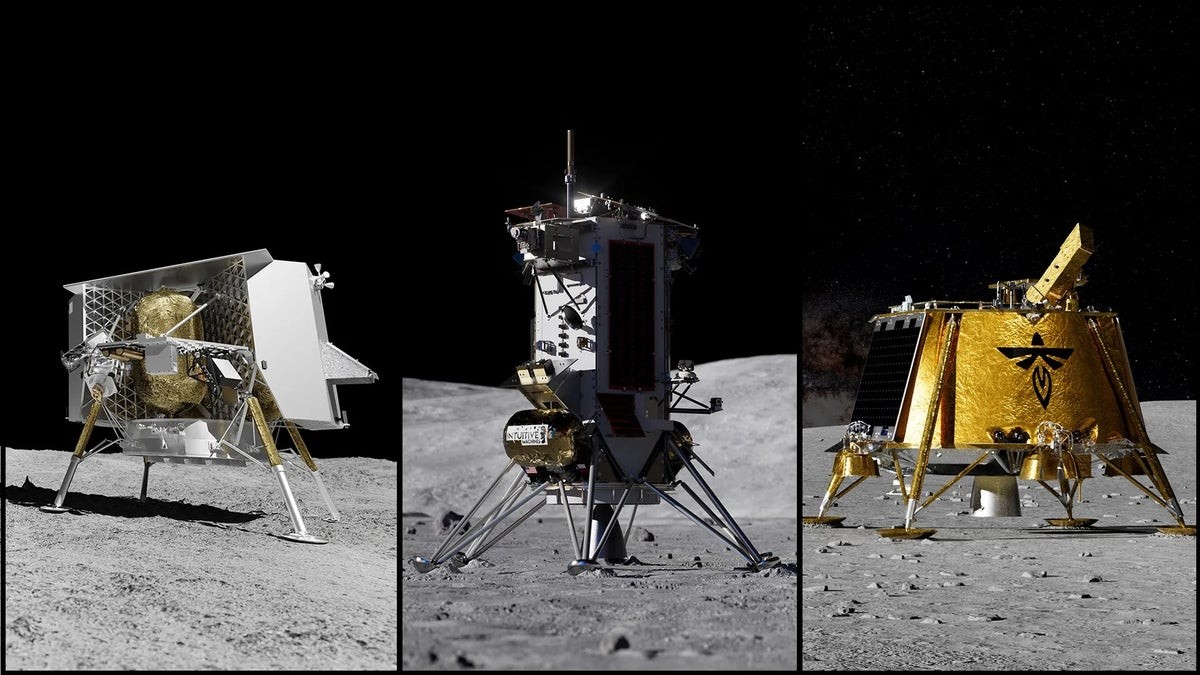
On Tuesday, NASA handed out $600 million in cash. Three private firms caught the drop: Astrobotic, Firefly Aerospace, and Intuitive Machines. They have one job. Land four missions by late 2028.
It isn’t just about planting flags this time. The agency needs these landers to deposit crucial science payloads. Think of them as test runs for a permanent settlement.
Ryan Stephan, NASA’s acting director of cargo landers for the Moon Base initiative, didn’t sugarcoat the strategy.
“We’re building a proving ground for MoonBase operations.”
Accelerating the cadence. More launches. Faster learning.
A Rover Repurposed
Human boots haven’t touched lunar dust in over five decades. Before we get back, NASA wants wheels there.
That sounds simple enough, but it isn’t. Other countries like Japan and India have managed to park rovers on the Moon recently. NASA hasn’t. Never. It’s a embarrassing hole in their resume, really.
But now, Jared Isaacman, the administrator who took the helm in December, has a solution. He might send the PROMISE rover there instead of its original target.
PROMISE stands for Polar Rover for Observation, Mapping. And In-Situ Exploration. Originally, it was destined for Mars. Built to hang out with Curiosity and Perseverence on the Red Planet. Now, the destination changed. The hardware stays the same.
“We are thinking very hard right now about sendng PROMISE to the Moon,” Isaacman said at the press event.
Why the sudden shift? Executive order. The Trump administration issued one in December. Focus on the Moon. Land humans by 2028—that would be the first landing since Apollo 17 in ’72. Start construction on a crewed base by 2103.
Isaacman unveiled the roadmap in March. It costs $30 billion. That’s steep.
Artemis IV is the hinge on this door. That mission sees NASA astronauts hitting the lunar surface for the first time in 50-plus years. No exact date yet. Maybe first half of 202s.
By 2032, the goal shifts from landing to ferrying crews to a semi-permanent habitat near the lunar south pole. Then 2036. That’s the big one. A permanent outpost. Powered by nuclear reactors.
The Math Behind The Mission
Do the numbers feel manageable? Hardly. The plan involves 79 launches. Seventy-three landers. Ten moon buggies. Plus drones, habitat modules, infrastructure.
The new contracts break down the start of this effort.
- Astrobotic gets $297. million. Two missions.
- Intuitive Machines gets $1483 million. One mission.
- Firefly Aerospace gets $1442 million. One mission.
All flights use updated versions of designs that already flew. Same hardware. Different payloads? No. They carry identical instruments.
What do these payloads do? High-tech cameras. They create 3D views of the landing site. Why? So scientists know exactly what conditions await larger spacecraft later. They also deploy laser navigation arrays. And radiation sensors.
Joel Kearns, deputy associate for exploration at the Science Mission Directorate, compares it to weather stations on Earth.
“By flying the same science instruments on multiples landers… It’s akin to having weather station in different locations on Earth.”
Data collection. Safety. Repetition builds reliability.
We know what comes next. The first launch is imminent. The rest? That depends on budget and politics.
Note: This story references a future timeline where Jared Isaacman is NASA Administrator, based on the provided text.
What happens when the money runs dry? Nobody knows yet. The rockets are already in the shed though.