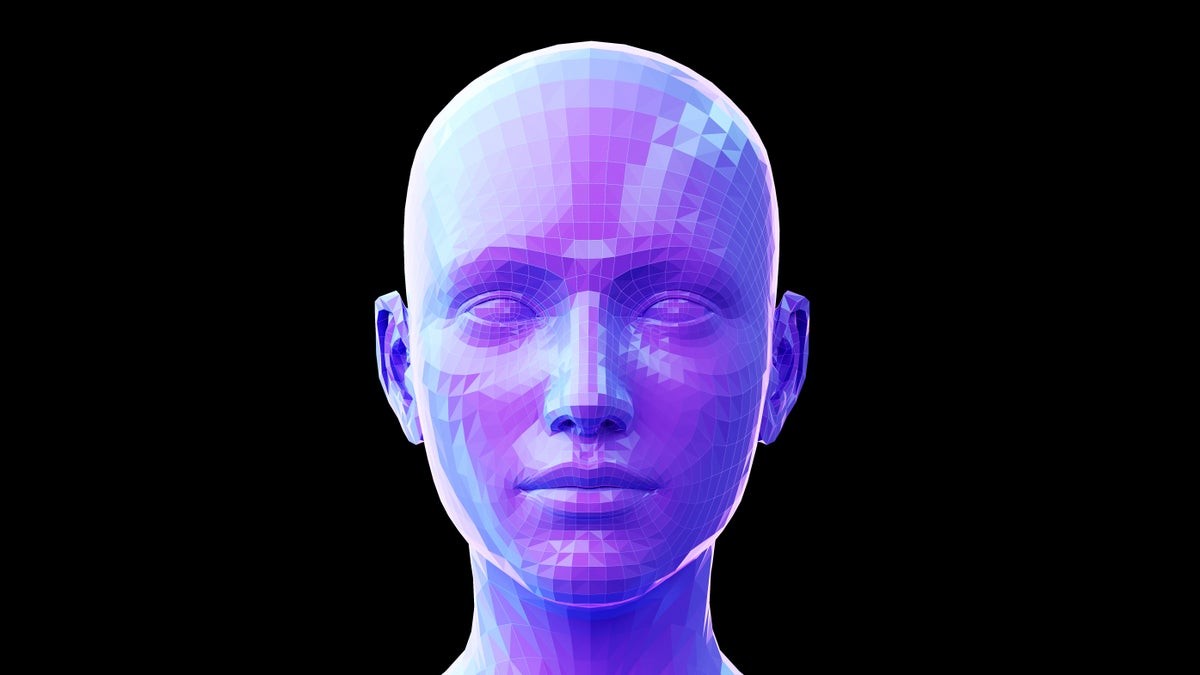
Remember when spotting an AI face was easy?
Look for the uncanny sheen.
The impossible smoothness of the skin. Eyes that didn’t align or that dreaded third ear tucked behind a lock of hair. You saw it, you dismissed it, move on.
That’s dead.
Today, AI generators pump out portraits so convincing that your brain just… gives up. Even careful watchers struggle to separate the real from the fabricated. That is exactly why apps like Zoom and Tinder now ask for biometric proof, like retinal scans, to confirm a flesh-and-blood human sits behind the profile picture. But you don’t always need a scan. You can train yourself.
Scientists have a new idea.
“The AI is getting too good.”
Amy Dawel, an associate professor at the Australian National University, said this recently. She knows the old tricks are gone. Fraudsters simply avoid using images with obvious glitches like malformed ears or two-pupil eyes. Those clues vanish with a software update anyway. It feels like a tech arms race we’re losing.
The researchers didn’t just give up.
Instead of hunting for tiny, fleeting errors, they taught people to look at the big picture. Not the stats left behind by one generator, but the global qualities that define an AI’s output.
Here is the mechanism: AI models learn from millions of faces. When they build a new one, they aren’t copying a specific person. They are calculating a mathematical average of every face in their dataset. They construct the “typical.”
The result? A face that drifts toward the center of everything.
It is too balanced. Too generic. Too conventional.
Individually, none of that screams fake. But together? It creates a subtle banality. A blandness that humans sense implicitly.
Tanya George, a researcher involved in the study, noted that even short training sessions improved accuracy. Why? Because participants learned to spot what AI does best—and where it fails most profoundly.
AI-generated faces tend to be:
- More symmetrical
- More proportional
- More attractive
- Less expressive
- Less distinctive
- Less memorable
Real faces are chaotic.
Our asymmetries. The way our nose tilts. The scar, the wrinkle, the slight slouch. These small deviations from the norm make us unique. They make us memorable. When people were trained to look for this lack of character—instead of hunting for a mismatched ring—their ability to spot fakes nearly doubled.
AI gravitates to the middle.
People don’t. Our imperfections are not bugs. They are our signature. But looking at a perfectly average, symmetrically beautiful stranger online? You have to ask yourself who—or what—is really smiling back.