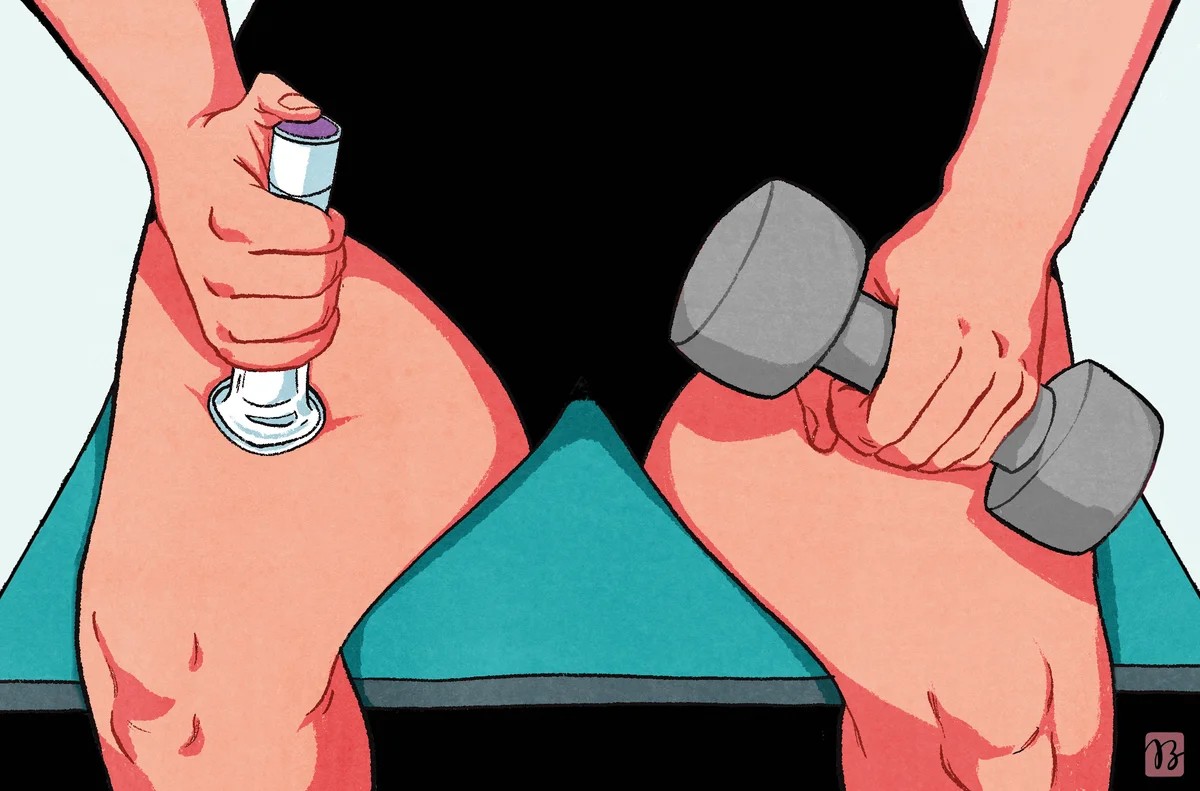
Ozempic works. You drop the weight. It feels good.
But look closer. The scale doesn’t lie, but it doesn’t tell the whole story. When people shed pounds on Wegovy or Ozempic, roughly 25 to 40% of that loss is lean mass. That means muscle. Actual functional muscle.
This bothers everyone, but especially the elderly. They are already fighting sarcopenia, that slow erosion of muscle tissue linked to falls and broken bones. But wait—it’s not just about getting older. The muscle you keep in your thirties is the bank account for your sixties. Deplete it early, and you pay interest in metabolic dysfunction later.
Weight loss interventions have always taken muscle as collateral. Diets, bariatric surgery, GLP-1 receptor agonists. All of them strip tissue.
GLP-1 drugs just made the problem visible. Widespread use sparked a rush toward new meds that promise fat loss without the muscle penalty.
“Losing any amount of muscle can amplify risk.”
Why We Should Care About Muscles
Muscles aren’t just for lifting. They’re storage units for glucose. Engines that burn energy. If you have them, you move better when you’re eighty.
Without them, mobility declines. Between the ages of 20 and 80, humans lose about 30% of their muscle naturally. GLP-1 drugs might turbocharge that decline.
Data suggests that starting semaglutide—or tirzepatide, known as Mounjaro or Zepbound—could accelerate muscle loss to the equivalent of twenty years of aging. Within a few years of treatment. That’s a fast track to frailty.
Some researchers shrug. They argue the muscle loss is proportional to total weight lost, which is “normal.” Maybe.
But older adults already have low reserves. They are also prescribing these drugs in droves. Add the two factors together. You get weakness. New, pre-print research hints at a link to osteoporosis too. Not exactly a reassuring footnote.
The Big Pharma Fix
Eli Lilly isn’t going to sit on this. They have Zepbound to sell.
They’re testing bimagrumab. It blocks myostatin.
Myostatin is a protein. Think of it as the body’s off-switch for growth. It stops muscles from getting too big. Naturally, unless you have a genetic mutation. There is at least one documented human with that mutation who possesses extraordinary muscle mass.
Bimagrumab jams that signal. It hits activin type II receptors on muscles. Turns off the inhibition.
Steven Heymsfield runs obesity research in Louisiana. He consults for Eli Lilly. His phase 2 trial in Nature Medicine looked promising.
Combining bimagrumab with semagrutide yielded 22% weight loss over 72 weeks.
But here’s the kicker: 92% of what was lost was fat. With semaglutide alone, it was 76%. People on the combo kept their muscle. They grew new fibers. Their grip strength increased significantly.
So why isn’t everyone cheering?
Early trials in older adults were mixed. Yes, muscle volume increased. No, they couldn’t walk faster or lift heavier things. Dimitris Papamargaritas from the University of Leicester points out a nasty possibility: the drug makes the muscle bigger, not necessarily stronger. Pure bulk. No functional gain.
Trials continue. Using tirzepatide alongside bimagrumab next.
The Synthetic Option
Another path exists. SARMs.
Selective Androgen-Receptor Modulators.
They mimic testosterone’s muscle-building effects. But they aren’t testosterone. Testosterone hits the whole system, causing trouble for the heart, the prostate, and elsewhere. SARMs are targeted. Engineered to hit bone and muscle.
Theoretically.
A 2025 review links them to better body composition. The safety data, however, is a foggy gray area.
We don’t know if these solutions last. Or what they do to organs ten years down the line. We’re chasing muscle back while dropping weight.
It’s an expensive trade-off. And we are still learning the cost.