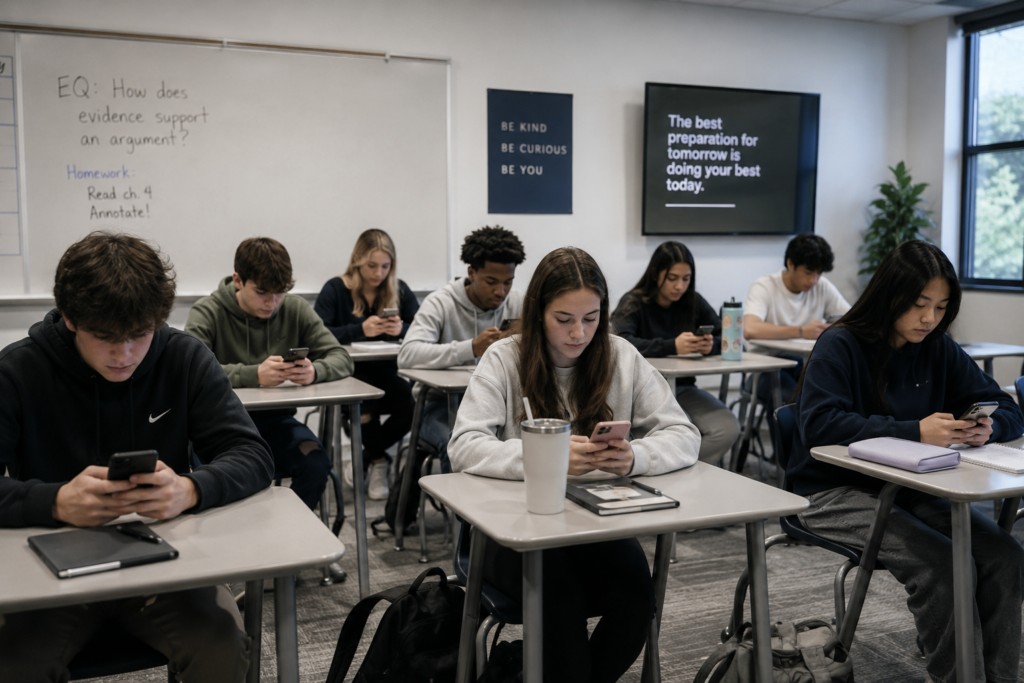
Los Angeles isn’t alone. Across the country, districts are slapping handcuffs on laptops. Tablets vanish. Grade caps on screen time appear out of thin air. Early learners might never see a device again.
On the surface. It looks like a war on pixels.
Dig deeper and it’s messy. Attention spans. Mental health. AI looming over everyone’s shoulder. We think we are talking about screens. We aren’t. We are panicking because technology stopped making sense inside walls designed a century ago.
The grammar of schooling is dying a slow, noisy death. And everyone is screaming at the symptoms.
The Grammar Is Broken
Let’s name it. School runs on a specific rhythm. Age-grade classrooms. Bell schedules. Teachers holding the answers like sacred scrolls.
It feels natural. It’s not. It’s a design.
When digital tools entered, they didn’t just add flashcards to a stack. They broke the lock on information. Collins and Halverson wrote about this in Rethinking Education in the Age of Tech. Tech redistributes expertise. It shifts where learning lives.
That threatens the system.
We’ve seen this movie before. Early computing. The internet. The 1-to-1 iPad wave. Each time the script is the same: What does the teacher do now? What is the point of this building?
AI just sped up the trailer.
It’s fast now. Visible. Impossible to ignore. Post-pandemic, the distractions aren’t hidden in back pockets. They are everywhere. Social development fractures. Academic integrity turns into a joke. Everyone sees it simultaneously. The gradual tension became acute pain.
So we panic.
Fight. Flight. Freeze. Fawn.
When structure cracks, instincts kick in. Not logic. Instinct.
Some districts fight. Ban the device. Block the site. Lock the door. They cite wellness, yes, but it’s mostly control. And kids adapt. Workarounds bloom. The cycle resets. The underlying problem? Still there. Just hidden.
Others flee. Out goes the family. Into private schools. Micro-schools. Homeschool pods. It aligns their values. Great. But the landscape shatters. Responses fragment. We stop solving shared problems because we are no longer in the same room.
Some freeze. Leaders wait. Let’s see what happens. Responsible? Maybe. Smart? No. Technology waits for no one. The gap widens. The cost of catching up spikes. Capacity rots in the meantime.
Then there’s fawn. The rapid adoption crew. Buy the tool. Signal innovation. No strategy. No plan. Just tools piling up like unread newsletters. Complexity grows. Impact stays uneven. You aren’t transforming. You’re cluttering.
None of these moves fix the crack in the foundation.
They are all attempts to steady the ship while ignoring that the ocean changed.
Reacting Isn’t Planning
Restricting a phone doesn’t improve instruction. Leaving the district doesn’t change how the system works. Waiting doesn’t build capacity. Buying software without training is just expensive noise.
The real friction? It’s not the screen time.
It’s the clash between new tools and old beliefs. About expertise. About what it means to know things.
For some, the threat is distraction. For others, it’s the erosion of human connection. For teachers? It’s identity. Am I still relevant? When answers are free and instant, who do you serve?
Without clarity on what is actually at stake, we treat the fever. We ignore the virus. Decisions become reflexes. Ban. Wait. Run. Buy.
It’s exhausting. It’s ineffective.
The work ahead isn’t about blocking pixels. It’s about naming what we value. Aligning on purpose. Building a system that can handle uncertainty without breaking.
This moment is setting the course. We can keep reacting to every new update.
Or we can start designing the future we actually want.