What happened to Walt Disney’s personal Grumman Gulfstream?
It spent fifteen years rotting.
Sun, salt, and Florida humidity do cruel things to aviation metal. But the Walt Disney private airplane, famously known as The Mouse, has finally dried off. A massive restoration effort wrapped up recently. The result? The jet is back to its 1969 prime.
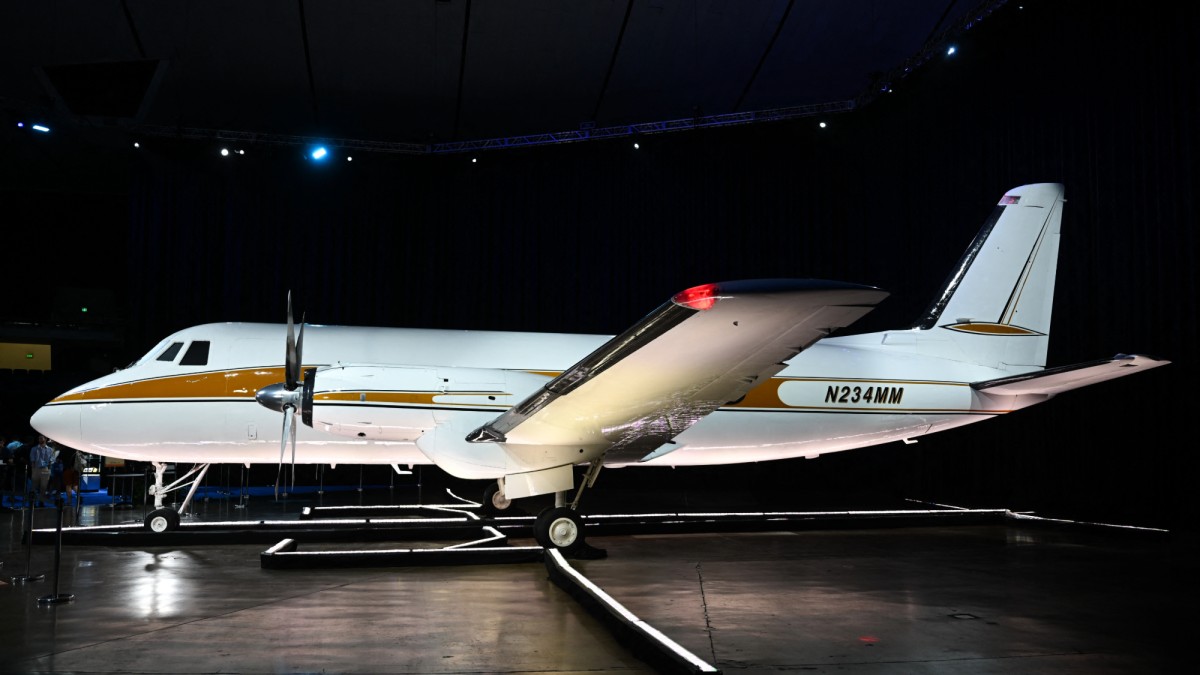
The Grumman Gulfstream I isn’t going to take to the skies anytime soon. Its engines were sold decades ago. But its soul is intact. It now sits on display at the Palm Springs Air Museum in California. You can walk inside. You can sit where Disney sat. The midcentury interior is whole again. Creamy tones. Rust accents. Brown plush seats. Even the Mickey Mouse ashtrays have returned.
This isn’t just nostalgia. It’s a correction of historical neglect. Since 2014 the plane sat derelict in a field at Walt Disney World. Windows leaked. Paint peeled. The interior rotted from the heat. Bringing it back required stripping it down to the aluminum skeleton.
How does Walt Disney’s “The Mouse” jet differ from modern business aviation?
Walt bought this specific jet in 1963. Registration number N234MM. MM for Mickey Mouse, naturally. For nearly thirty years it shuttled executives, celebrities, and heads of state between Los Angeles and Florida. It carried an estimated 83,0 by 1992. That’s a lot of flight hours. Two thousand of them, roughly.
Presidents rode it. Jimmy Carter did. Ronald Reagan did. Stars of cinema did too.
“Walt’s plane allowed him to… conduct day-to-day business without the worrying about other passengers overhearing his conversations.” — Edward Ovalle, Disney archivist manager.
That last part matters. Privacy was the product. In 1963 commercial travel meant noise and eyes everywhere. Private aviation offered a bubble. Walt loved trains. Everyone knows that. But he loved aviation just as much. He installed an instrument panel behind his own seat. Altimiter. Speed gauge. Clock. He liked to watch the data stream while the rest of the crew flew.
He used the plane for surveillance too. Aerial surveys of the Orange County land that became Disney World were flown from its cockpit. It helped build an empire. Literally.
Performance-wise? It was modest by today’s standards. But capable.
– Two Rolls-Royce Dart turbopro engines.
– Cruising speed of 350 mph.
– Top altitude of 30.000 feet.
A Boeing 747 cruises at 560 mph now. You get there faster. You lose the mystery. The Gulfstream was slower. But it had space. Fifteen seats. Three crew. A galley. Two bathrooms (one for the boss. One for the help). A couch. A desk. Scripts were read here. Deals were made. Cigarettes were smoked. Oh yes. Smoking was still allowed back then. Cocktail napkins bore Mickey’s face. Matchbooks too.
The most striking feature? A floor-to-ceiling clear plastic divider. It separated Walt’s section from the passengers. Filled with leaves from his own backyard. Private. Domestic. Weird. Perfect.
Who restored “The Mouse” and what did the project entail?
Bringing the plane back to life took teams from across Disney.
The Walt Disney Archives.
Walt Disney Imagineering.
Phoenix Air Group.
And the Palm Springs Air Museum itself.
The work was grueling. The interior had to be gutted. Specs from the archives guided the rebuild. The kitchen. The passenger area. The mouse-themed accouterments. Everything recreated from scratch.
The exterior needed paint too. Its original 60s orange and black scheme was restored. It looks aggressive again. Sharp.
Why Palm Springs? The connection isn’t arbitrary. Disney loved the area. He and his family often decamped there after long trips. The museum sits in California sun. Close to the heat that originally broke it. But inside now it’s controlled. Clean. Dry.
Visitors pay twenty-five dollars for adult entry. No fast passes. No lightning lane shortcuts here. You stand in line. You look closely. You see where the leaves were. Where the smoke cleared.
It’s a time capsule. Sealed for fifteen years in Florida damp. Open now to the dry California air.
Does it feel like Disney magic? Not quite. It feels like engineering. Business. Ego. And a lot of plastic. But it’s his. It’s there. Waiting for the next curious traveler to wonder how small the world looked from 30,000 ft when you own it.