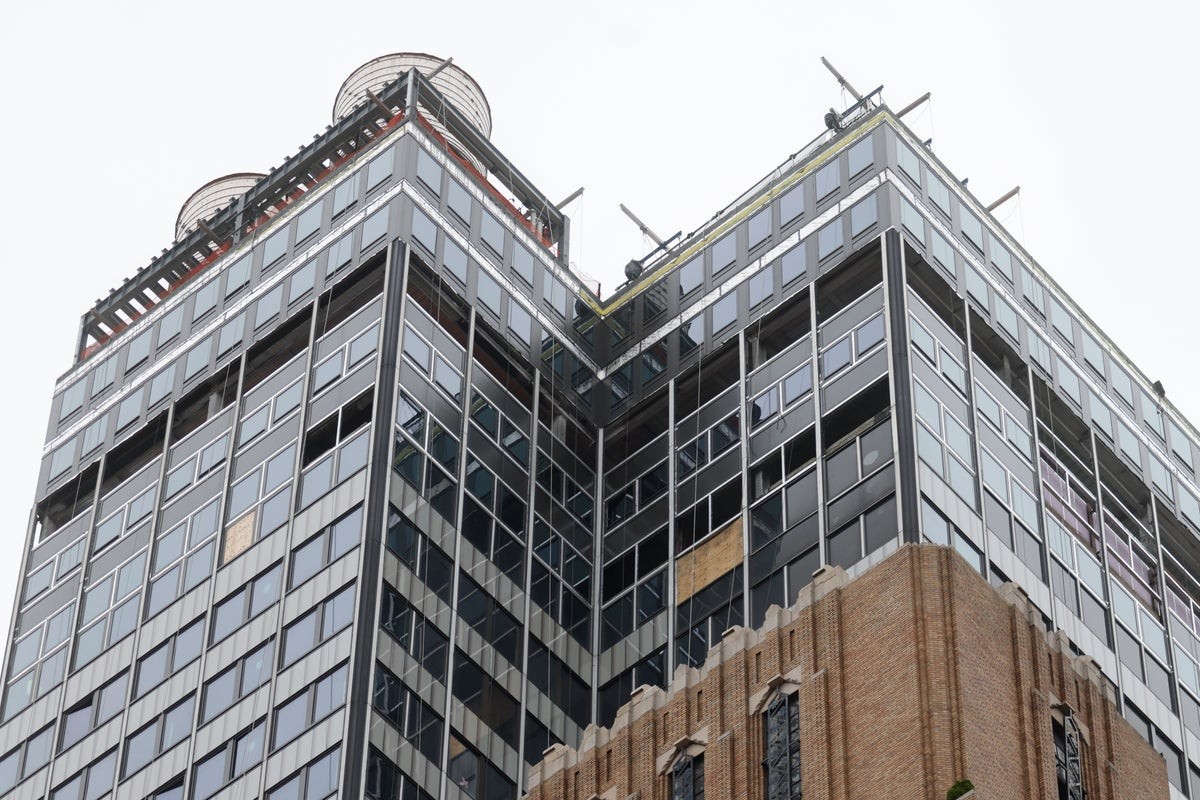
The snap heard ‘round the Midtown office
Evacuation order Tuesday morning.
Right near Grand Central Terminal. The building is at 235 East 52nd Street. People got out.
FDNY got a call just before 8 A.M They arrived to see things they really do not like. Steel columns buckling on the twenty-first and twenty-second floors. Flooring sagging from the twenty-first all the way up to the twenty-sixth.
Buckling isn’t magic. It is a known problem. Gregory Deierlein is a structural engineering professor at Stanford. He sees it happen.
Imagine you’re standing there and look down—the part of the floor held up by that weak column has dropped. Just a sag. Like a bed that has been slept on for thirty years.
Why does this happen?
Live loads. That is the engineering term. It means people. Furniture. Construction debris. When a building goes up, engineers guess how much weight will live on each square foot of floor. They build for that. They do not build for infinite weight.
Deierlein suggests renovation messes this up. You stockpile bricks. You pile up steel beams in a corner. Suddenly the load in one spot is heavier than the column was designed to take. The column fails. The floor sags.
Iskaner from NYU is skeptical about the surprise. Magued Iskaner. Professor.
He would be shocked if they did not plan for added floors. This building is thirty-seven stories tall. It used to house Pfizer. Now it is becoming a luxury condo. $75 million project. 1,600 apartments planned.
You do not just add weight and hope it sticks.
“One of the most common reasons… is that the load gets transferred,” Iskaner notes. “But maybe the column was weak to begin with. A latent defect.”
Where it breaks
Doug Holmes teaches engineering at Boston University. He knows where things go wrong.
The joints.
Where the beam meets the column. Bolts shear. Steel bends. If there is corrosion there it is bad. If the metal is worn it fails. It is the weakest link.
MetroLoft runs this conversion project with David Werner. They want everyone to know safety is priority one. They issued an update.
Stabilization is done. The Department of Buildings says it is stable. Thirty units affected. No collapse threat ever.
“We remain on schedule.”
They are working around the clock. They plan to rebuild the damaged part. They say it is a small portion. It won’t delay delivery.
Gensler the architects didn’t reply. Yet.
Human error again
Engineers from DOB are on site. FDNY uses drones. They install temporary emergency beams to hold things up while they figure out why the main ones failed.
Deierlein says this is short term. Permanent fix? Hard.
“You might have to jack up the floors.” You need temporary columns next door. Then you pull out the broken one. Feasible? Maybe. Up to the team.
Iskander thinks the problem isn’t bad steel. It is people.
Communication gaps. Mistakes in the millions.
“It’s par for the course.” Stuff happens. Codes are fine. Materials are fine. We are the problem.
Again.