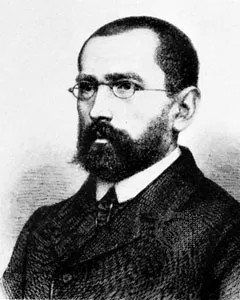
He was a biologist at heart who looked at words and saw living things. August Schleicher didn’t just study language; he tried to force it into the rigid framework of natural science. Born in Meiningen in 1821, he spent his life trying to prove that grammar was as subject to evolution as any beetle or oak tree. By the time he died in Jena in 1868, he had redrawn the map of human speech.
His early years were steeped in the heavy philosophy of Hegel and the pre-Darwinian biological theories that were taking hold in European universities. He believed that if you could understand how organisms grew and died, you could understand how languages did the same. It was a bold, almost arrogant idea. But it worked enough to define the field for decades.
The Fieldwork That Started It All
Before Schleicher, linguists mostly looked at old texts. They traced roots through dusty manuscripts. Schleicher decided to go to the source. Between 1850 and 1857, he taught at the University of Prague. But instead of staying in the lecture hall, he moved to the countryside of Prussian Lithuania.
He lived among the peasants.
He listened to them speak. This was the first serious attempt to study an Indo-European language directly from speech, not just written records. The result was the Handbuch der litauischen Sprache (1856–57). It was a massive, scientific description of Lithuanian. It included a grammar, a reader, and a glossary. It was the first time someone had captured a living language in such detail.
Lithuanian turned out to be incredibly close to the ancient parent language. Schleicher realized that if he could find the common thread running through these diverse tongues, he could reconstruct the original Ursprache.
Building the Language Family Tree
Schleicher’s most famous work, the Compendium der vergleichenden Grammatik der indogermanischen Sprachen (1861–62), laid out his entire theory. He called it the Stammbaumtheorie, or family-tree theory.
Think of it like botany. Just as a botanist classifies plants by their roots, Schleicher classified languages by their origins. He believed languages were organisms. They had birth, maturity, and decline. They grew, branched out, and sometimes died out.
He traced groups of related languages and arranged them into a genealogical tree. This wasn’t just a list. It was a structural model. It showed how Sanskrit, Greek, Latin, and Germanic languages were all branches of the same trunk: Proto-Indo-European.
Language is an organism exhibiting periods of development, maturity, and decline.
This model became the standard for historical linguistics. It shifted the focus from comparing individual words to understanding the systemic evolution of entire language families.
Why His Method Still Matters
Schleicher’s specific conclusions have been updated. We know now that languages don’t always fit neatly into a simple tree; they borrow from each other, mix, and spread like a network. But the core idea remained.
He proved that language could be studied scientifically. He showed that you could reconstruct lost pasts by comparing living forms. His work provided the direction for much subsequent research.
Today, when linguists look for the roots of a word, they are walking down the paths Schleicher mapped out. He didn’t just describe language. He tried to capture its life cycle.
The tree model has its cracks. Languages are messier than plants. But the impulse