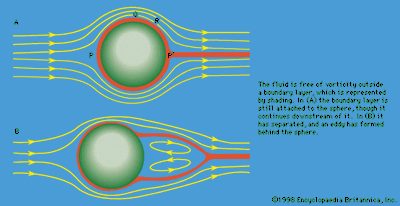
Fluids are messy. They swirl. They churn. They do exactly what they want, not what we calculate.
The Navier-Stokes equation is the best mathematical tool we have for predicting that chaos. It is a partial differential equation. Specifically, it describes how incompressible fluids move. If you are a student, a parent helping with homework, or just someone who likes to understand why the wind blows differently behind a building, this equation is the key.
It is not the first attempt at this problem. In the 18th century, Leonhard Euler, a Swiss mathematician, tried to solve it. His equation worked for incompressible fluids. But there was a catch. Euler assumed the fluids were frictionless. Real life does not work like that.
Enter Claude-Louis Navier.
In 1821, this French engineer made a crucial change. He introduced viscosity. Viscosity is just a fancy word for internal friction. Honey has high viscosity. Water has low viscosity. Air has even less. By adding viscosity, Navier made the math realistic. He also made it vastly more difficult.
The work continued in the mid-19th century. Sir George Gabriel Stokes, a British physicist and mathematician, improved Navier’s formulation. He pushed the math further. But even Stokes could only get complete solutions for simple, two-dimensional flows.
Here is the hard truth.
Three-dimensional flows are a different beast. Think about turbulence. Vortices. Chaos. When fluid velocity increases, the behavior becomes intractable. No simple formula captures it. We rely on approximate numerical analysis methods instead. Supercomputers crunch the numbers. We get estimates. We do not get exact answers.
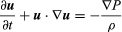
Euler’s original equation, written in modern notation, looked like this:
If you’ve ever tried to explain fluid dynamics to a friend, you know the struggle. You start with simple concepts like water flowing from a tap, but then the math kicks in. The Navier-Stokes equations are the bedrock of that math. They describe how liquids and gases move. For students, engineers, and curious minds, understanding them is less about memorizing formulas and more about grasping the physical intuition behind the symbols.
Breaking Down the Variables
Let’s look at the components that make up these equations. In modern notation, the equation balances forces acting on a fluid element. Here is what each term actually represents in the real world:
- u (Velocity Vector): This isn’t just speed. It tells you which direction the fluid is moving and how fast at every single point in space. Think of it as a map of flow directions.
- P (Pressure): This is the force the fluid exerts on its surroundings. High pressure pushes fluid toward low pressure. It’s the engine that drives much of the motion.
- ρ (Density): How heavy is the fluid for its size? Water is denser than air. This value determines how much inertia the fluid has. A heavier fluid is harder to accelerate or stop.
- ∇ (Gradient Operator): This mathematical symbol points in the direction of the steepest increase of a quantity. In fluid dynamics, it helps us understand how properties like pressure or velocity change from one location to the next.
The Navier-Stokes equation essentially says: The change in momentum equals the sum of forces acting on the fluid.
Why This Equation Matters
You might wonder why you should care about a partial differential equation. The answer is everywhere.
- Weather Forecasting: Meteorologists use simplified versions of Navier-Stokes to predict storms.
- Aerospace Engineering: Designing airplane wings requires knowing exactly how air flows over them to minimize drag.
- Medical Research: Understanding blood flow in arteries helps doctors diagnose heart conditions.
The equation connects the microscopic behavior of molecules to macroscopic phenomena like turbulence or laminar flow. It’s not just abstract theory. It’s the reason your showerhead distributes water evenly or why your car gets better mileage with a sleek design.
How to Approach Learning Navier-Stokes
If you’re a student diving into this topic, don’t get overwhelmed by the notation. Start with the basics.
- Master the Vector Calculus: Understanding gradients, divergence, and curl is essential. These are the tools that let you interpret the math.
- Visualize the Flow: Use simulation software or even simple experiments with food coloring in water. Seeing vortices form makes the variables tangible.
- Simplify First: The full Navier-Stokes equation is notoriously difficult to solve. Start with idealized cases, like flow in a straight pipe, before tackling turbulent flow around a sphere.
Many learners ask which resources are best. Look for introductory texts that focus on physical interpretation rather than pure derivation. Visual aids and interactive simulations can bridge the gap between the equation on the page and the fluid in the tank.
The Unresolved Challenge
Despite its importance, the Navier-Stokes equation remains one of the seven Millennium Prize Problems. We don’t yet have a complete

It all comes down to a few symbols. u is the fluid velocity vector. P represents pressure. ρ stands for density. υ is kinematic viscosity. And ∇²? That is the Laplacian operator.
Put them together, and you get the Navier-Stokes equation. It describes how liquids and gases move. Or how they should move.
In 2000, this equation hit a wall.
The Clay Mathematics Institute in Cambridge, Massachusetts, declared the existence of smooth, reasonable solutions to the three-dimensional Navier-Stokes equation a Millennium Problem. They picked seven of these impossible-seeming math puzzles.
Why? To see if anyone could crack them.
The stakes were high. A million dollars for each solution.
No one has claimed the prize yet. Not because they didn’t try. But because the math is messy. Turbulence defies simple answers.
The question isn’t just about calculation. It’s about existence. Do smooth solutions always exist? Or does the fluid break down?
This is the core of the Navier-Stokes existence and smoothness problem. It remains one of the most significant open questions in mathematics.
If you solve it, you get a million dollars. And a place in history.
If you don’t, the mystery continues. Fluids keep moving. Unpredictably.