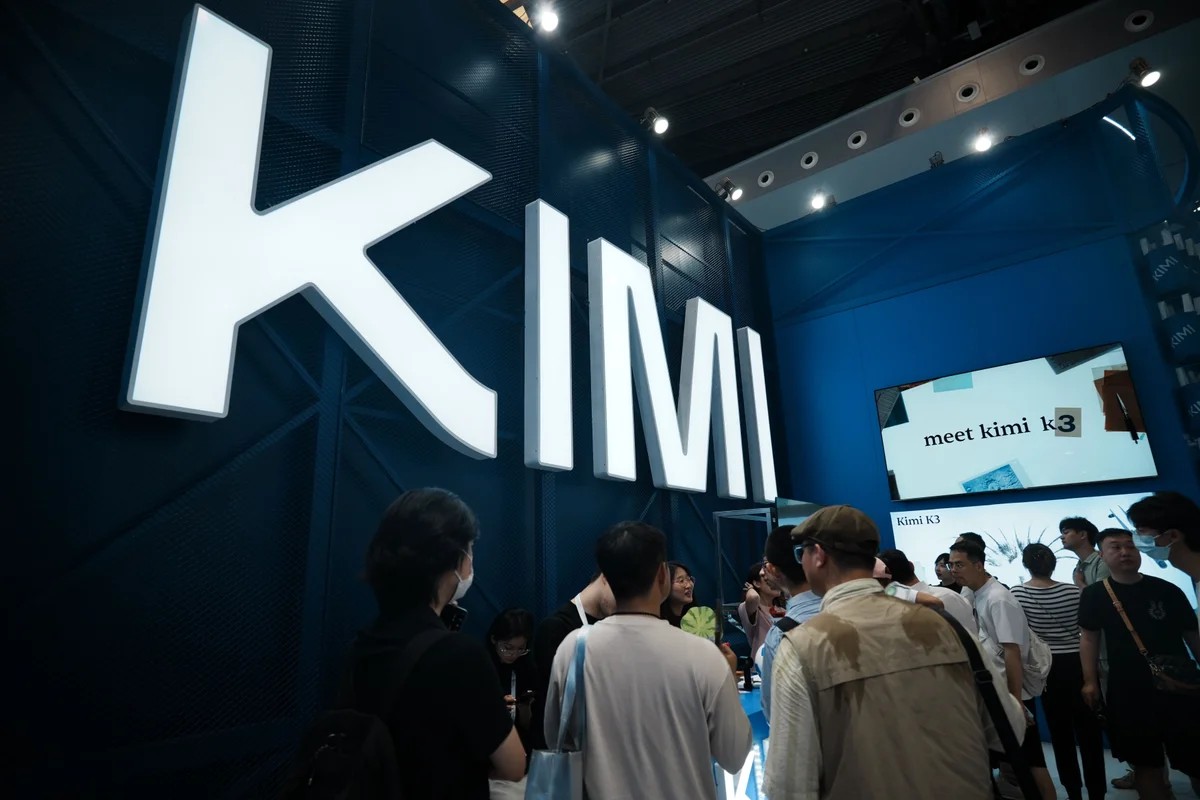
It only took three days. July 17 hit, Moonshot AI dropped Kimi K3, and the servers melted. Demand was so brutal that the Chinese developer had to shut down new subscriptions almost immediately. They couldn’t handle the traffic.
But here’s the kicker. Moonshot isn’t just sitting on this hit. They announced a July 27 release of the full model weights. That means anyone with enough hardware can download, host, and tweak Kimi K3. No API limits. No corporate gatekeepers. Just raw, accessible power.
This move triggered a panic from some Western voices. Dean W. Ball, who heads strategic futures at OpenAI, took to X to call this potential “full AI communism.” He warned of a dystopian hellscape. Fair enough, he has a business model to protect. But let’s look closer. Why would a top-tier company give away its crown jewel?
The real power of Kimi K3’s architecture
Kimi K3 is a beast. It’s a 2.8-trillion-parameter model. In recent benchmarks from Moonshot, it generally beats OpenAI’s GPT-5. Web and Claude Opus 4. Web. It trails Claude Fable 5 Web and, on some tasks, GPT-5.6 Web. It’s not the undisputed king, but it’s certainly in the top tier. It excels at web searches and business workflows—things that actually matter in production.
So what’s the differentiator? It’s not raw scoring. It’s the weights.
While OpenAI and Anthropic keep their best models locked behind private servers and paywalls, Moonshot is opening the vault. This inversion is the key. Users usually just chat with GPT or Claude. They never own the model. With an open-weight release, the code and the trained numbers go public.
“Open weight is not the same as open source.”
This distinction matters. James Landay, a computer science professor at Stanford, points out that people keep confusing the two. True open source provides code, training data details, and the ability to study the system deeply. Open-weight just hands you the weights. It’s like getting the engine of a car without the schematic on how it was built or where the fuel comes from.
Open weights vs. open source: The security gap
This opacity raises valid security questions. Landay warns that organizations should be cautious. If you don’t know the provenance of the model, you don’t know if it’s “phoning home” with your data. You can’t audit what’s inside the black box fully.
But commercial logic doesn’t care about your paranoia. Kyle Chan, a fellow at Brookings Institution studying China’s tech policy, says Moonshot still makes money. They can sell API access. They can keep their premium subscription tiers. Releasing the weights doesn’t kill their business; it just adds a layer.
For a smaller player like Moonshot, it’s survival. And growth.
How Kimi K3 bypasses US chip restrictions
Let’s talk about the elephant in the room: hardware. The U.S. introduced export controls in 2022. Chinese labs are cut off from the most advanced AI chips. This constraint on compute capacity is a constant topic in Beijing. They talk about it constantly.
This restriction makes open weights more than just a philosophical choice. It’s a tactical necessity. Moonshot doesn’t have the infinite compute farm of a Google or Meta. But if they open the weights, they can leverage the infrastructure of others.
Chan predicts that major platforms like Databricks will start hosting Kimi K3 once the weights drop. By open-weighting it, Moonshot unlocks all that extra compute capacity other providers have built up. It’s an amplifying effect. Their model rides on someone else’s server.
Meta popularized this with Llama in 2023, and DeepSeek gained attention with R1 in early 2025. Even U.S. giants like OpenAI and Google are now releasing open-weight families, saving their absolute best for controlled, high-margin services. The trend is undeniable.
Can Chinese models win the AI race?
Will this strategy guarantee victory for China? Probably not. Landay notes that the next big models might still come from established giants like Alibaba or new U.S. start-ups. If I could predict it, he jokes, I’d be the guy in the expensive car.
But the competitive pressure is real. Chan argues that U.S. labs risk ceding global adoption if Chinese models become the default choice for developers worldwide. Widespread adoption builds influence. It sets standards.
“The success of the Chinese models is showing [open weight’s] value,” Chan says.
Giving up on open-weight is a mistake. It’s how smaller players punch above their weight class. And in the long run? Open ecosystems tend to win. They adapt. They spread. They become infrastructure. Closed systems are easier to control, but they’re also easier to outgrow.
Kimi K3 might not be the most perfect model. But its open-weight strategy is already rewriting the rules of who gets to play in the game.
The question isn’t whether it will succeed. It’s what happens when everyone else realizes they can do it too.