They are ghosts.
At least, that’s what locals call the Sunda clouded leopard (Neofelis diardi ). If you walk the dense rainforests of Borneo and Sumatra, you might catch a flash of tawny fur or a shadow that isn’t a tree branch. These big cats blend into the canopy so well that spotting one feels like losing your mind. For decades, we knew little about them. How long do they live? How do they spend their days? The answers were mostly guesses.
That changes now.
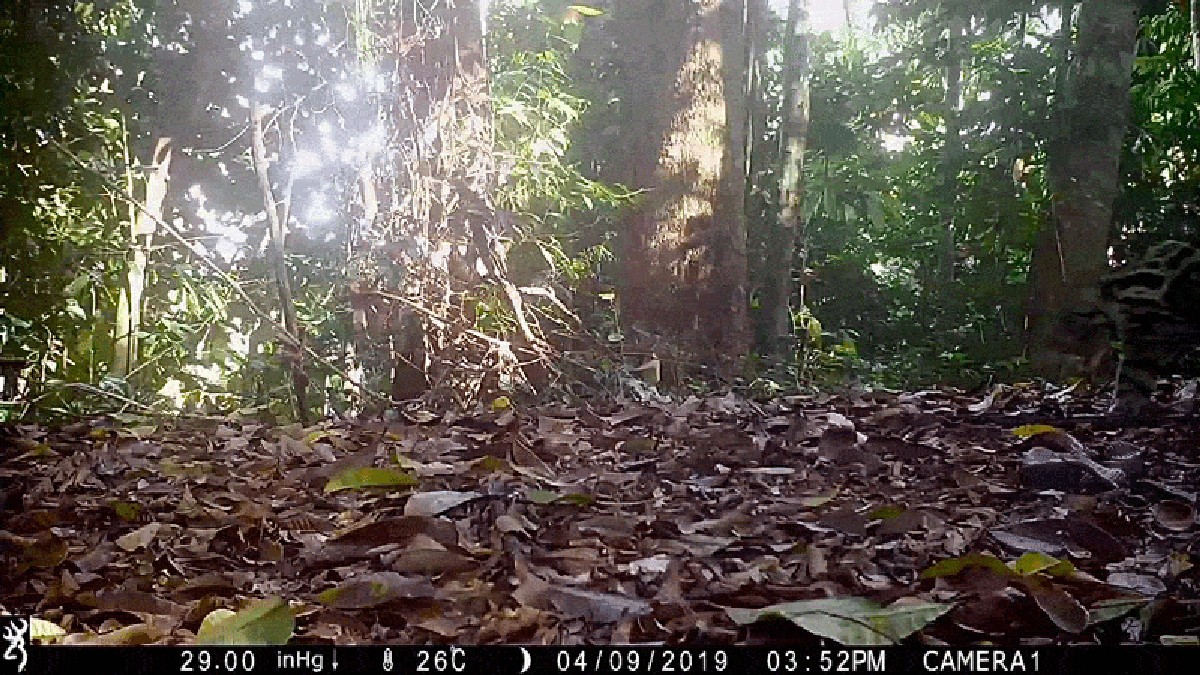
A fresh analysis of data gathered between 2007 and 23 has finally peeled back the layers on these elusive predators. The study, published in Biotropica, looks at camera trap photos taken across three reserves in Sabah, Malaysian Borneo. Researchers identified 52 adult individuals over the 15-year span.
How Gender Changes Sunda Clouded Leopard Behavior in Trees
The most striking finding? The cameras hated taking pictures of the girls.
Wait. Hear me out. It’s not the equipment. It’s the lifestyle.
Katharina Kasper, the study’s lead author and a biologist at the Polish Academy of Sciences, noted the discrepancy. Out of the 52 adults, only 22 were female. Why such a gap?
Because the females stay in the trees.
Males, by contrast, patrol the ground. They mark territories with urine. They circle. They move through areas where camera traps—usually mounted on lower branches or logs—are likely to snap their photo. Females prefer the high branches. Their bodies reflect this adaptation. They are slender. Their tails are fluffier, acting as counterbalances for life high above the forest floor.
“Their physique hints at this… Resident males, by contrast, spend much more time circling and re-marking long-range territories with urine.” — Katharina Kasper
So, if you want to photograph a male Sunda clouded leopard, look at the ground level. For the female, you’d need to point your lens straight up, and even then, good luck.
Why Do Sunda Clouded Leopards Have Shorter Lifespans in the Wild?
We knew they hunted bearded pigs and mouse deer. We knew they were vulnerable on the IUCN Red List—just one step up from Endangered. What we didn’t know was their lifespan in the wild.
Previous estimates were vague. This study nailed it down.
Researchers tracked a single female individual across many years of footage. She lived to be 8.5 years old. That’s the new record for wild Sunda clouded leopards and the first concrete evidence of their natural longevity.
How does this compare to their relatives? The mainland clouded leopard (Neofelis nebulosa ) hit 20 years in captivity. It’s a common pattern. Wild big cats usually live half as long as those living behind glass. Zoo conditions offer safety from predation, consistent food, and veterinary care. The wild is less forgiving.
Does 8.5 years sound short?
For a wild cat fighting starvation, injury, and habitat loss every single day? No.
What Factors Influence Sunda Clouded Leopard Conservation in Borneo?
The study wasn’t just about taking cool photos. It was about survival.
The research team, which includes scientists from the non-profit Panthera and the Sabah Forestry Department, used this data to understand the threats. With better data on age and movement, they can now model population stability.
If females stay arboreal to avoid predators or conserve energy, what happens when the canopy degrades? When trees are logged for palm oil or timber, their escape routes vanish.
This is why the work matters. The IUCN lists the species as Vulnerable. That label can feel abstract. Concrete numbers ground it. Eight and a half years is all a female might have. If deforestation shrinks her range or reduces prey density, that number drops.
Kasper’s team is already using these insights to refine conservation strategies. They need to protect not just the ground cover males roam, but the high canopy females call home.
The forest remains silent for the most part. The ghosts stay hidden. But now, we have eyes on them. We have data. Whether it’s enough to keep them there is another question entirely.