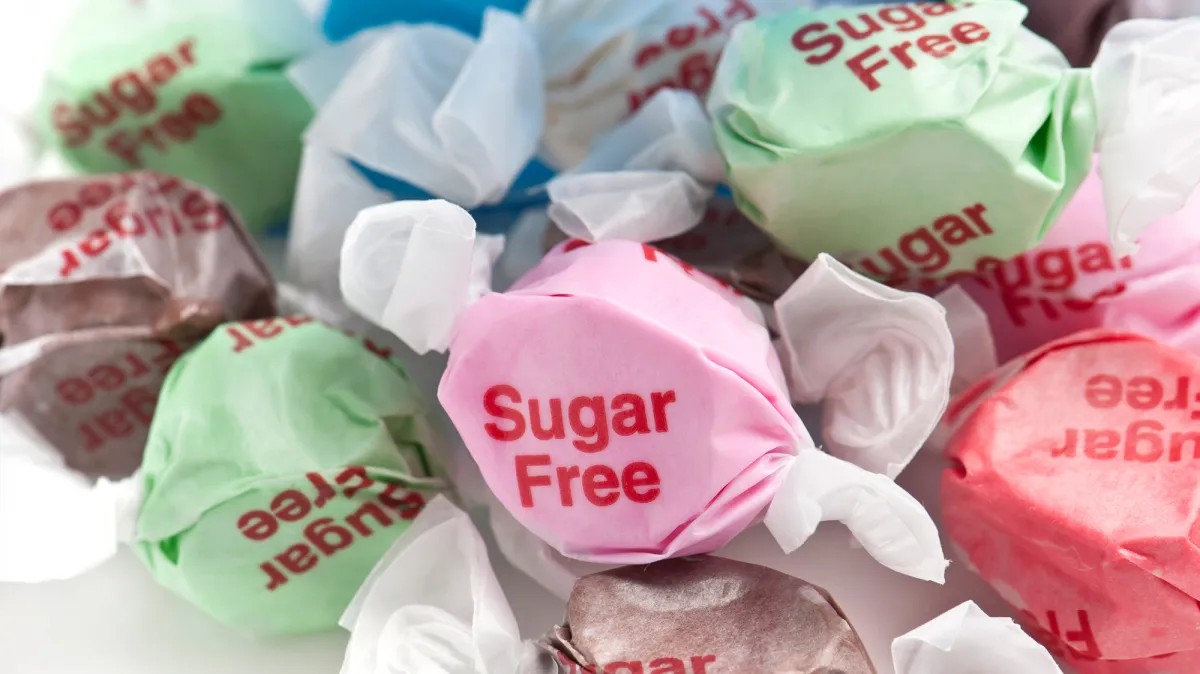
The short answer is yes.
We tell ourselves sugar-free treats are the golden ticket. The healthier choice. A way to have cake without the metabolic wreckage. You can have it and eat it too. It feels like a win against the dietary villainy of added sugars, which spike blood glucose, overwork the pancreas, and pack on empty calories without making you full.
But the trade-off isn’t free. It’s just expensive.
When manufacturers swap sucrose for polyols like xylitol or sorbitol, they are swapping a metabolic spike for a plumbing crisis. These sugar alcohols don’t digest cleanly. They don’t vanish. They sit there.
“The sugar alcohol causes an osmotic shifts in the gut.”
Dr. Kait Brown puts it plainly. These compounds pull water out of your body tissues and dump it into your intestines. Fermentation happens next. Gut bacteria party on the undigested carbs. The result? Gas. Bloating. Muscle contractions that push everything through.
Watery, loose diarrhea.
Why does sugar-free candy hurt my stomach?
It comes down to chemistry, not poison. Regular candy is bad for blood pressure and diabetes risk over time. Sugar-free candy attacks your GI tract now.
Most diet sodas use artificial sweeteners like aspartame. That’s different. Sugar-free gummy bears and mints usually rely on polyols. These are digested slowly. Barely absorbed at all. That’s why your blood sugar doesn’t crash, but your gut does.
If you eat multiple servings at once, the osmotic effect accelerates. Water rushes into the bowel. The bacteria ferment the excess. The muscles in your gut tighten. It adds up quickly.
What about the cancer scares?
You’ve probably heard the headlines. Artificial sweeteners cause cancer. They destroy the microbiome.
Pause. Breathe.
Dr. Emily Leeming notes that most of the concerning data comes from mice. Mice are not humans.
Even the human studies often use doses nobody would realistically consume. You would have to chomp on sugar-free sweets for hours to match those experimental inputs. It is disproportionate to reality. The link to cancer or long-term gut damage is currently theoretical, based on rodent models and extreme overconsumption.
Who needs to worry about sugar alcohol limits?
Most of us can handle a pack now and then. The body is resilient. But some systems are fragile.
Irritable Bowel Syndrome changes the rules entirely. People with IBS are often hypersensitive to polyols. The threshold for discomfort is razor-thin.
Here is the tricky part. The FDA only mandates a laxative warning if a product could lead to 50 grams of polyol intake per day. For a sensitive gut, 10 grams can be enough to trigger pain.
You don’t always know the amount. Xylitol might be the fourth ingredient on the list. That tells you order of predominance, not quantity. Dr. Brown points out this is harder with food than medicine. You don’t get a dosing chart for your peppermint strip.
How do I find my personal limit?
Experiment.
Start small. Notice when the stomach aches start. If it happens, you’ve crossed the line. Dial it back.
Sugar-free candy isn’t toxic. It isn’t a superfood either. It’s a tool for reducing sugar intake, useful in moderation. But moderation is a spectrum, and your spectrum is different from your friend’s.
If you notice gas, bloating, or loose stools, the candy knows you overdid it. Stop. Drink water. Maybe switch back to regular candy, if only to punish the metabolism instead of the colon.
The question remains: Is the guilt of sugar worth less than the cramp of the alcohol?
We don’t know yet. Keep chewing. Watch what happens.