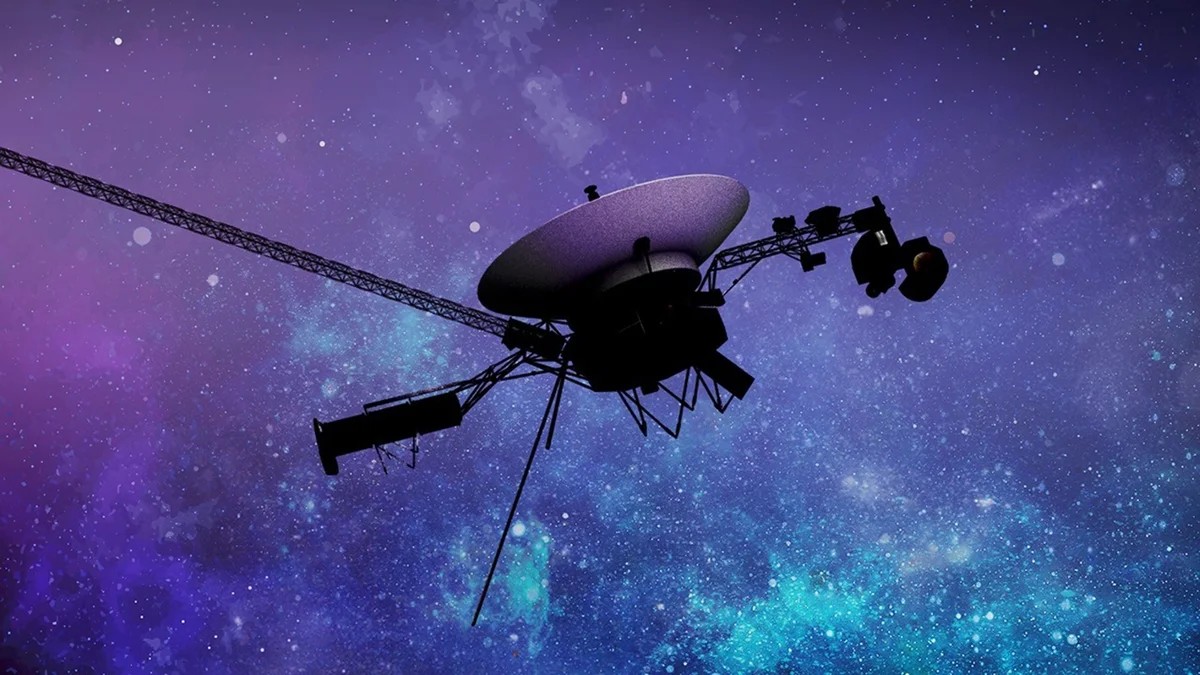
The legendary Voyager 1 spacecraft is entering a critical phase of its mission. NASA has officially deactivated one of its three remaining scientific instruments to manage a sudden drop in power, leaving the probe with only two functional tools to study the interstellar medium.
The Power Crisis and Recent Deactivations
Last Friday, NASA engineers shut down the Low-Energy Charged Particles (LECP) experiment. This instrument was vital for measuring ions, electrons, and cosmic rays, providing scientists with essential data on the pressure fronts and structures within the space between stars.
The decision was driven by necessity rather than choice. Following a maneuver in late February, the spacecraft experienced an unexpected drop in energy levels. To prevent a total system failure, mission managers at NASA’s Jet Propulsion Laboratory opted to reduce the power load.
“While shutting down a science instrument is not anybody’s preference, it is the best option available,” said Kareem Badaruddin, Voyager mission manager.
A Legacy of Exploration
Launched in 1977, the Voyager twins—Voyager 1 and Voyager 2—were designed for a “grand tour” of the outer solar system. While Voyager 1 quickly completed flybys of Jupiter, Saturn, and Titan, its true legacy lies in its current position: it is currently 15.78 billion miles away from Earth, traveling at speeds exceeding 51,000 mph.
The challenge facing the mission is the inevitable decay of its power source. The spacecraft relies on a nuclear power supply that has been steadily losing strength for decades. Since the late 1980s, NASA has followed a strategic “sunsetting” process, systematically turning off instruments to prioritize the most critical scientific functions as electricity becomes scarce.
The Path Forward: Project “Big Bang”
Voyager 1 is now operating with just two instruments:
* The Magnetometer
* The Plasma Wave Subsystem
At the current rate of power consumption, NASA estimates this configuration will remain viable for approximately one year.
To combat the aging process, engineers are developing a specialized energy-saving strategy known as the “Big Bang” plan. This procedure aims to optimize power usage across both Voyager probes to extend their operational lifespan. NASA plans to begin testing this new protocol on Voyager 2 starting next month.
Conclusion
As Voyager 1’s power dwindles, NASA is shifting from broad exploration to a highly controlled preservation mode. The success of the upcoming “Big Bang” testing on Voyager 2 will determine how much longer these historic probes can continue to transmit data from the edge of interstellar space.