A mirror in the dark
The U.S. approved it last week.
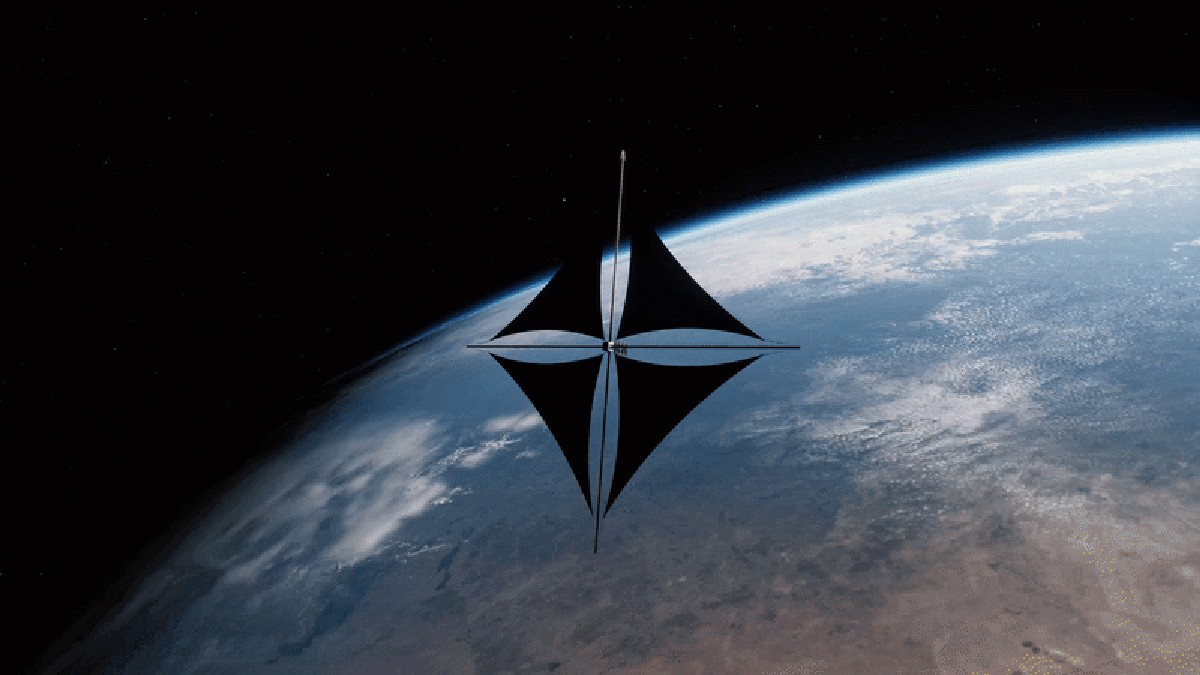
Reflect Orbital gets to launch Eärendil-1. A test satellite. Its job? Beam sunlight down at specific patches of Earth to turn night into day. Simple idea. Terrifying consequence. Astronomers are reeling.
The FCC said yes.
They looked at over 1,800 comments from people screaming about the sky turning into daytime. The response was basically “not my department.”
Glare, not light
This isn’t about soft evening ambiance. It is a hard glare.
The satellite carries an 18-meter steerable mirror. When it fires up, anything in its path sees a dot that is four times brighter than a full moon 🌕. Imagine walking outside at 2 a.m. and the sky is lit by a spotlight aimed at you. That is the vision.
Samantha Lawler, an astronomy professor in Canada, is scared. She sees the regulatory gaps. They are wide. They are deep. Reflect Orbital just sailed right through them.
“It shows what gigantic holes there are,” Lawler said. “I’m really worried about the future.”
One satellite? A million problems
The FCC called it a “small risk.” One test. One experiment.
But the business plan involves 50,00 mirrors by 2035 🛸.
Olivier Hainaut runs the numbers at the European Southern Observatory. He ran simulations. The result is bleak. The global night sky could become three or four times brighter. Everywhere.
The darkest corners of Earth—the places scientists go to find the faintest signals from the universe—would look as bright as the suburbs.
Think about the cost.
* Wildlife rhythms break.
* Stargazers see nothing but smog of light.
* Telescope sensors burn out if they look directly at it.
“It’s not to slow progress,” Hainaut noted. “Just not to do anything stupid.”
Who owns the dark?
The FCC controls radio frequencies. They say light pollution? Outside their lane.
So who owns the sky?
The U.N. Outer Space Treaty exists. Signed in 1967. It says nations are responsible for what they launch. It forbids “harmful contamination.” Astronomers argue this light counts as contamination. The U.S. disagrees—or at least, the regulator shrugs.
Here is the trap: You can sue after the damage. You can get paid. But if a satellite blocks your view of a rare supernova that happens once a century, no amount of money brings it back. Data is gone. The moment passed. You can’t undo time.
A fractured system
We already have over 14,000 active satellites. Starlink alone is pushing past 10,00. The queue has proposals for 1.7 million more.
It is getting crowded. Risky. Bright.
Betty Kioko at ESO watches the international reaction. COPUOS members are worried. A decision by the FCC in one country changes the sky for everyone on Earth. The ripple effect is global.
G7 science academies wrote a joint statement this May. They want a new treaty. They want an organization stronger than the current system to handle space traffic and environmental impact. They think we are sleepwalking into chaos.
Reflect Orbital promises responsibility. A spokesperson claims they are working with the National Science Foundation to minimize damage. They want “clear rules.” They want oversight.
Sounds reasonable.
Roohi Dalal of the American Astronomical Society sees through it. She is pushing Congress to step in. To demand the FCC include scientists in the loop, not just after the fact.
Scientific research led America. It defined the last century. But the new tech rush ignores the old wisdom. We are building the ladder and breaking the rungs.
The first mirror is coming later this year.
What happens to the sky when it lands?