Game of Thrones isn’t just for humans. In the animal kingdom, territory fights get bloody fast. Mates get defended. Lines get drawn in the sand. And long before the claws come out? They prep.
A new study in Trends in Ecology & Evolution says we’re looking at more than just reflex. We’re looking at anticipation.
Environmental cues and bad memories signal that war is coming. So these creatures act. They quiet down. They scan the perimeter. They bond with allies through grooming. They raid. These behaviors shape evolution itself, tweaking population dynamics and community structures in ways we are only starting to grasp.
Andrew Radford, a behavioral biologist at the University of Bristol, put it simply. Conflict is rife in social species, from ants to primates. Studying it helps us understand our own violent ancestry. Not to excuse it. To see where it came from.
Battle prep changes everything
Conflict drives evolution. It selects for the smart. The cautious. The ones who survive the clash over resources. Humans aren’t outliers here. We surveil. We take high ground. We spy silently to avoid detection. It’s ancient tech.
Chimpanzees know the drill. In zones prone to intergroup fights, they skip feeding. They stop traveling loudly. They climb to hilltops and wait. They become statues with teeth.
Dwarf mongooses are no different. They slow their movements to a crawl. When they hear or smell a rival, they don’t panic. They post look-outs. They monitor. They turn stealth into a survival strategy.
Preemptive behavior is widespread wherever intergroup conflict exists. It scales with the threat. More danger? More prep. Unfamiliar rivals? You see even more caution.
Josh Arbon, co-author of the study, notes that the level of anxiety is calibrated to the enemy. If the rival group is big. If they are unknown. The animals ramp up the defenses. It isn’t random fear. It’s calculated.
Space, raids, and sticking together
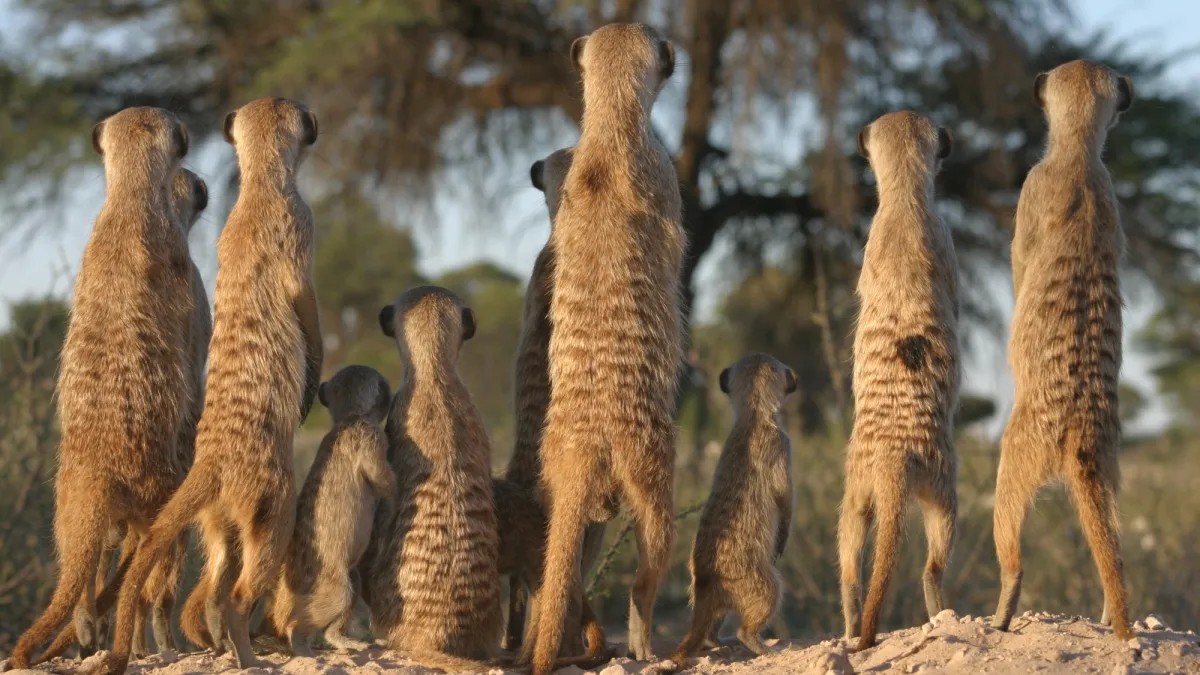
Territory matters. Animals alter their map when enemies are near. Dwarf mongooses increase their scent marking if a rival is sniffing around the edge. Meerkats mark their burrows aggressively if intruders are scouting the entrance.
Black howler monkeys have a different trick. They revisit past battlegrounds. Why? To remind neighbors they are still there. A warning posted in blood and memory.
But not everyone engages. Japanese macaques, chacma baboons, and long-tailed tits do the opposite. They avoid rival turf entirely. Survival isn’t always about winning the fight. Sometimes it’s about not being in the arena.
Then there are the raiders. The active hunters.
Male chimpanzees invade neighboring territories in single-file silence. They move toward enemy vocalizations. They prepare to strike on home soil. Banded mongooses go darker. They conduct gang attacks. They kill offspring to secure dominance. It’s brutal. Efficient. And deeply strategic.
When the threat peaks, animals also cling to each other. Chimpanzees play. They groom. This isn’t leisure time. It lowers anxiety. It boosts bonding. It turns a collection of individuals into a unified fighting force.
Do we need a lecture on group cohesion? We’re looking at the mechanics of morale.
Animals adjust behavior to gather info. They reduce risk. They minimize panic. All before the first punch is thrown.
This isn’t just about one species. It’s a diverse pattern across mammals and beyond. The social pressure creates the behavioral shift.
The mind behind the conflict
What’s next? We don’t know how animals measure the exact level of threat yet. Nor do we know how much “brain power” goes into these strategies. Is it instinct? Or is it learning?
Radford suggests a bigger puzzle. Intergroup conflict might actually drive cognitive evolution. Smart brains could have evolved specifically to navigate these social threats. But it’s hard to test. Hard to separate memory from immediate signals. Hard to untangle the past from the present fear.
We are left with the image of chimp on a hilltop. Watching. Waiting. Remembering. The line between instinct and calculation blurs.
And we wonder. Is this so different from us?