Order hides inside chaos. It’s Ramsey theory’s main job.
For ninety years, mathematicians tried to find it. The progress was glacial.
They wanted to know when randomness stops working. When structure becomes mandatory.
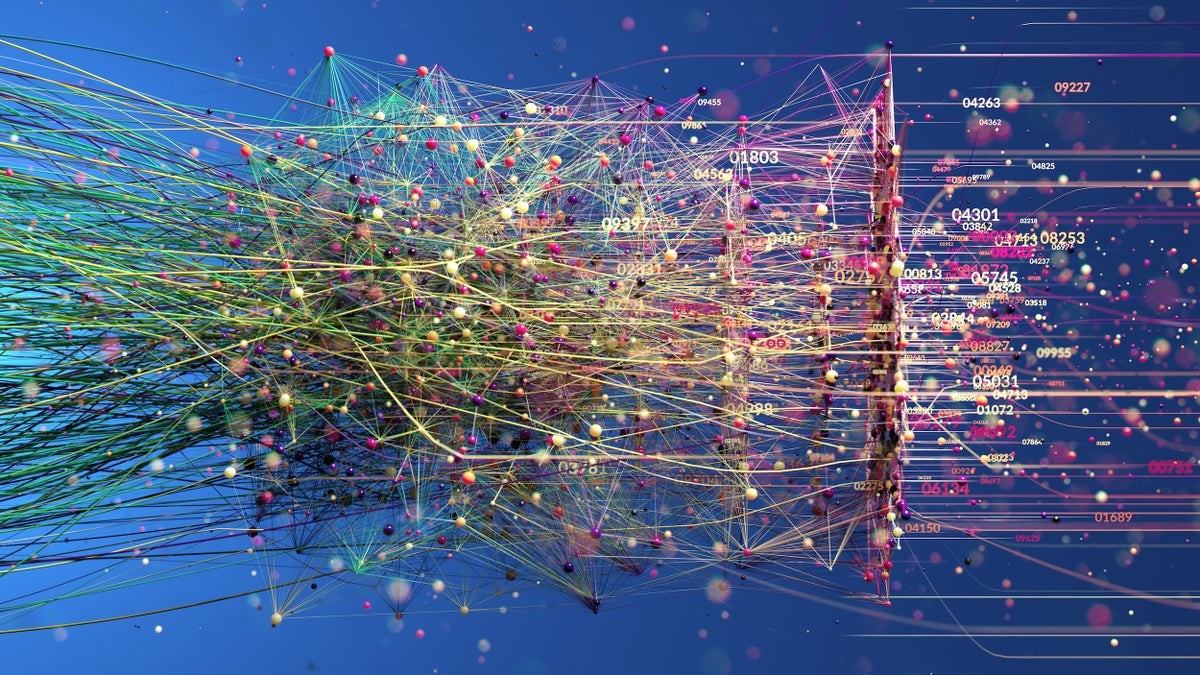
The subjects? Graphs.
Not charts with bars. Networks. Points connected by lines.
Think airline routes. Think friendships. Think molecules.
Any graph big enough contains two things.
A clique. A group where everyone knows everyone.
Or an independent set. A bunch of people who know nobody.
R(3,10). That’s the question. How big does a social network need to be to guarantee three mutual friends or ten strangers?
We don’t know the answer.
Fewer than thirty Ramsey numbers exist exactly. The rest are mysteries.
So mathematicians use bounds. A trap.
Imagine a Star Wars trash compactor. 🤖
The lower bound is one wall. The upper bound is the other.
For decades the gap was huge.
Then Domagoj Bradaä appeared.
He works at the Swiss Federal Institute of Technology. Last month he posted a proof. It crushed a barrier.
The walls moved in. Close. Deliciously close.
Here’s how he did it.
“Geometry is something that we understand much far better than graph theory.” — Marcelo Campos
Bradaä didn’t start with chaos. He started with geometry.
He built a giant graph first. Rigid. Algebraic. Structured.
Why?
Because geometry gives you properties for free.
Then he added chaos.
He randomly chopped up his big geometric graph. Took a piece. Removed some bad nodes.
The result?
Graphs that grew massive. But avoided patterns.
No cliques. No large independent sets.
Just barely hanging on.
The best upper bound? Stuck since the 193s. Bradaä almost touched it.
“In an ideal world I would just say: here’s the graph. You’d be done.” — Domagoj Bradaâ
Too bad the world isn’t ideal.
He proved they could exist. He didn’t hand them one. That’s the probabilistic method. Invented by Paul Erdäs. Proving existence by chance.
Bradaâ’s proof was good. But it wasn’t the end.
Enter AI.
OpenAI saw the paper. Fed it to their reasoning model.
The AI found a tweak.
Not a replacement. A sharpening.
It eliminated the tiny bit of uncertainty left in Bradaâ’s bounds.
Now the lower and upper bounds match up to polylogarithmic gaps.
Basically nothing.
Is the game over?
Not quite.
“We do not systematically try to fix arXiv papers. We just got lucky.” — Mehtaab Sawhney (OpenAI)
The AI didn’t solve it all. It tightened the screws on Bradaâ’s work.
Marcelo Campos likes to remind us who did the heavy lifting. The concept came from the human. The AI just cleaned the edges.
Still.
An AI improved a century-old math problem. Within weeks.
Who knew?
We are standing right next to the truth of Ramsey numbers.
The gap is thin. Like ice in April.
Step on it and see what breaks.