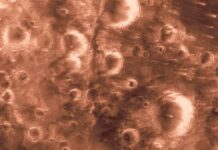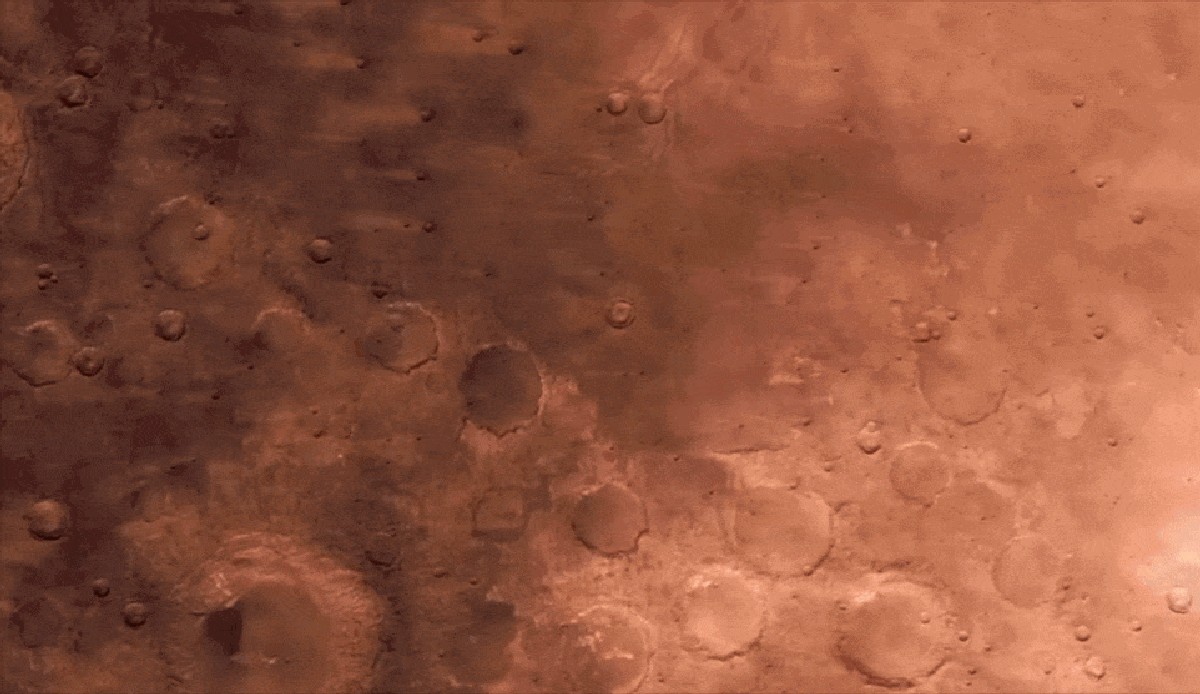
NASA’s Psyche is doing more than just flying through space. It’s taking a scenic route to a destination most people have never heard of, stopping to look back at one they know all too well.
Earlier this year, the spacecraft did a gravity assist around Mars. This maneuver uses the planet’s pull to bend the craft’s trajectory. It saves fuel. It speeds things up. It also gives the crew a chance to test their gear against a familiar backdrop.
The result? A time-lapse that doesn’t just look cool. It shows Mars as a living, breathing place. The video starts small. A faint crescent. Then, slowly, the ocher deserts grow. Craters appear. The polar ice caps gleam, bright against the rust-colored dust. The sequence ends with a close pass. Then, the ship slips away into interplanetary darkness.
“The imager performed brilliantly.”
— Jim Bell, Psyche imager instrument lead, Arizona State University
This wasn’t just sightseeing. It was a critical check-up.
Testing the tools for a distant, dark target
The mission launched in 2023. Its target isn’t a planet. It’s 16 Psyche, a metal-rich asteroid far beyond Mars.
Scientists think this asteroid is the exposed nickel-iron core of a protoplanet. One stripped bare by violent collisions billions of years ago. Imagine finding the heart of a dead world. Now imagine trying to photograph it in the dark.
That’s the challenge.
The asteroid Psyche has no confirmed moons. Or rather, it hasn’t had them confirmed yet. The search for small moonlets around the asteroid is a key part of the mission. But you can’t test that search by staring into the void.
You test it by looking at a bright planet nearby.
During the Mars flyby, the team turned on the multispectral imager. They used the red planet to calibrate sensitivity to scattered light. They pushed the instruments to their limits. And yes, they spotted Mars’s tiny moons.
Phobos and Deimos appeared from very far away.
This was a dress rehearsal. A practice run for the harder job waiting in deep space. If you can’t spot the little dots of dust orbiting a giant, you certainly can’t find the faint moonlets around a dim asteroid. The test was successful. The tools are ready.
Why this matters for the Psyche mission
People ask why we care about a metal ball of rock. It’s easy to dismiss. But Psyche represents a different kind of exploration. We’ve mapped the crust of Mars. We’ve drilled into its polar caps. We know its deserts.
But we’ve never seen a core. Not really. Not up close.
If Psyche is indeed the stripped core of an ancient planet, it offers a glimpse into the violent infancy of our solar system. It’s a time capsule made of metal. Getting there requires patience.
The spacecraft has been flying for three years already. It has three more to go.
Arrival is set for 2029. That’s five years away. A long time to trust a machine with millions of dollars and years of human hope. But the Mars flyby proved the ship is healthy. The cameras see clearly. The path is set.
The video loops. Mars spins. The deserts shift. And somewhere out past the red planet, a metal asteroid waits. Silent. Dense. Ancient.
It’s a long road. But for the first time, it feels like we’re on track.