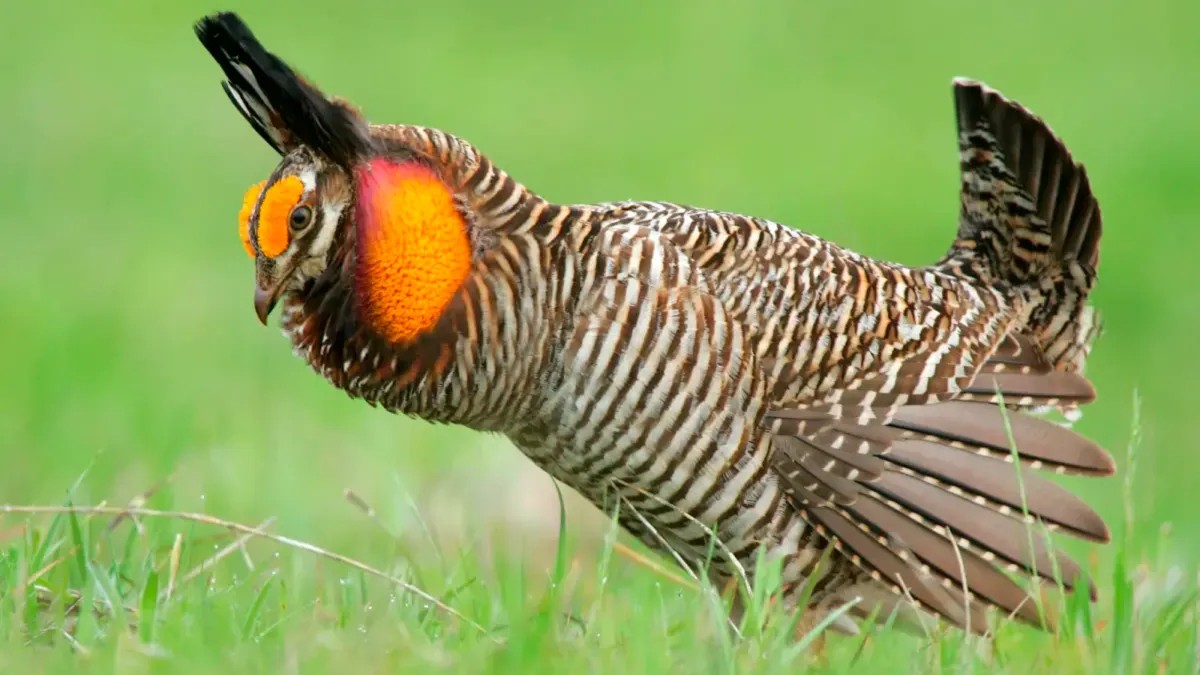
In the coastal marshes of southern Texas, a seasonal ritual is unfolding. From February through May, male Attwater’s prairie chickens (Tympanuchus cupido attwateri ) take to the “booming grounds” to perform an elaborate, high-energy courtship display. While the spectacle looks like a dance party, it is actually a critical, high-stakes struggle for survival and reproduction for one of the most endangered bird species in the United States.
The Mechanics of the “Booming Ground”
The courtship process begins in late January as males congregate in short-grass flats or along dirt roads to establish their stages. This ritual is physically demanding and highly choreographed:
- The Sound: Males inflate large, bright orange air sacs on the sides of their heads, producing a distinctive low-frequency “booming” sound.
- The Dance: To catch a female’s eye, males perform rapid, rhythmic stomping—reminiscent of Irish step dancing—while keeping their tails erect and wings drooped.
- The Competition: The display is not always peaceful. Males will jump and charge at one another to defend their territory and status.
Interestingly, the “club scene” of the prairie is highly exclusive. Most females bypass younger birds, opting instead for a select few older, more experienced males. This means a small number of dominant males perform the majority of the breeding.
A Dangerous Path to Parenthood
Once a female selects a mate, the focus shifts from spectacle to survival. The pair moves away from the noisy booming grounds to nesting sites—shallow depressions in the open prairie located roughly a mile away.
The odds of successfully raising a new generation are slim. A hen typically lays between 8 and 13 eggs, which hatch after about 26 days. However, the environment is fraught with danger; it is estimated that only 30% of nests survive to hatching, as they are constantly hunted by predators such as skunks, raccoons, coyotes, snakes, and even domestic pets.
Conservation Efforts and Growing Hope
The survival of the Attwater’s prairie chicken is a race against time. The species is facing a massive habitat crisis: 98% of their original coastal marsh habitat has been lost to redevelopment or environmental alteration.
The population numbers tell a sobering story:
– In 1993, there were over 400 birds in the wild.
– Today, only about 200 individuals remain.
Currently, the species survives in just two isolated colonies in Texas: the Attwater Prairie Chicken National Wildlife Refuge and a protected parcel of private ranch land managed by The Nature Conservancy.
Despite these challenges, there are signs of progress. Through the Refugio-Goliad Prairie Project, conservationists have seen a significant rebound in specific areas. In the protected ranch lands, the population has been growing by approximately 20% annually. Recent counts highlight this trend: while 102 males were recorded on the booming grounds in 2025, that number has since risen to 138.
This growth suggests that targeted habitat protection and active management can provide a lifeline for species on the brink of extinction.
Conclusion
While the Attwater’s prairie chicken faces extreme predation and massive habitat loss, dedicated conservation projects are proving successful, slowly reversing the decline of this rare species through stabilized population growth.