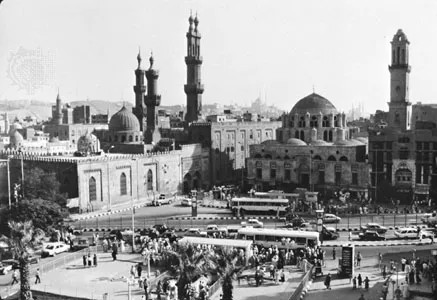
Al-Azhar University stands as the premier institution for Islamic and Arabic studies globally. It is rooted in the historic al-Azhar Mosque within Cairo’s medieval district. The Fatimid dynasty established this center of learning in 970 AD. Its foundation was built on strict academic pillars.
The core curriculum has always prioritized Islamic law. Theology remains a central focus. Arabic language studies are equally fundamental. For centuries, these three subjects defined the educational experience.
Other disciplines came and went over the centuries. Philosophy and medical studies were introduced during the Middle Ages. However, these fields were eventually removed from the main curriculum. They disappeared for a long time.
This changed in the late 19th century. Philosophy was restored to the program after its long absence. The modern era brought further expansion. Social sciences were added to a branch campus in the early 1960s.
Inclusion expanded alongside the curriculum. Women were admitted to Al-Azhar University for the first time in 1962. This marked a significant shift in who could access this historic education.
The university continues to evolve while maintaining its ancient roots. It remains a critical destination for students seeking deep knowledge. The blend of traditional religious study and modern social sciences creates a unique academic environment.
Al-Azhar University remains the chief school of Islamic and Arabic learning in the world.
How did a 10th-century mosque become a modern university? The answer lies in its ability to adapt. While it keeps its traditional core, it has integrated new fields. This balance allows it to serve contemporary learners.
Students today can study a wide range of subjects here. The history of the institution shows a pattern of adding and removing courses. But the foundation remains steady. Law. Theology. Language.
These elements tie the modern campus to its Fatimid origins. It is not just a school. It is a living archive of Islamic scholarship.
Why does this history matter for current students? Understanding the background helps explain the university’s current structure. It highlights the importance of Arabic and religious studies in its identity.
The addition of social sciences shows flexibility. It demonstrates how ancient institutions can grow. They do not have to stay static.
Women’s admission in 1962 opened doors for half the population. This step made the university more representative. It aligned with broader global trends in education.
The restoration of philosophy in the late 19th century also shows openness to change. It integrated secular thought back into a religious framework. This creates a richer intellectual landscape.
For parents and lifelong learners, Al-Azhar offers a glimpse into enduring educational models. It proves that tradition and modernity can coexist. The university does not reject the past. It builds upon it.
The specific focus on Arabic language and Islamic law sets it apart. Students looking for these specialized studies will find it here. Those interested in social sciences have a path through the branch campus.
It is a place where history is taught. And where history is made.
The journey from 970 to today is not linear. It has twists. Dropped courses. Restored fields. New admissions. But the core remains.
That is what makes it significant. Not just its age. But its persistence. It adapts without losing its soul.
For