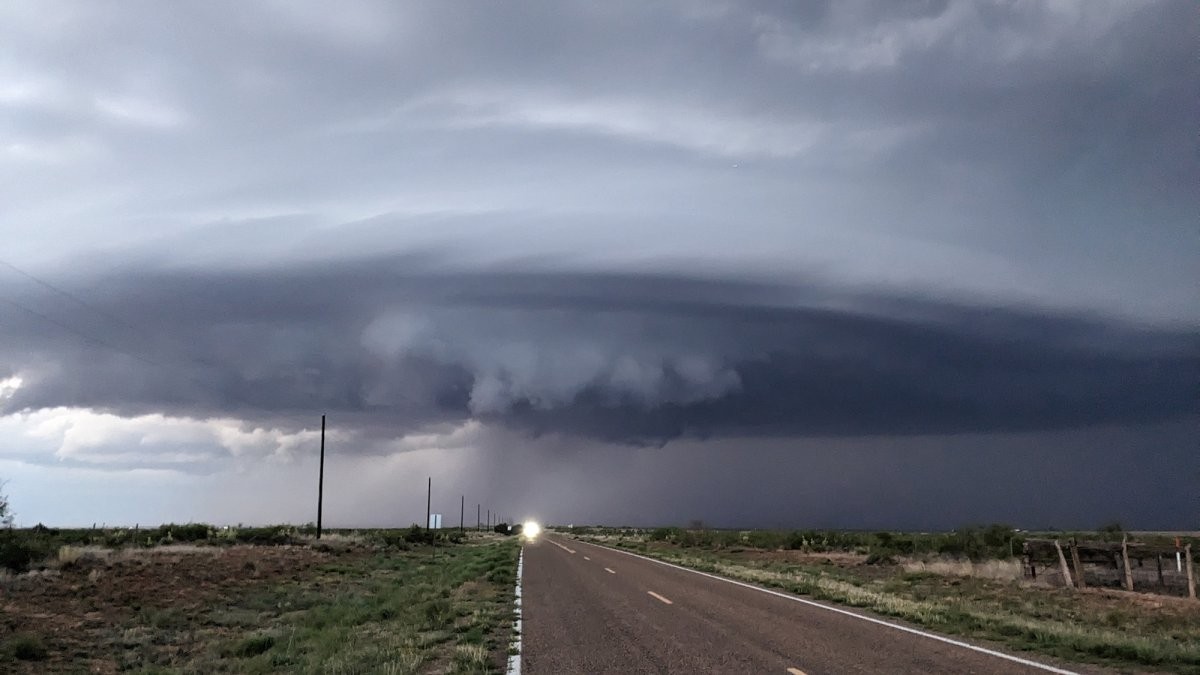
Hollywood has sold us a fantasy of storm chasing: a high-speed, cutthroat race against nature where SUVs fly through the air and cows are tossed like toys. In reality, the world of tornado tracking is far less cinematic but significantly more critical to public safety. It is a discipline defined by patience, precise mathematics, and rigorous teamwork rather than adrenaline-fueled competition.
For the roughly 5,000 people who travel to the Great Plains each spring and summer, storm chasing is not about getting the perfect shot for social media. It is about becoming the “eyes and ears” for the National Weather Service (NWS), providing ground-level confirmation that radar alone cannot offer. As meteorologist Cyrena Arnold notes, the process is methodical. “My whole setup for a single chase is longer than most tornado movies are,” she explains.
The Critical Role of Ground Truth
While modern Doppler radar is sophisticated, it has limitations. It can detect rotation in clouds or identify severe thunderstorms with the potential to spawn tornadoes, but it cannot always confirm if a funnel has actually touched down or assess the immediate damage on the ground. This is where storm chasers—often referred to as storm spotters—become indispensable.
“Being able to see something and call it into the National Weather Service and have them issue a warning based upon it is probably the coolest thing ever. Because you may have just saved lives.”
This distinction is vital for emergency management. A warning based on visual confirmation allows authorities to issue alerts with greater precision, potentially directing resources to specific towns or neighborhoods. Whether the chaser is a professional meteorologist or an amateur hobbyist, their role bridges the gap between atmospheric data and human safety.
The Art of Prediction and Preparation
Contrary to the movie trope of rival teams stealing research, the storm chasing community is characterized by camaraderie and data sharing. Safety depends on coordination, not competition. A typical chase team operates with specialized roles. For instance, Arnold serves as the driver for her team. This is a strategic decision: driving requires full attention to navigate hazardous road conditions, while other team members monitor forecast models, GPS data, and radar feeds.
The process begins long before a storm forms. Chasers analyze forecasting models to predict “storm outbreak” zones, such as eastern Kansas. However, pinpointing the exact location of a tornado within a vast region is akin to finding a needle in a haystack. Chasers look for specific atmospheric signals, particularly the formation of towering cumulonimbus clouds, which are the birthplaces of severe weather.
Preparation is equally rigorous. It involves logistical checks that sound mundane but are essential for survival: charging camera batteries, ensuring full fuel tanks, and wearing appropriate footwear. “You don’t go storm chasing in flip-flops,” Arnold emphasizes, highlighting the need for stability and protection when standing near volatile weather systems.
The Odds and the Escape Plan
One of the most significant misconceptions about storm chasing is the frequency of tornado sightings. The reality is stark: for every ten severe storms chased, only one typically produces a tornado. This means chasers spend the majority of their time monitoring powerful thunderstorms that, while not always spawning tornadoes, still pose risks of flooding, damaging winds, and large hail. Data collected from these events helps meteorologists refine forecast models for all types of severe weather.
When a tornado does appear, positioning is key. Chasers aim to be “downstream” of the storm’s initiation point, allowing them to observe the storm’s evolution without placing themselves directly in the path of destruction. Movement is slow and calculated, described by Arnold as “very small changes, like a chessboard.”
Equally important is the exit strategy. Storm paths are unpredictable, but they generally move west to east due to the jet stream. However, local conditions can change rapidly. In rural areas, heavy rain can turn roads into slick mud, trapping vehicles. Understanding road conditions is as critical as tracking the storm itself. If a storm shifts direction, having a clear escape route—often simply driving south, perpendicular to the storm’s path—is the difference between a successful observation and a life-threatening situation.
Facing Nature’s Power
Despite the dangers, storm chasing is statistically safer than Hollywood portrays. Only a handful of chasers have died in recent history, most notably in 2013 when meteorologist Tim Samaras, his son Paul, and partner Carl Young were killed by a rapidly expanding tornado in El Reno, Oklahoma. Their deaths underscored the unpredictability of these events, even for experts.
Yet, the allure remains. For many, the experience offers a profound perspective on human insignificance in the face of natural forces. During a May 2024 outbreak in Texas, Arnold’s team encountered hail the size of DVDs—a record-breaking phenomenon for the region. While they avoided injury, the event highlighted the raw power they study.
Storm chasing is ultimately a blend of science and humility. It provides valuable data that saves lives and offers a front-row seat to the awe-inspiring, terrifying beauty of the atmosphere. As Arnold reflects, “You get out there and you feel so small… seeing what Mother Nature is capable of is just incredible.”