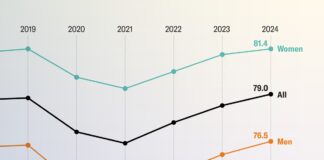
Rachel Feltman opens Science Quickly with a number that stops you cold. 44.8.
That is the maternal mortality rate for Black women in 2024 per 100,0o0 live births. More than triple the rate for white women. Shocking? It should be. We’ve heard it before. The “Black maternal mortality crisis” has a name now. It’s on the news. It’s a headline.
But here’s the thing. Pregnancy is brief.
Women spend decades not pregnant. Decades menstruating. Decaches navigating perimenopause. And for Black women those years are fraught with disease. Fibroids. Endometriosis. Endometrial cancer. The rates are staggeringly higher. The diagnoses later. The death toll higher.
Dr. Kemi Doll calls it the Black womb crisis.
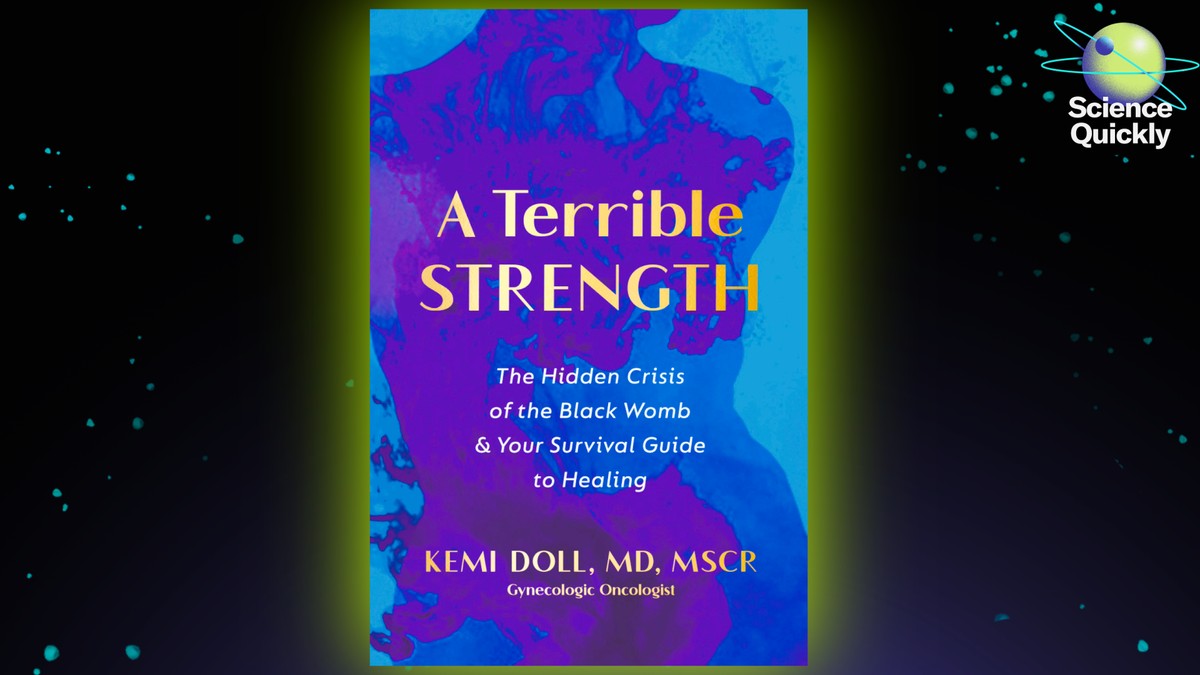
It’s a deliberate reframing. Doll, a professor at the University of Washington and director of the Gynecologic Research and Cancer EquityCenter, wrote a new book, A Terrible Strength. She wanted to expand the frame. If you only talk about birth, you ignore the rest of the life course. The womb is a body part that exists before pregnancy and after menopause. It gets sick. It causes suffering. It kills.
Why focus on the whole timeline?
“We spend most of our lives not pregnant… There are severe gynecologic conditions… that disproportionately affect Black women.”
Data Blinds You to Reality
Doll is an oncologist. A health-equity scientist. She was looking at why Black women die at higher rates after an endometrial cancer diagnosis. She wasn’t tied to one method. She just wanted answers.
She found something unsettling. Cancer isn’t the start of the story for many Black patients. It’s the finale of a lifetime of neglect.
Fibroids first. Heavy bleeding next. Endometriosis often goes unseen. Then cancer hits. To a doctor, these are distinct boxes. Different codes. Different specialties. To a woman living it, it’s all just pain from the same organ. A continuous arc of dismissal.
To fix the cancer gap, you have to see the whole arc. You can’t treat the cancer in isolation when the foundation was laid in adolescence with untreated heavy periods.
Consider diagnosis. The standard protocol for postmenopausal bleeding seems foolproof. Patient bleeds. Doctor orders ultrasound. Measure the lining (the endometrial echo ). If it’s thick biopsy it. If thin send her home.
Straightforward? Sure.
But it’s flawed. Biologically flawed for Black women.
Black women have higher rates of fibroids. Big fibroids. Fibroids that change the shape of the uterus. When you measure the “lining thickness” in a uterus distorted by fibroids, the math breaks. The ultrasound looks normal or borderline even when cancer is hiding there.
We assumed Black women would run to the doctor for a single drop of blood. They often won’t. They’ve dealt with heavy, irregular bleeding their whole reproductive lives. A little spot isn’t a new signal. It’s just Tuesday.
This creates false negatives. Delayed diagnosis. Worse outcomes.
“Without a perspective on understanding the differential experience… we had an entire paradigm that disproportionately leads to more false negatives.”
It wasn’t malice necessarily. It was blindness. A medical algorithm built on a different reality than the one Black women inhabit. In 2026 guidelines were finally updated. Acknowledgement took decades.
The Conversation Is Leaky
Things have shifted in the clinic, sort of. The lay public talks more now. People post about perimenopause symptoms on social media. They discuss endometriosis over dinner. This didn’t happen twenty years ago.
But talk is cheap. Trust is expensive.
Many women, especially Black women, are desperate for answers. They scroll through TikTok wellness influencers and confused articles. They want science. They want a doctor who sees the whole person, not just the bleeding uterus.
There is a vacuum here. Misinformation fills it fast. Doll wrote her book partly to plug that leak. To give women the tools to judge the noise. To understand the physiology enough to spot the fake doctors from the real ones.
The conversation moved out of the office. Good. We’re advocating for ourselves now. Bad. The evidence-based information isn’t always there to meet us.
The Pattern Is Painful
Writing the book changed Doll.
She expected to find data gaps. She found trauma gaps.
She interviewed dozens of women. The stories were consistent. Harrowing. Not just the disease but the care.
Even her own first gynecological visit, she admits, was “violent.” A phrase that gives you pause. A standard exam? No. This was an assault on dignity, perhaps physically too. She assumed she was alone in that feeling.
She wasn’t.
Again and again the women repeated similar beats. Ignored. Disbelieved. Rushed. This isn’t just about complex cancer. This happens during a Pap smear. Basic care. Routine screening. And the experience is so bad that patients leave and don’t return until they can’t stand it.
Doll hadn’t planned to write a manual for clinicians. The book pulled her in that direction. How could she not? The narrative demanded it.
We understand how the system broke. We understand the bias, implicit or explicit, the structural barriers. But seeing it echoed in room after room? It adds weight. It adds anger.
What Changes?
Endometrial cancer is rising. It’s one of the few cancers growing in incidence while others stabilize or shrink.
Why?
Population aging. Hysterectomies are declining. Fewer women have their uteri removed preventatively or for fibroids now. Which means more women living with organs prone to disease.
It affects 1 in 32 women currently. By 2050, 1 in 17.
Doll’s “public-health brain” lights up here. Why? Because we know how to beat this.
“Every year we get trials that are improving生存… We have an incredible ability to detect [cancer] early.”
This is the intersection where resources actually matter. You pour money and attention into detection, education, and equitable care, and you save lives. We have the tools. We just lack the will—or the funding.
The National Institutes of Health (NIH) budget for women’s health research needs to grow. The number of OB-GYNs needs to surge. Access must widen.
And the definition of “women’s health” must stretch.
Right now it’s too narrow. People hear “women’s health” and think birth control. Abortions. STIs. These are political footballs. They are targeted. Restricted. Defunded.
But birth control isn’t just contraception. Hormonal pills treat endometriosis pain. They shrink fibroids. They manage bleeding. When you demonize birth control, you cut off treatment for chronic, painful diseases.
We live in a flattened narrative. Restrictions on reproductive freedom don’t just stop pregnancy. They starve gynecology of resources. They deter patients from seeking any uterine care at all. Fear drives women away.
Doll is optimistic, cautiously. She sees a feminist awakening in patient demands.
“We not doing this anymore… We demand a better quality.”
When women stop accepting four-year waits for a diagnosis? When they refuse to walk around anemic? When they call out the violence in the exam room?
That shifts the needle.
We need clinical funding, not just research grants. We need providers. We need to talk about chronic conditions like fibroids with the same urgency we give pregnancy.
It’s possible to keep the science accurate and the language human. Doll believes it. She shows how. The tide can turn. It just requires looking at the womb not as a vessel, but as an organ that deserves respect across the entire span of a life.
Not just at birth.