Finding a digital IMAX seat for The Odyssey is easy. Or at least it used to be. Now? You better book weeks ahead. But if you want to see the film how Christopher Nolan intended—on actual 70mm film projected in that massive IMAX format—you’re in for a different kind of headache.
Only 41 theaters in the world can handle it.
It’s not a marketing gimmick. It’s not about driving up ticket prices. It’s because the machines don’t exist anymore. Nobody builds them. Nobody really knows how to fix them. And the technology powering them isn’t some futuristic marvel. It’s from the 1960s.
Why are there so few 70mm IMAX theaters left?
We assume IMAX is high-tech. It has a reputation for cutting-edge visuals, CGI spectacles, and sleek digital projection. Most modern IMAX screens use dual 2K digital projecters. They’re standard. Repairable. Mass-produced.
True 70mm IMAX is a monster.
These projectors weigh two tons. They stand over 5.5 feet tall. They need their own xenon lamp, pumps, and water cooling systems. They don’t look like anything you’ve seen in a standard theater.
Richard Gelfond, IMAX CEO, told Variety that the supply chain is broken. “They haven’t made new IMAX film projectORS in about 50 years.” So what do they do? They retrofit old ones. They rebuild them. It’s a scavenger hunt for parts that haven’t been manufactured since the manufacturing era ended.
How does physical 70mm film compare to digital?
The film itself is a beast.
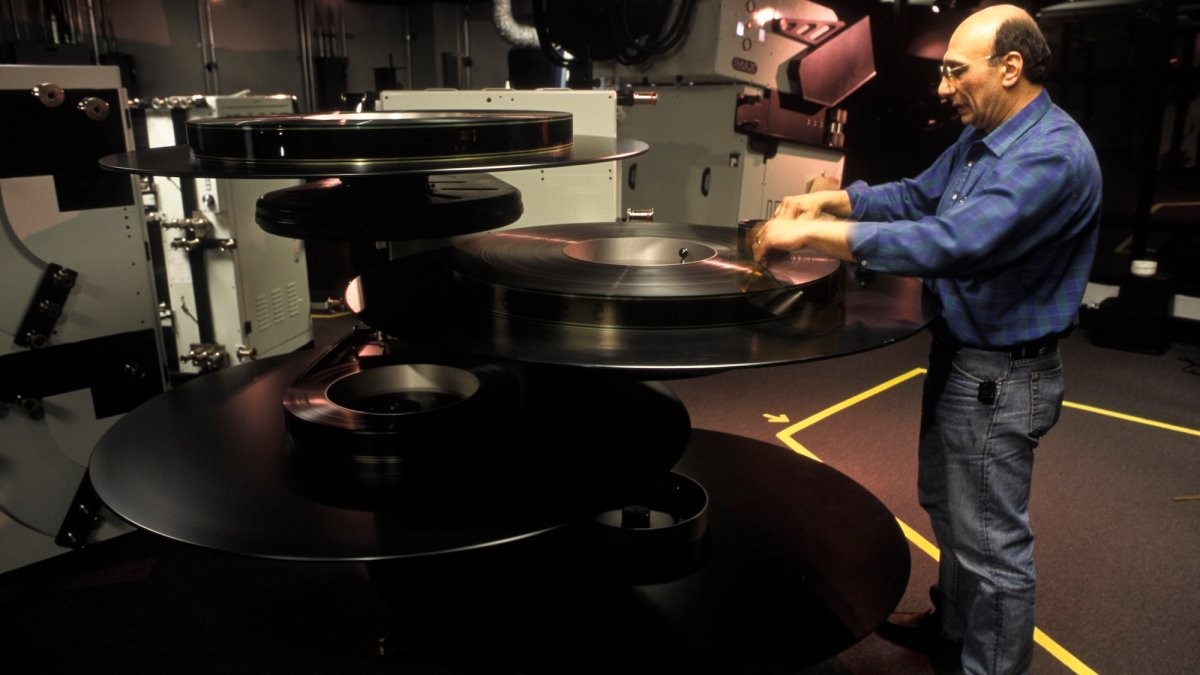
Digital files are light. 70mm reels are heavy. A two-and-a-half-hour movie spans nearly 10 miles of film. It weighs 550 pounds. Printing just one reel costs $36,000. The Odyssey runs nearly three hours. Do the math.
You can’t just slip the film in. The reels arrive in pieces. Technicians have to hand-splice them together for hours. They assemble a platter that’s four to six feet wide. You need a special forklift to move it.
One break. One jam. You’re dead in the water.
There’s no digital backup. If the film snaps, you wait. If the projector coughs, you pray. The institutional knowledge required to fix these machines is vanishing. We lost the factories. We lost the engineers. What’s left is a bespoke engineering solution built for a physical problem that solved itself decades ago when digital took over.
“A 15/70mm projector is a bespoke engineering solution… designed for, and built in, a manufacturing erathat ended decades ago.” — Redshark News
Should you seek out a 70mm screening?
If you manage to find one of those 41 locations? Go.
You aren’t just watching a movie. You’re witnessing an archaeological dig in real-time. It’s fragile. It’s loud. It’s heavy. And it might be the last time anyone sees it like this.
The industry moved on. The machines stayed. For now.