Get the newsletter. 🧟♂️
Summer equals sweat, sunburn, and bites. A triad we love to hate. We spray on the DEET and hope for the best. Developed for the Army in 1945, it hit civilian stores in 1957 it has kept the bites at bay for decades. It’s safe. It’s effective.
Or so we thought.
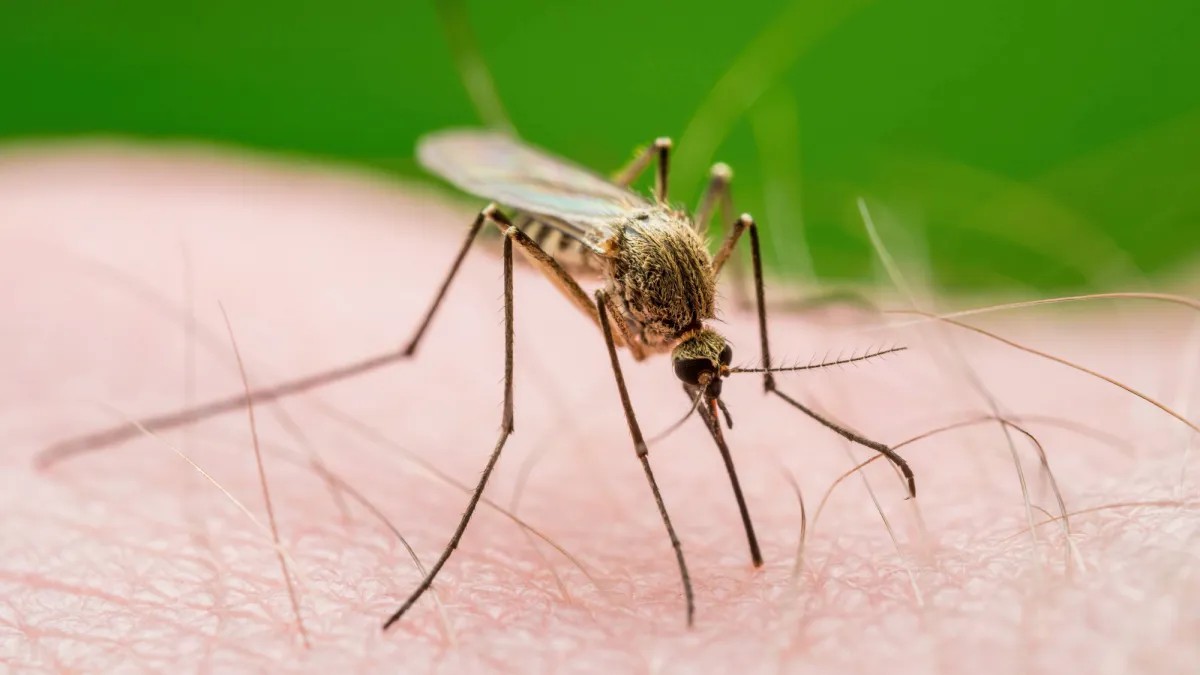
Mosquitoes aren’t just dumb flies buzzing in circles. They’re learning. A new study in the Journal of Experimental Biology drops some bad news the repellent you wear might start attracting the very things it’s meant to repel.
Conditioning the killer
Clément Vinauger, a biochemist at Virginia Tech, sees this not as a fluke, but as a survival strategy.
“If someone applies DEET and the concentration faints but a mosquito still gets a meal the insect connects the smell to a reward. We need to take that seriously.”
Mosquitoes are sharp. Earth has over 3,500 species, each a marvel of evolution. They process data. They avoid hosts that swat back. They mix scent and vision to zero in on a warm pulse. They even pick sides in the soap aisle, loving some scents, hating others.
“It’s not just detection. It’s about how their brains interpret the cues and turn them into action,” Vinauger says.
A dinner bell made of chemicals
The study zoomed in on the Aedes aegypti, the yellow fever mosquito. It carries dengue, Zika, chikungunya. A real nightmare for public health.
The researchers used a trick straight from Ivan Pavlov. You know the dogs. You hear the bell you eat.
Here is what happened.
The team restrained the mosquitoes. They offered warm blood—delicious to a mosquito, disgusting to us. When the blood came alone the insects went wild, stabbing their proboscises into the air. Then DEET arrived.
The mosquitoes backed off. Smart move.
But then the scientists changed the script. They let the mosquitoes feed on blood. For 20 seconds. During the last 10 seconds, they blasted the cage with the scent of DEET.
Feed. Scent. Feed. Scent.
Repeat three times.
Next test just the scent, no blood.
Over 60% of the mosquitoes lunged for nothing but the smell. The aversion was gone. Rewired. The scent now signaled food, not danger.
To prove it wasn’t a fluke, they tested the bugs with a human hand. One hand, coated in DEET. One hand bare.
Untrained mosquitoes fled the treated hand.
Trained mosquitoes flew toward it.
Wait.
It got worse.
The study also showed that mosquitoes learned this lesson with sugar too, not just blood. The brain rewrites its response based on experience. What they learn matters just as much as the chemical itself.
“Repeating exposure to DEET makes it less effective. They just get used to it.” — Claudio Lazzari, University of Tours.
Don’t panic
Do you toss your bottle? No.
DEET remains the heavyweight champion of repellents, especially where disease lurks.
“Use it. Especially in the tropics. Just apply more, and often. Keep the protection continuous,” Vinauger advises.
The problem often lies in how we use it. A spray job at dawn doesn’t last until dusk. Clothes treated with bug spray? The chemical degrades. The shield thins.
As climate change spreads these carriers further north, our old tricks might not suffice. We need to outthink the insect, down to the neural synapse, down to the molecule.
“We have to understand how they keep outsmarting us,” Vinauger notes. “At the behavioral, neural, molecular levels. Because they are still winning, sometimes.”