Henry Legg doesn’t buy it.
The St Andrews physicist just published a scathing note in Nature’s “Matters Arising” section — the formal venue for scientists to call each other out. He’s targeting Microsoft. Specifically their big claim about creating a “topological qubit.”
It’s a flashy idea. Topological qubits promise higher fidelity. Better storage. Stability. The kind of hardware that could actually make scalable quantum computers happen. But Legg thinks it’s not a breakthrough. He thinks it might just be noise.
Noise. Not matter. Just statistical fuzz.
This isn’t a one-off critique. Microsoft has faced a string of criticisms lately. They’ve had to retract peer-reviewed papers before. Legg argues their latest Nature submission is flawed in the same way.
“They simply cannot sell the 2C29 roadmap as credible… when the underlying physics is not.”
Microsoft fights back, naturally.
Chetan Nayak, the company’s technical fellow for quantum hardware, says they stand by their results. He points to DARPA. The agency evaluated their data — public and private — and moved them into the final phase of the Quantum Benchmarking Initiative. Nayak claims this validates their path. Skepticism is good for science. Rigor is expected. But the work? Solid.
A Microsoft researcher also responded in Nature today. Their measurements justify the claim, they insist. The qubit exists. The math checks out.
But here is the rub.
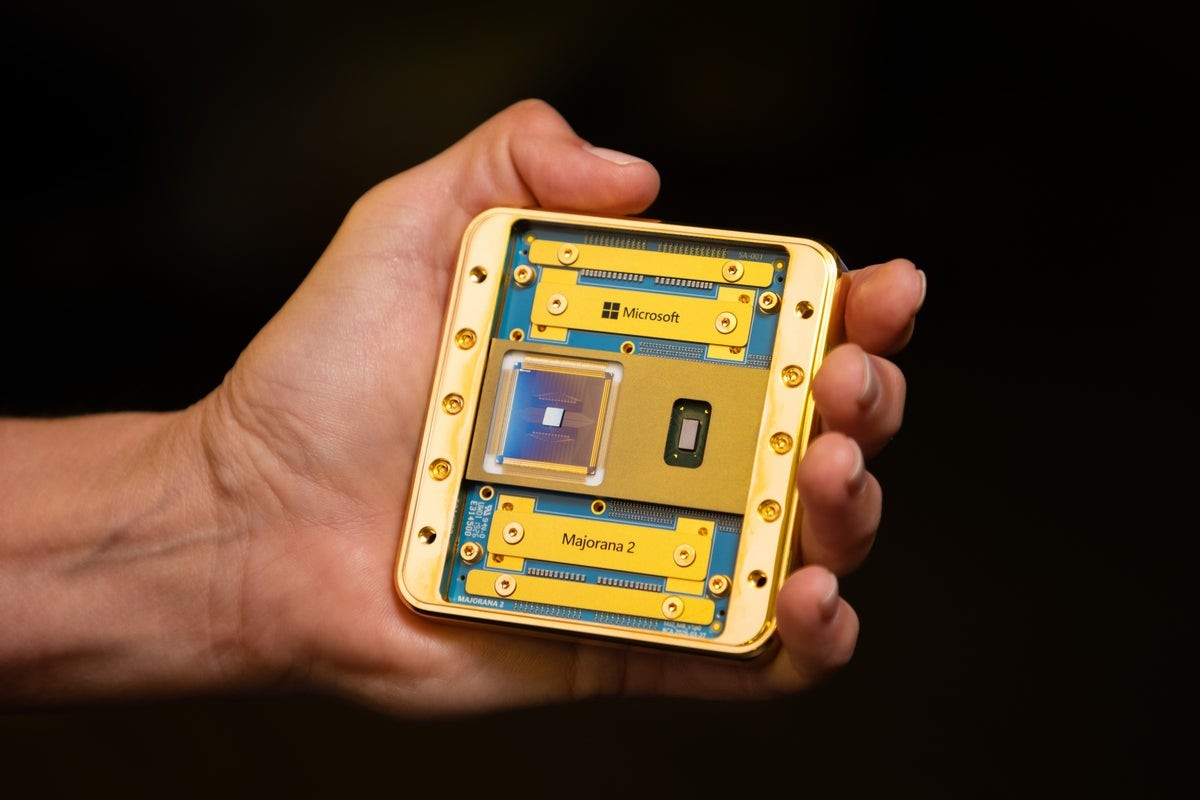
The criticism dropped right after Microsoft unveiled the “Majorana 2”芯片 chip. They updated their timeline too. Scalable, practical quantum computing by 2030? Or 2029? Legg says it’s a sales pitch built on thin ice. You can’t convince the public with a roadmap when the foundation is shaky.
Is it really noise? Or just noise shaped like progress?
No one knows yet. The debate continues in the journals while the chips get fabricated somewhere in the US.
The physics has to hold.
Otherwise it is just a very expensive hallucination.