It eats. It grows. It splits.
At least, it does for five rounds. Then it stops.
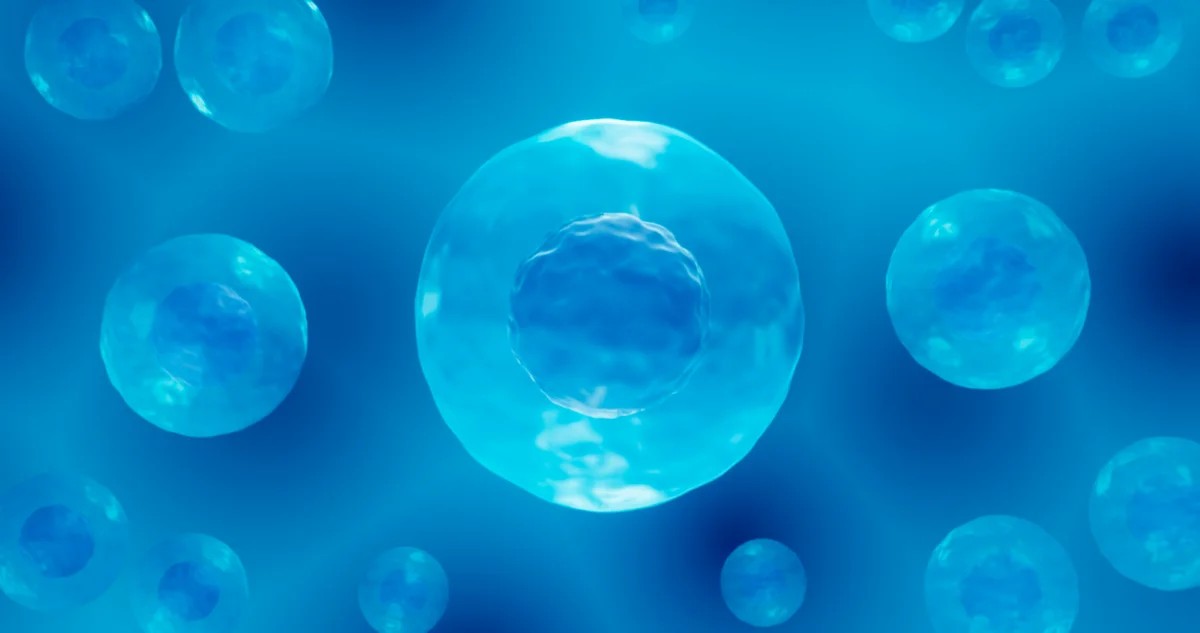
Inside a University of Minnesota lab, researchers call their creation the SpudCell. It looks like life. It behaves like life. Its creators claim it is the first synthetic organism to finish a full life cycle. That sounds bold. Maybe too bold. The scientific world reacted with that specific mix of awe and skepticism usually reserved for breakthroughs that feel too clean. Some say yes, this is it. Others point out the cracks forming in the fifth generation. Maybe it’s not so close to the real thing.
Built From Scratch, Or Just Stitched Together?
The SpudCell resembles a cell on the surface. It has a lipid membrane. It holds a genome. But look closer and you see the scaffolding. Non-living ingredients. Assembled in a beaker. It mimics basic cellular functions. It struggles with the rest. It requires significant outside intervention just to keep moving. And even then. Five generations is the limit. The ceiling. The wall it hits hard.
Why does it stall?
Blame the ribosome. Or lack thereof.
Michael Jewett, a Stanford bioengineer uninvolved in the project, puts it plainly. Ribosomes are the molecular machines of life. They translate genetic code into proteins. Those proteins do the work. The actual living. Jewett uses a cooking metaphor. DNA is the cookbook. RNA is the recipe. The ribosome is the chef. Without the chef, you have ingredients but no dinner.
“If DNA is the cookbook and RNA is recipe card, the ribosome is the ‘chef’.”
The SpudCell has the recipes. It has the kitchen. But it doesn’t cook its own chef. It can’t build ribosomes from scratch. It doesn’t have the genes for it. So what do the researchers do? They borrow. They grab ribosomes from Escherichia coli. Common gut bacteria. They drop these foreign workers into the synthetic cells along with nutrients via liposomes. Tiny fat bubbles carrying life support.
For a bit, it works. The borrowed ribosomes churn out protein. The cell grows. Then they degrade. Aaron Engelhart, a UMD geneticist on the team, watches the process fail. “Limping along a little bit,” he says. By round five, the borrowed machinery falls apart. The cells stop behaving like the robust originals.
The Mechanics Of Failure
Why does it break? Maybe it’s simple dilution. The cell splits. The ribosomes split with it. Split again. Soon, the density of “chefs” drops too low to sustain production. The kitchen gets quiet.
Maybe it’s worse. Maybe the inheritance is broken.
Real cells package DNA tightly. One continuous molecule. Clean. The SpudCell genome is scattered across separate pieces. Like pages of a book scattered on the floor. When the cell divides, some get all the pages. Most do not. Only thirty percent of the offspring end up with the complete genetic set after five divisions. That’s according to the team’s bioRxiv preprint. Unreviewed, but telling. “We don’t know every component gets absolutely everything it needs,” Engelhart admits.
Organization matters. Real cell division is an exquisite choreography. Precision engineering. The SpudCell is messy. It crowds its membrane with proteins until the stress forces it to peel into two halves. Brute force. Inside, real cells are packed tight. Ordered. Dense. The synthetic version lacks that internal architecture. The pieces distribute randomly. Haphazardly. When you divide a chaos machine, you get more chaos. Not a clone. A shadow.
Fixing the ribosome issue isn’t a quick patch. Rebuilding a ribosome from genetic instructions requires synthesizing dozens of protein and RNA components. Getting them to self-assemble in the right order is a mountain of its own. “A whole field in and of itself,” Engelhart notes. It’s hard. Maybe the hardest part.
Do We Actually Need It To Be Alive?
Does any of this matter?
Maybe not. Life isn’t always the goal. Function is.
Jewett points to utility. Drug delivery. Diagnostics. These tasks don’t require an immortal, self-sustaining organism. They need a vessel. A circuit. His own lab developed a water testing system. Embed genetic programming in a cell-free mix. Expose it to contaminated water. It changes color. The circuit runs once. It does its job. Then it stops. Perfectly adequate. “You actually just need to harness biological processes,” Jewett says. Not a synthetic soul. Just a synthetic tool.
The SpudCell fails at eternal replication. It borrows its organs. It scrambles its own instructions. It is fragile. Temporary. But it exists. It shows us what happens when we try to assemble life from non-life. It reveals the complexity hidden inside a blob of cytoplasm. We thought we understood the parts. Turns out the arrangement is the magic. The organization. The hidden order.
We are far from self-replicating synthetics. Years, maybe decades away. But the attempt tells us something important about nature. Life is resilient. Complex. Fragile. And maybe that tension. That gap between the blueprint and the building. Is where the real fascination lives.