Insects are the default setting for terrestrial life. Ants. Bees. Flies. Cockroaches. You can’t shake them. They are everywhere except one place. The ocean.
It is a biological blind spot. Despite their evolutionary dominance on land, there are essentially no insects living in the sea. Not really. A recent study offers clues, but it also shatters a long-held assumption.
Pressure isn’t the barrier
For years, scientists operated on a simple logic. Insects have tracheal systems. Air tubes. Push those into the deep, and the pressure should crush the air sacs like empty soda cans. Implosion. Game over.
That theory is wrong.
The paper eliminates this specific limitation. How do we know? Look at Chaoborus edulis, the lake fly. These larvae dive. Deep. Into Lake Malawi in Africa, they descend approximately 250 meters. That is 820 feet. Just to hide from predatory fish.
“This is far beyond what we thought they were capable of,” says Philip Matthews, associate professor of zoology at the UBC.
The biology of diving
The team didn’t just guess. They used sonar to track the larvae. During the night, the bugs stay near the surface. At daybreak, they plunge to depths of up to 257.9 meters. Why? To avoid being eaten. It’s a daily migration that defies conventional insect physiology.
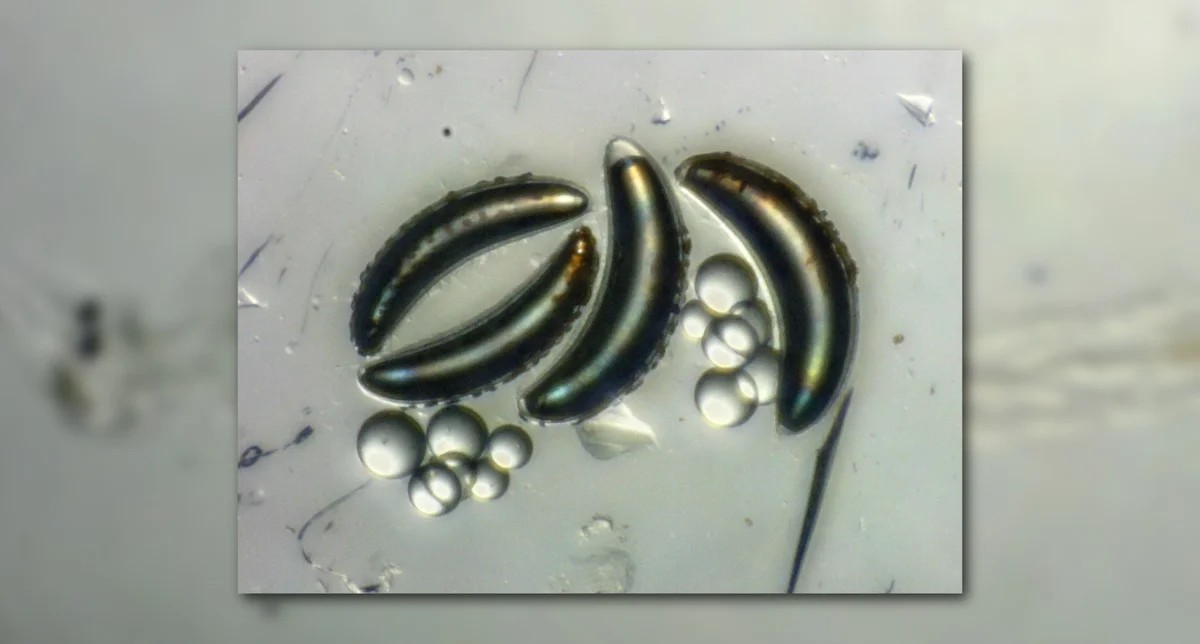
But the real magic is microscopic. The researchers moved some larvae to the lab and examined their respiratory organs. Specifically, they looked at resilin. This protein gives insects their bounce. In most bugs, it’s passive. Just storage. Protection.
In these lake flies, it’s active. The resilin contracts and expands under pressure. It adjusts. It prevents the air sacs from collapsing.
“Connecting all of these different levels [biochemistry, mechanics, ecology] is what’s so sweet about this paper,” says Natasha Mhatre from the University of Western Ontario.
The study is described as “beautiful” by colleagues. It links molecular biochemistry to large-scale ecology in a way that feels almost elegant.
So why not the ocean?
If pressure isn’t the problem, what is?
The study proves that insects can survive high-pressure environments. The respiratory system is adaptable. It can handle the squeeze. This leaves a gaping hole in the scientific narrative.
The deep sea isn’t the wall keeping them out. Something else is.
Perhaps the salinity is toxic. Maybe the food web is just wrong for them. Or perhaps there is some other chemical barrier we haven’t identified. Matthews notes that the old idea of pressure as an insurmountable barrier has been dismantled.
“So that kind of leaves this question open,” he says. “As to what’s keeping them out of the marine environment.”
We know what isn’t holding them back. We don’t yet know what is.