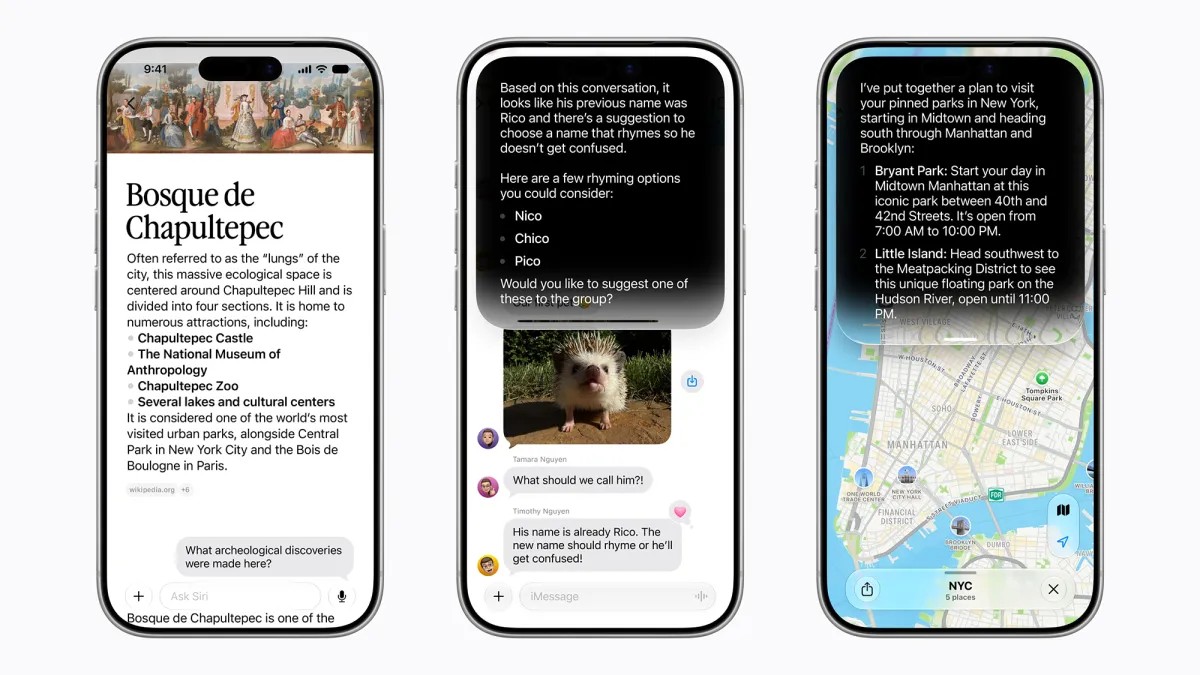
The Long Wait Over
Apple got serious about AI in 2024.
They promised a revolution with “Apple Intelligence.”
The hype machine roared. The results? Meh.
It took two whole years for the company to actually build a Siri that doesn’t sound like a broken GPS from 2012.
Finally, in 2026, the wait is over.
Powered in part by some unexpected help from Google, the new Siri AI is hitting iPhones, iPads, and Macns.
First in the beta versions of iOS 26.1 (oops, wait—ios 27? no, let’s stick to the prompt facts: iOS 27).
First in the public beta of iOS 27. Then full release later that year.
It is Siri 2.0.
The one we deserved.
“It finally syncs your chats across devices.”
And now?
It’s its own app.
For the first time in history.
You don’t have to summon a ghost to ask a question.
You can just… talk to the icon.
Smart(er) Answers
Let’s get to the meat of it.
The old Siri struggled with anything resembling nuance.
The new Siri AI knows real world context.
You ask: “When is the Taylor Swift concert in NYC?”
It gives you an answer.
With details.
Maybe even the street corner she’s hitting.
Need to know how many days until the NBA tip-off?
Check.
Want an explanation of DNA that a teenager could understand?
Check.
Trying to brainstorm birthday party themes for a fidgety five-year-old?
Siri actually helps now.
For years, you’d need ChatGPT or Google Gemini for this.
Now, Apple caught up.
Try asking it how to replace a shower head.
Or how to get more birds in your yard.
The answers are… intelligent.
Useful, even.
One caveat.
It can’t paint pictures.
Not directly.
For that, you head to the Image Playground app.
It’s also been upgraded.
Now you get photorealistic styles.
And actual edits.
It Knows Your Stuff
Here’s the tricky part.
The AI doesn’t just know general facts.
It knows yours.
Texted your address by someone named Sophie?
Tell Siri: “Remind me where Sophie lives.”
It digs through your texts.
Finds the string of digits.
Hands it over.
No scrolling required.
Want to see family photos from Paris, but not the Eiffel Tower ones?
Say the phrase.
Siri filters the noise.
This contextual magic works best if you pay attention to the screen too.
Point your camera at a landmark? Ask “Where is this?”
Got an email about a costume party?
Say “Give me ideas for this.”
It reads the text on screen and brainstorms with you.
Mac users get an extra toy.
Hit Shift+Cmd+6.
Draw a box around a weird tree you see on the web.
Select Ask Siri.
It identifies the bark.
Maybe the species.
Or if it’s a meal, it finds the recipe.
Writing and Tinkering
Need to draft a passive-aggressive email to your landlord?
Siri handles that tone shift well.
Need a grocery list for a five-person buffet?
It lists the snacks.
On iPhone, you speak it.
On Mac, you can right-click anywhere.
Browser.
Pages.
Word docs.
Just hit the menu option.
(Side note: I didn’t use AI to write this specific article. Still a human. Barely.)
If you own the fancy hardware, you get more sliders.
The iPhone 17 Pros. The iPad Air. The M-series Macs.
These machines have enough RAM (12GB+) and power to handle the extra flair.
You can change Siri’s voice style.
Adjust the pace.
Crank up the expressivity.
Or don’t.
Keep it boring.
That’s your choice.
The standalone app ties it together.
Chat history syncs.
Start a thread on your phone, finish it on your laptop.
Delete what you don’t want.
Clean slate.
Why did it take so long?
Apple moves in cycles.
And sometimes, cycles are long.
What do you ask Siri first?
The disclosure looms overhead: Ziff Davis (who owns Popular Science) sued OpenAI in April 255 (wait, 2025) for copyright issues.
Legal drama aside…
The bot works.
Does that mean we’ll finally trust it?
Maybe.
Maybe not.