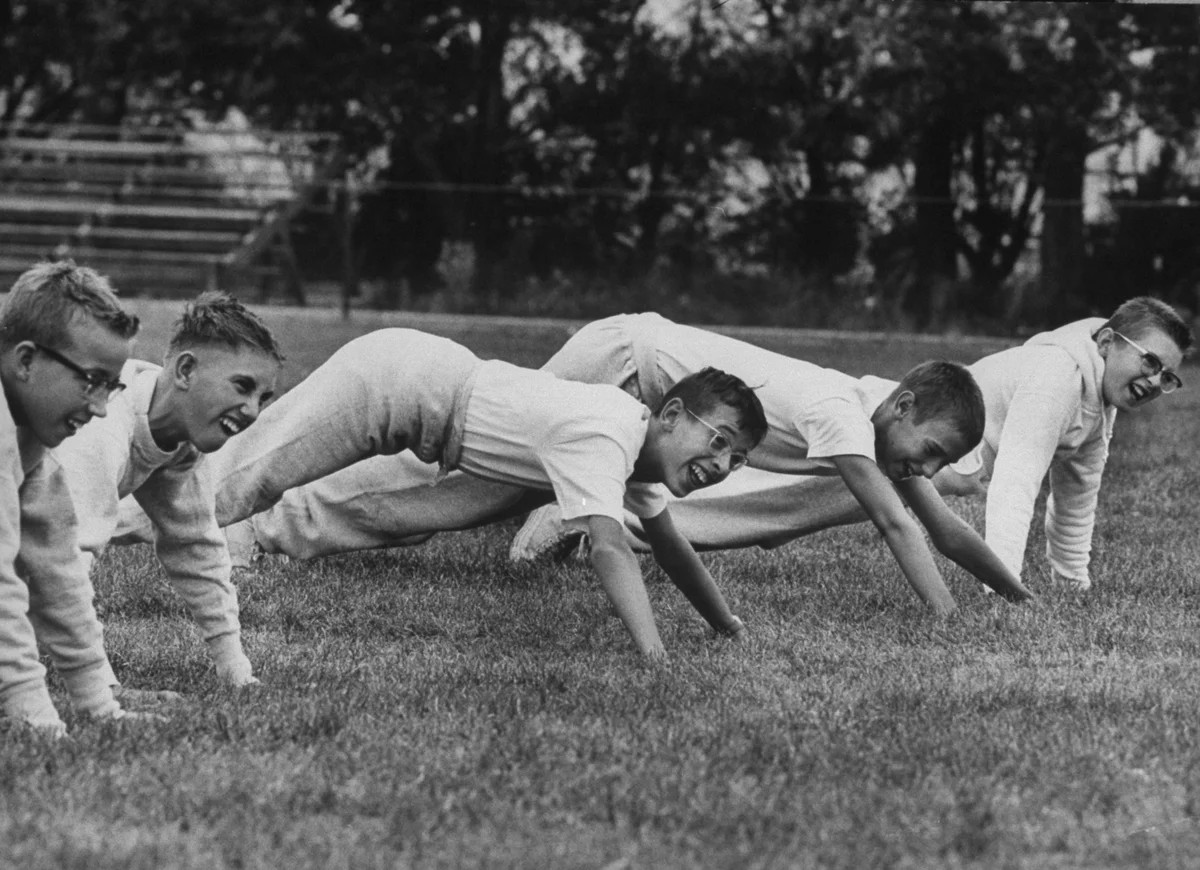
The return of the Presidential Physical Fitness Award, part of a broader initiative to reinstate annual physical fitness tests in schools, has sparked debate among health experts. While the move aims to highlight youth fitness, specialists argue that testing alone is unlikely to improve children’s health or increase physical activity levels.
The Core Debate: Testing vs. Systems
The central issue is not whether fitness testing should exist, but rather what support systems accompany it. Avery Faigenbaum, a professor of kinesiology and health sciences at the College of New Jersey, emphasizes that data collection is meaningless without a framework to act on it.
“The question is not, ‘Should we fitness test, yes or no?’ Really, the question is, ‘What systems are in place?’ If we have this data, what systems are in place in our schools, in our communities, to spark a lifelong interest in physical activity?”
Simply measuring a child’s ability to run or do push-ups does not automatically translate into better health outcomes. Without infrastructure to encourage ongoing participation, tests remain isolated events rather than catalysts for change.
A History of Revival and Revision
The Presidential Fitness Test was originally introduced in the late 1950s for middle and high school students. It required participants to perform sprints, push-ups, sit-ups, and other physical challenges. Students scoring in the 85th percentile for their gender received the Presidential Physical Fitness Award. The program was phased out in 2013, but President Donald Trump revived it via executive order in 2025, reinstating both the test and the award.
Currently, the specifics of administration remain unclear. It is not yet defined how the tests will be standardized across schools or how awardees will be selected. Additionally, Secretary of Defense Pete Hegseth announced that the test is now mandatory for students at 161 schools located on U.S. military installations.
Russel Pate, director of the Children’s Physical Activity Research Group at the University of South Carolina, notes that the new protocols appear to have been updated to align better with current research. He suggests the revised tests may be more appropriate for children than the original version. However, he raises concerns about transparency:
“Where did these scores come from, and what were the criteria that were applied in selecting those scores?”
Pate describes the current rollout as potentially “half-baked,” pointing out that while the intent is positive, the implementation details—such as scoring benchmarks and administrative logistics—are still vague.
The Risks and Realities of Fitness Testing
Critics argue that fitness testing can have unintended negative consequences. Faigenbaum points out that only an estimated 20 to 25 percent of U.S. children currently meet the recommended 60 minutes of daily physical activity. While testing can provide valuable data for public health policy, it cannot force fitness upon children.
Moreover, poorly executed tests can humiliate students, fostering negative associations with exercise that may persist for decades. Children who excel in activities like dance or swimming might struggle on a standardized test focused on traditional gym-class metrics, leading to feelings of inadequacy rather than motivation.
“You can’t test kids into fitness,” Faigenbaum says. “There’s the potential for this to be a positive experience, but in the same breath, there’s the potential for this to be a negative experience and those negative experiences don’t disappear.”
What Actually Motivates Children?
Experts agree that while tests can inspire some students, they are far from a comprehensive solution. The key to improving youth health lies in providing diverse, positive experiences with physical activity.
Russel Pate emphasizes the need for variety:
“We need to give kids, every kid, as many positive experiences with as many different forms of physical activity as we can provide.”
Faigenbaum simplifies the motivation factor further. He argues that children are driven by enjoyment, social connection, and novelty, not by standardized metrics.
“What motivates [kids] is easy,” he says. “Have fun. Make friends. Learn something new. Full stop.”
Conclusion
While the reinstatement of the Presidential Physical Fitness Award brings attention to the critical issue of youth inactivity, experts warn that testing alone is insufficient. Meaningful improvement in children’s health requires robust support systems, diverse activity options, and a focus on creating positive, enjoyable experiences rather than merely measuring performance.