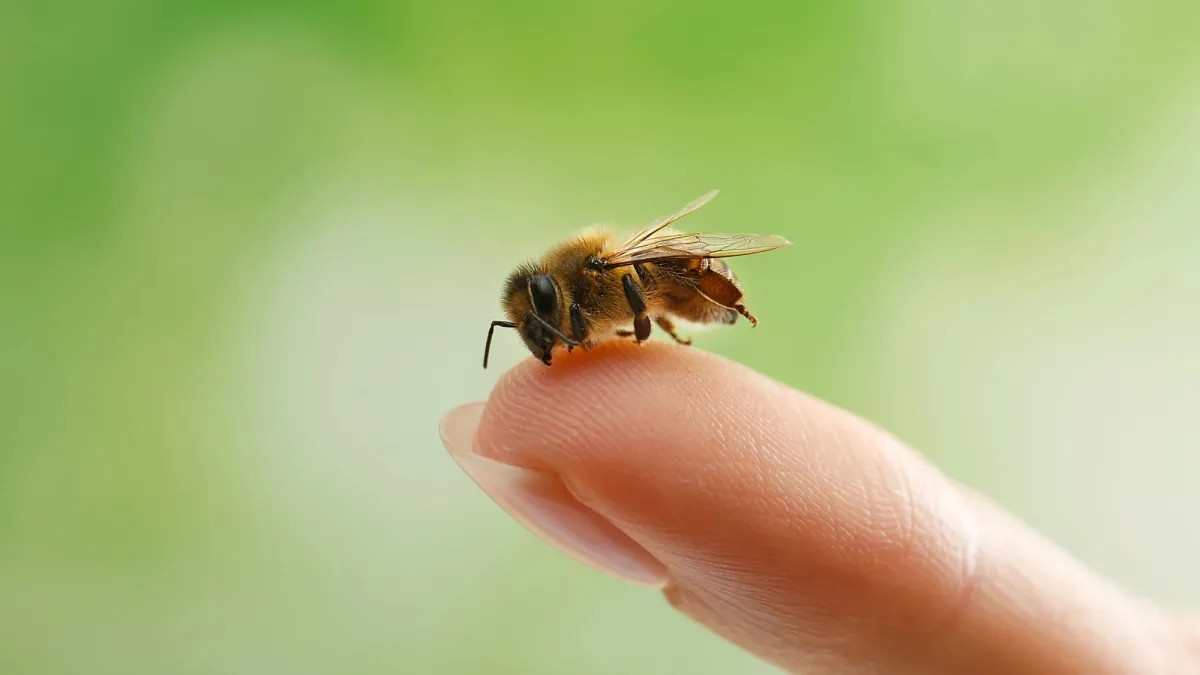
For a long time, the scientific community has debated the true cognitive limits of the honeybee (Apis mellifera ). With a brain weighing less than one milligram and containing fewer than a million neurons, these insects were often dismissed as creatures of simple instinct. However, new research from Monash University suggests that these tiny pollinators possess a capacity for abstract numerical reasoning that challenges our understanding of intelligence.
Beyond Visual Instincts
While previous studies suggested that bees could grasp addition, subtraction, and even the concept of zero, skeptics remained unconvinced. The primary argument against bee intelligence was that the insects weren’t actually “counting”; instead, they were merely reacting to spatial frequency —subtle visual cues like the density or pattern of shapes on a surface.
To settle this debate, researcher Scarlett Howard and her team designed a more rigorous experiment. They presented bees with varying quantities of black shapes on a surface, including a completely blank surface to represent zero. By using reward-based incentives, the team observed how the bees associated specific numbers and frequencies with their rewards.
Proving Abstract Reasoning
The results, published in Proceedings of the Royal Society B: Biological Sciences, provide a definitive answer to the skeptics. The researchers found that the bees’ choices could not be explained by low-level perceptual hints alone.
“This finding strongly suggests that bees were engaging in abstract numerical reasoning rather than relying on spatial frequency alone,” the study authors noted.
This distinction is crucial. If a bee is merely reacting to the “busyness” of a pattern, it is a mechanical reflex. If a bee is responding to the number of items regardless of the pattern, it is performing abstract thought. The study concludes that the honeybee’s biological makeup supports a level of cognitive processing that transcends simple visual association.
Why This Matters: Nature and Technology
The ability to count is not just a laboratory curiosity; it has profound implications for both biology and technology:
- Survival in the Wild: In a natural setting, these mathematical skills likely help bees navigate their environment. For instance, a bee might “count” or estimate the density of petals or nectar availability to identify and remember the most nourishing flowers.
- The Future of AI: These findings offer a blueprint for Artificial Intelligence. Currently, AI models require massive computational power and billions of parameters to perform logic. Honeybees prove that “less is more”—demonstrating that highly complex reasoning can be achieved with incredibly minimal biological “hardware.”
- Redefining Intelligence: The research serves as a reminder to avoid anthropocentrism —the tendency to judge intelligence based solely on human-like senses and logic.
Conclusion
By proving that honeybees can perform abstract math, this research shifts our perspective on the complexity of life. It demonstrates that sophisticated cognitive abilities can evolve in even the smallest organisms, providing vital lessons for both evolutionary biology and the development of efficient artificial intelligence.