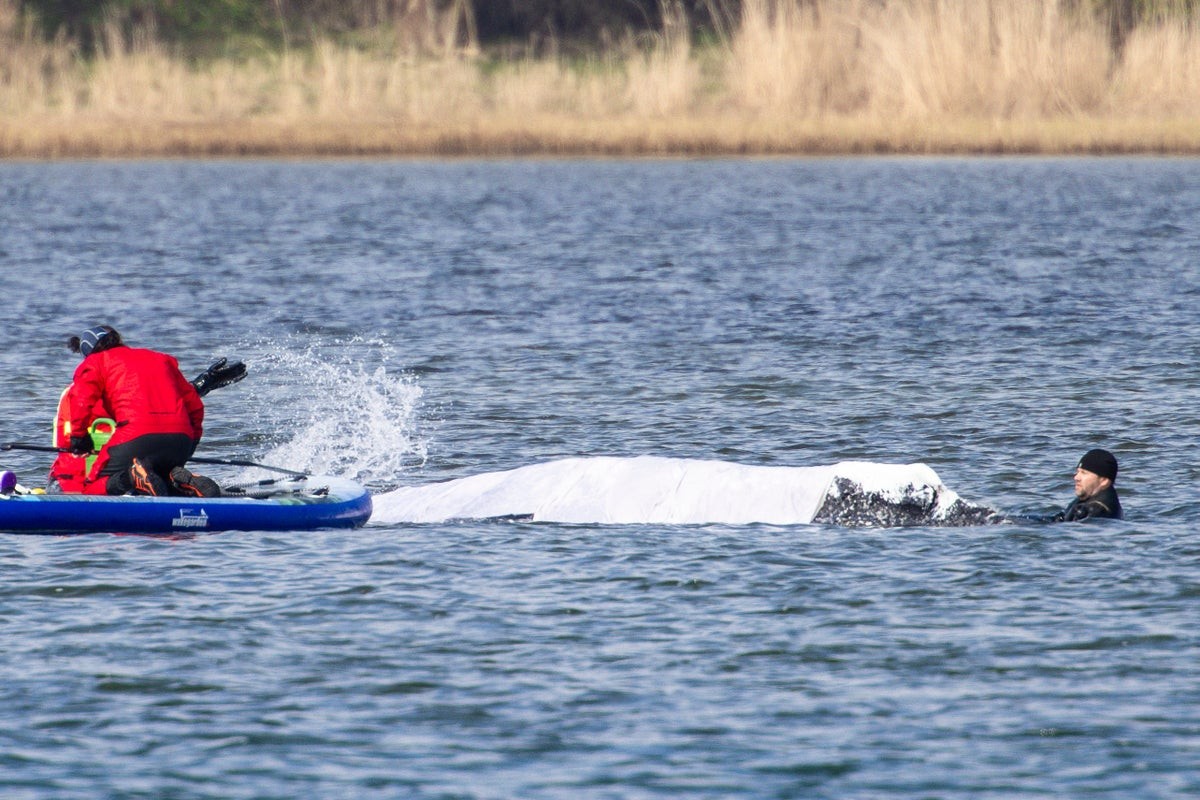
For over a month, a humpback whale dubbed “Timmy” has captivated global attention after becoming stranded in the shallow, low-salinity waters of the Baltic Sea off the coast of Germany. What began as a desperate rescue effort that was initially called off in early April has escalated into a controversial, high-risk operation: transporting the distressed animal on a specialized barge to the deeper, saltier waters of the North Sea.
While the initiative has drawn praise for its determination, it has also sparked significant debate among marine experts regarding its feasibility and ethical implications.
A Last-Ditch Effort Backed by Private Wealth
The saga began on March 3, when Timmy was first spotted in the Baltic Sea—a region where humpbacks rarely venture due to the water’s low salinity and shallow depth. Researchers suspect the whale entered the area due to illness, injury, or severe disorientation.
Initial rescue attempts failed, and the animal remained stuck on sandbanks near a small Baltic island. By early April, authorities deemed the situation hopeless and called off the operation, citing the whale’s deteriorating physical condition. However, the narrative shifted dramatically when two German millionaires stepped in to fund a new, unprecedented intervention.
On Tuesday, a team of divers loaded Timmy onto a flooded barge. The plan is to tow the whale across the Baltic and release it into the North Sea, hoping the change in environment will aid its recovery.
“Something like this has never happened before in Germany, where a lifesaving operation of this kind has been carried out,” said Till Backhaus, a local official, describing the event as a successful experiment in marine rescue logistics.
Expert Skepticism and Ethical Concerns
Despite the logistical success of moving the whale, the scientific community remains divided. The International Whaling Commission (IWC), the global body responsible for whale conservation, has labeled the effort “inadvisable.”
The IWC argues that while the intentions are noble, the process could inflict additional stress on an already critically ill animal, offering “little ultimate benefit” to its chances of survival.
Matthew Savoca, a marine biologist at the California Marine Sanctuary Foundation, echoes these concerns. He predicts that the whale is unlikely to survive the ordeal or the transition to new waters.
“My guess would be that it’ll be a lot of effort, and the whale probably won’t survive,” Savoca stated.
Why This Story Matters Beyond One Whale
While the immediate outcome for Timmy remains uncertain, the incident highlights a broader tension in marine conservation: the balance between individual rescue efforts and population-level protection.
The whale’s condition has worsened since its stranding, with reports indicating irregular breathing and minimal movement. Yet, the public outcry and private funding mobilized for Timmy’s sake raise important questions about resource allocation in wildlife conservation.
Savoca suggests that the true value of this story may not lie in Timmy’s survival, but in the awareness it generates. The massive deployment of resources, manpower, and funding for a single animal demonstrates the potential impact if similar energy were directed toward systemic threats facing whale populations globally.
“If we’re actually willing to dedicate this many resources, people power, funding and fuel to make this thing happen for this animal, imagine the type of conservation impact we can have on whole populations,” Savoca noted.
Conclusion
The rescue of Timmy represents a unique intersection of private philanthropy, public empathy, and scientific skepticism. While the whale’s survival is far from guaranteed, the operation has successfully ignited a global conversation about marine life protection, urging society to look beyond individual tragedies and address the widespread dangers of fishing gear entanglement and ship strikes that threaten whales worldwide.