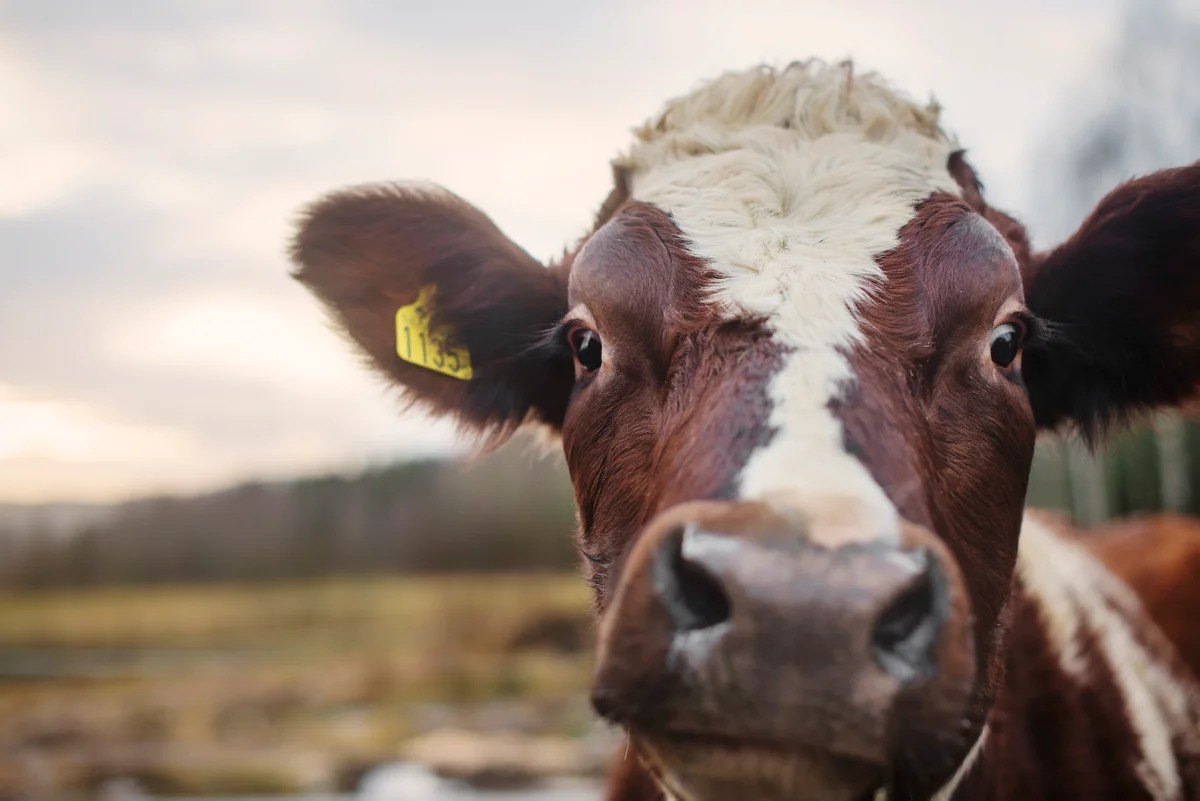
Cattle are major contributors to global greenhouse gas emissions, primarily through their digestive processes. A single cow can release up to 220 pounds of methane annually, a potent gas that traps heat in the atmosphere nearly 30 times more effectively than carbon dioxide. While livestock production accounts for roughly 15% of global emissions, the precise biological mechanism behind these emissions has long remained partially obscured. New research published in Science has now identified a specific cellular structure within gut microbes—the “hydrogenobody”—that acts as the engine for methane production, offering a potential target for future mitigation strategies.
Inside the Bovine Gut: The Role of Rumen Ciliates
Like humans, cattle possess a complex microbiome essential for digestion. Central to this system are rumen ciliates, single-celled organisms named for their habitat in the rumen (the first stomach compartment) and the hair-like cilia covering their surface. For years, scientists suspected these microbes played a role in methane generation, but the exact biochemical pathway was unclear.
The new study reveals that rumen ciliates contain specialized organelles called hydrogenobodies. These structures perform two critical functions:
1. They remove oxygen from the cellular environment.
2. They produce hydrogen as a byproduct.
This hydrogen does not stay within the ciliate. Instead, it is released into the gut environment, where other microbes known as methanogens consume it to produce methane. Essentially, the hydrogenobody acts as a factory, supplying the raw material that methanogens convert into the greenhouse gas responsible for cows’ potent burps.
A Mechanistic Breakthrough
The identification of the hydrogenobody represents what experts call a “mechanistic breakthrough.” Jie Xiong, a co-author of the study and a professor at the Institute of Hydrobiology at the Chinese Academy of Sciences, noted the team’s surprise at how clearly this structure linked cellular biology to macroscopic emissions.
To confirm this finding, researchers combined three distinct lines of evidence:
* Genetic analysis of hundreds of rumen ciliate genomes.
* High-resolution imaging of the microbes.
* Real-time methane measurements from dairy cows.
The data showed a direct correlation: ciliates with a higher density of hydrogenobodies contributed to greater methane production than those with fewer structures. This validates previous observations that methanogens cluster near hydrogen-producing microbes, but it finally explains how that hydrogen is generated at the cellular level.
Implications for Climate Change
Understanding the specific origin of hydrogen in the cow’s gut opens new avenues for reducing agricultural emissions. Currently, efforts to curb methane often focus on diet or additives, but they lack a precise biological target.
Ermias Kebreab, a professor of animal science at the University of California, Davis who was not involved in the study, emphasized the significance of this clarity. By pinpointing the hydrogenobody, scientists now have a clearer framework for developing interventions. Potential strategies could include:
* Genetic modifications to reduce hydrogenobody efficiency.
* Dietary changes that inhibit the formation of these structures.
* Targeted additives that disrupt the interaction between ciliates and methanogens.
“While these ideas are still at an early stage, our work provides a clearer mechanistic framework that could guide future efforts to reduce methane emissions in ruminants,” says Xiong.
Conclusion
The discovery of the hydrogenobody transforms our understanding of bovine digestion from a general suspicion to a precise biological map. By identifying the microscopic source of methane production, this research provides a critical foundation for developing targeted solutions to one of agriculture’s most significant environmental challenges.