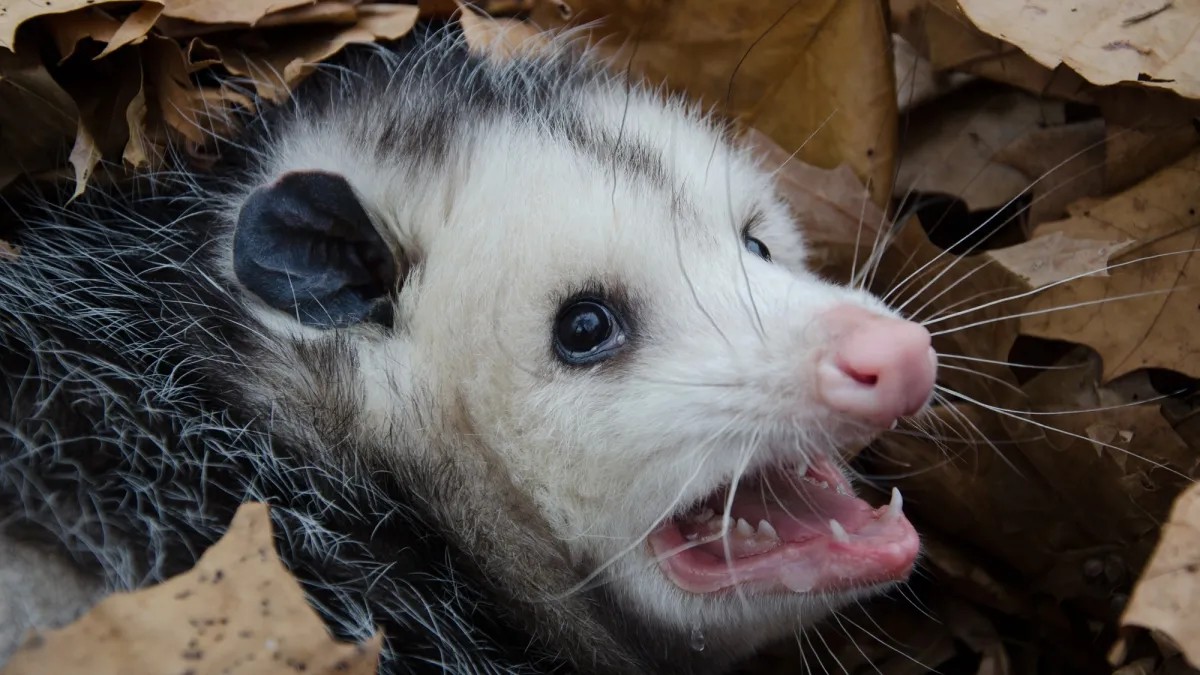
For decades, the Florida Everglades has been locked in a losing battle against an invasive predator: the Burmese python. These massive snakes, which can reach lengths of over 20 feet, have decimated native wildlife populations since their introduction to the region in the 1970s. Now, scientists are turning to a controversial but potentially revolutionary strategy to track and control them—using local opossums as biological beacons.
From Accidental Data to Intentional Strategy
The idea for this experiment was born out of a frustrating setback. In 2022, biologists A.J. Sanjar and Michael Cove from the North Carolina Museum of Natural Sciences began studying opossum movement patterns by fitting them with expensive tracking collars. However, they quickly discovered a grim reality: the pythons were eating the very animals they were trying to study.
Each time an opossum was consumed, researchers lost not only a data point but also roughly $1,500 in equipment.
Rather than viewing these deaths as mere failures, the team saw a pattern. Every python that ate a collared opossum was subsequently euthanized by conservationists. This led to a provocative question: Could researchers use opossums as intentional bait to locate and eliminate pythons?
The New Experiment: Low-Cost Tracking
After refining the logistics and securing new funding, the researchers are moving forward with a more cost-effective approach. Instead of the $1,500 collars, they have developed much cheaper $190 tracking devices.
The plan involves:
– Deploying at least 40 collared opossums into the Crocodile Lake National Wildlife Refuge in Key Largo.
– Monitoring the signals from the collars.
– Identifying when a signal originates from inside a snake’s stomach.
– Locating and removing the python to reduce the invasive population.
The Ethical and Ecological Dilemma
This strategy raises significant ethical questions regarding the use of native wildlife to combat invasive species. Critics might view the deployment of animals into a known predator zone as putting them in harm’s way. However, wildlife managers argue that the “harm” is an existing reality of the ecosystem; the researchers are simply using that reality to gather actionable data.
“We’re not putting these animals out there and in harm’s way,” Jeremy Dixon, manager of the Crocodile Lake National Wildlife Refuge, stated. “Harm’s way is there. We’re just documenting what’s happening.”
By turning the python’s feeding habits against it, scientists hope to transform a tragic ecological occurrence into a precision tool for conservation.
Why This Matters
The Burmese python is a highly efficient apex predator perfectly adapted to the subtropical wetlands of Florida. Traditional hunting methods—ranging from manual searches to even using robotic prey—have struggled to keep up with their rapid spread. If this “Trojan Horse” method succeeds, it could provide a scalable, data-driven way to track and cull invasive populations in dense, difficult-to-navigate environments.
Conclusion
By utilizing low-cost tracking technology on native opossums, scientists aim to turn an invasive predator’s appetite into a roadmap for its own removal. This experiment represents a shift toward using the natural behaviors of an ecosystem to restore its balance.