Forget streaming. The real drama is happening online, right now, on bird cams.
You stay on the couch. They show you everything. Birth, death, gluttony. All in HD. Cornell’s live feeds take you from South American hummingbirds to Indiana backyards where barred owls raise their families. It’s wild.
“Watching the cams is a life changing experience: an unprecedented learning experience that they liken to Virtual field trips or field biology in their viewing room,” the group says.
They really do think that’s big news. I’m with them. Here are six clips that stood out recently. Order doesn’t matter. The weirdness does.
Squirrels don’t always stay on the ground
April 30 started like any other day until a mother barred owl dragged a flying squirrel home for breakfast. Her chicks, Artemis and Apollo. Their meal was airborne before it arrived. You could see the patagium clearly on screen, the skin stretched between its limbs. That membrane lets them glide. Makes them distinct from the rodents usually hiding in trees. Owls eat gliders too. Nature is efficient that way.
Sugar rush in Central America
Plants matter. A rufous-tailed hummingbird paused at the Panama Fruit Feeder just for nectar. This bird is common in Central America, recognizable by the red tail and that bright pink beak. Most of their kind migrate. If you want them in your yard, you have to try. But these ones? They’re just visiting the digital stage. Quick sip. Gone.
Baby albatrosses need no alarm clock
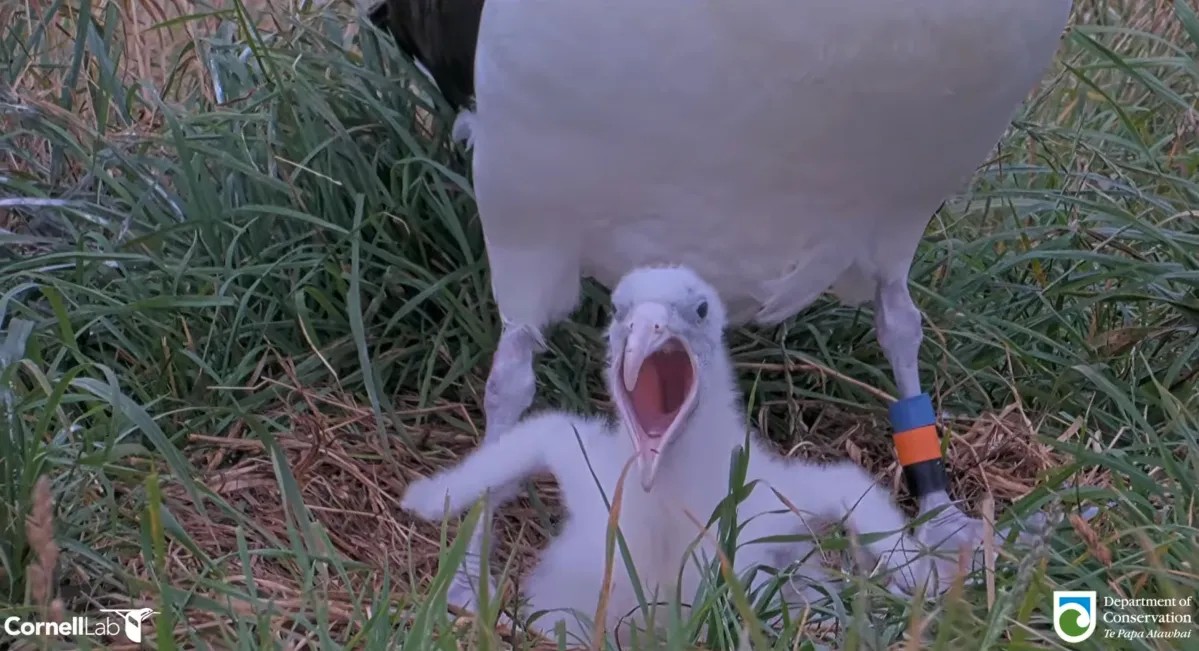
Daybreak arrived at 20 days old for a royal albatross chick. It opened its mouth. Flapped those useless-looking wing nubs. Welcome to the day, essentially. The stream covers the breeding grounds at Pukekura or Taiaroa Head on New Zealand’s south tip. Fun fact: the oldest known bird alive is a Laysan albatress nesting on Midway Atoll. Roughly 4,300 miles north of where this baby is waking up. Distance separates them but not the stubbornness to keep living.
Head bobs serve a purpose
Owlets are cute. This is not news. But watching them bob their heads? That’s science in action. On the Wild Birds Unlimited cam, the chicks sleep. Investigate the lens. Nod vigorously. Humans call it cute motion parallax explains why. Owls have fixed eyes. They cannot roll theirs like cats do. To map the 3D world around them they move their heads. They coordinate sight and hearing by doing so. Practice makes perfect for predation.
Toucans like their bananas mid-air
Bananas aren’t just for monkeys. A keel-billed toucan proved that in the Panamanian trees. Watch how it eats. It doesn’t bite chunks. It tosses the fruit pieces into the air and swallows them whole. Defying gravity just for a snack. Keel-bills mostly stick to bananas. They move seeds around for fruit trees. Essential workers of the forest. The camera sits in Soberanía National park. Thirty five miles north of Panama City on Semaphore Hill. Tropical heat and fruit everywhere.
When guests are unexpected
Rainforests are chaotic. The cam usually catches birds. Not always though. One day a gecko was relaxing on the feeder. A moth arrived. Wanted a seat? Or perhaps a meal for someone else? They stared each other down. A silent standoff between reptile and insect. The gecko tried to grab it. Failed. The moth escaped. The gecko probably kept its cool. Or didn’t. Life goes on in the jungle whether the camera likes it or not.
What happens next is always hard to say. The stream keeps rolling. You’re welcome. 🐦