The landscape of education has shifted dramatically over the last few years. While the immediate, chaotic challenges of the pandemic era—such as navigating virtual platforms and managing sudden shifts to remote learning—have subsided, they have been replaced by a deeper, more systemic crisis. For many educators, the struggle is no longer about technical logistics, but about a fundamental sense of demoralization.
The Shift from Demoralization to Revitalization
Demoralization in teaching is distinct from burnout. While burnout often stems from exhaustion, demoralization occurs when educators face persistent obstacles that prevent them from practicing the very values that drew them to the profession. In 2021, these obstacles were largely external and communal: lost instructional time, the struggle to replicate social services online, and the difficulty of rebuilding student relationships after isolation.
Today, however, the challenge has evolved. As we move further into a post-pandemic world, the core mission of schooling is undergoing a profound shift. It is no longer just about academic instruction; it is about teaching students how to claim their humanity and helping them navigate an increasingly complex social world.
The “Village” Concept: Redefining the School Community
To make a school feel “human,” we must move past the idea that responsibility rests solely on the shoulders of teachers and principals. A truly human-centric school relies on a massive, interconnected web of support.
The strength of a school community is found in the collective presence of:
– Instructional staff: Teachers, librarians, and coaches.
– Support staff: Guidance counselors, paraeducators, and child welfare specialists.
– Campus pillars: Cafeteria workers, custodians, secretaries, and campus supervisors.
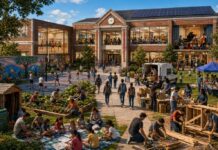
This diverse group forms the “village” required to foster a sense of belonging. When these individuals work in concert, they create an environment where empathy and mutual respect are not just ideals, but the baseline expectations for every student.
The Educator’s Herculean Task
This shift in focus places a heavy, often overlooked burden on educators. Teachers are currently tasked with a dual role: they must manage the academic needs of their students while simultaneously guiding them through the social-emotional complexities of living together in a fractured society.
This is a “herculean task”—asking teachers to model humanity and civil discourse at a time when they themselves have often felt blamed or undervalued by the broader public. To address this, the role of the educator must evolve from mere instructor to advocate and community builder.
The Power of Voice and Advocacy
Reclaiming the humanity of schools requires more than just classroom management; it requires advocacy. Using personal narratives—whether through essays, podcasts, or even children’s literature—allows educators to represent the real lived experiences of students and staff. By speaking out on topics like social-emotional learning, culturally responsive teaching, and neurodiversity, educators can influence the systemic changes needed to support both students and themselves.
The goal is to move from a state of demoralization to one of revitalization, where the school serves as a model for the best of human connection.
Conclusion
Modernizing the educational experience requires moving beyond academic metrics to focus on the holistic, human connections within the school “village.” By fostering empathy across all campus roles and amplifying the voices of educators, schools can become spaces that truly support the humanity of both students and staff.