NASA’s Curiosity rover recently faced an unexpected mechanical hurdle on the Martian surface: its robotic arm became physically entangled with a rock it was attempting to drill. While the incident temporarily halted operations, it highlights the complex, real-time problem-solving required to operate delicate scientific instruments in an alien environment thousands of miles from Earth.
The Incident: A Drill Gone Wrong
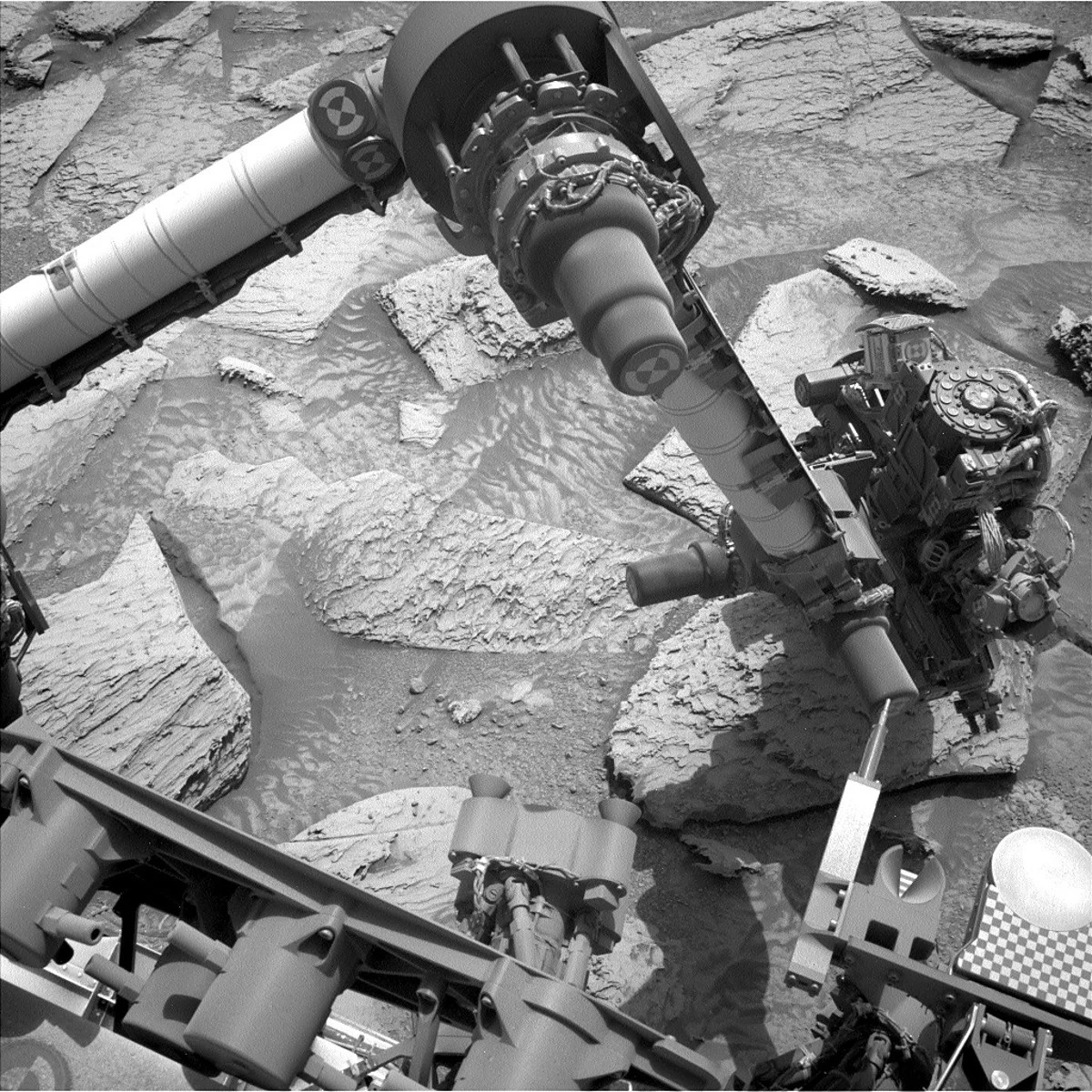
The trouble began on April 25, during Curiosity’s second day of drilling into a specific target rock nicknamed Atacama. The rock was substantial in size—approximately 1.5 feet wide, six inches thick, and weighing about 28.6 pounds.
As the rover attempted to retract its drill arm after penetrating the surface, the rock did not stay put. Instead, it became lodged onto the sleeve surrounding the drill bit. Essentially, the rock had clamped onto the machinery, preventing the arm from moving freely. This created a precarious situation where the rover’s mobility and scientific capabilities were at risk if the obstruction was not cleared.
The Resolution: Trial and Error from Earth
With no physical presence on Mars to intervene, the rover’s human controllers on Earth had to devise a remote solution. The process involved a series of cautious, iterative maneuvers:
- Initial Attempts: Controllers first tried to simply “shake” the rock loose by moving the arm, akin to freeing a stuck object by jiggling it. This method failed.
- Vibration Strategy: Next, they attempted to vibrate the drill mechanism to dislodge the rock. This also proved ineffective.
- Final Solution: On May 1, the team employed a more complex maneuver involving tilting, rotating, and spinning the drill bit. After several attempts, this combination of forces finally broke the rock’s grip.
Upon release, the rock fell to the Martian ground and shattered into smaller pieces. Crucially, the drill arm remained functional and undamaged, allowing operations to resume.
Scientific Context: Why This Matters
While the mechanical drama might seem like a setback, the incident directly feeds into Curiosity’s primary scientific mission. The debris from the broken rock is not waste; it is valuable data.
- Sample Analysis: The fragments will be analyzed by Curiosity’s Chemistry and Mineralogy (CheMin) instrument.
- Comparative Study: These samples will be compared with data from Mineral King, a different geological site located nearly 525 feet below the rover’s current position.
This comparison helps scientists understand the geological history and mineral composition changes across different elevations in Gale Crater. The incident underscores a key trend in modern space exploration: resilience and adaptability. Even when hardware encounters unforeseen physical challenges, the ability to troubleshoot remotely ensures that scientific objectives are not lost but often advanced through unexpected data collection.
The successful resolution of the stuck drill demonstrates the robustness of NASA