


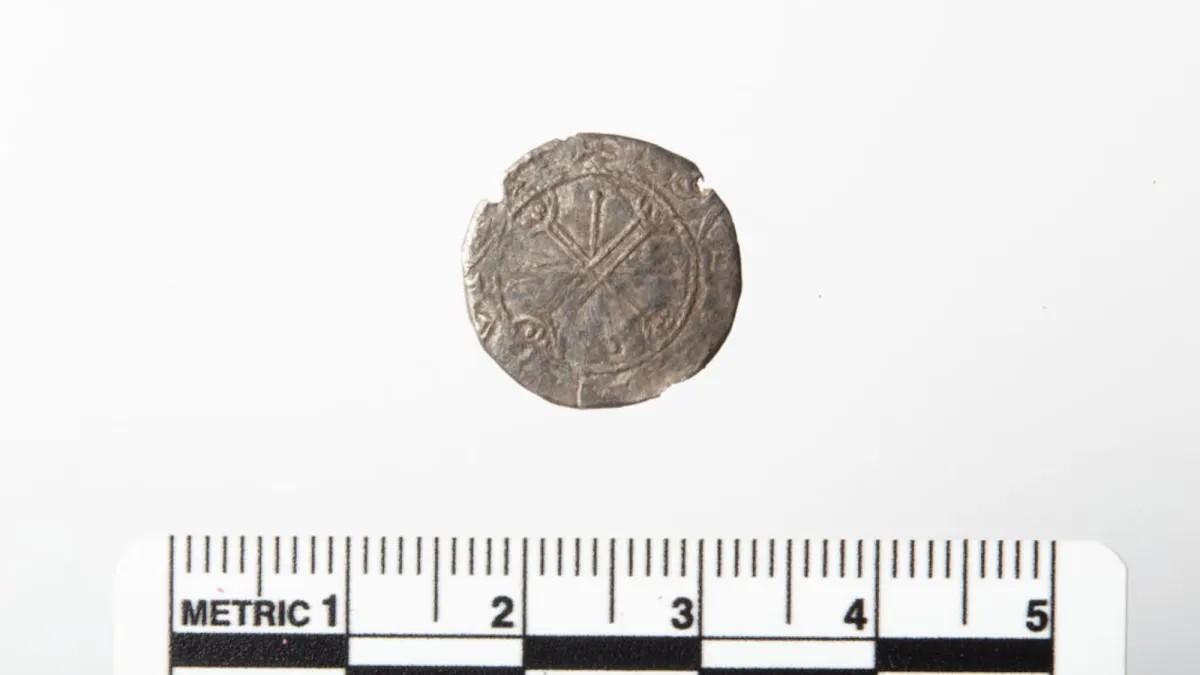
A dirt-stained lump turned up by Morten Eek near Utstein Abbey looked like garbage. Specifically, a post-medieval button. One side was silver. The other? Seemingly copper. Eek tossed it aside mentally, then later, practically. It happened in southwestern Norway, where the soil gives up secrets grudgingly.
He dug it out, put it back, then thought about it.
Months later, he picked it up again. Something bothered him. Under magnification, the shiny face held a cross. Not a generic symbol. A deliberate design. The copper side wasn’t just a dirty back—it was a plate folded over the edge. Secondary modification. Someone had repurposed this thing. Maybe threaded it with cord. Two tiny notches suggested a hole.
So Eek took his “button” to the archaeologists at the University of Stavanger. They didn’t laugh.
The experts saw it too. The cross pattern, the rim, the wear. This was currency. Specifically, Norse coinage from the late 11th century. The silver face had a fragmentary inscription, barely legible. But they couldn’t peel off the copper layer. Too risky. Too damaging to history’s fragile record.
Technology saved the context here.
They used X-rays instead. Beneath that copper shell, hidden for nearly a thousand years, lay the opposite side. It showed a creature. Griffin-like. Fierce. That sealed the deal. Eek hadn’t found lint from a medieval coat. He’d found money minted by Magnus Berrføtt.
Magnus Barefoot. The name sticks because of his boots, or lack thereof.
King from 1093 CE until he dropped in 1103. Norway’s last real Viking ruler. His dad, Olaf Kyrre (Peaceful Olaf, literally), ruled quietly. Magnus didn’t. He wanted everything. The North Atlantic is big. He tried to grab as much as possible. The Isle of Man. Parts of Ireland. The Hebrides. Ambitious? Sure. Dangerous? Also sure.
He didn’t live long enough to enjoy the loot.
Around age thirty, ambushed in Ireland. Killed during a western campaign. The coins tell the same aggressive story. He reformed the currency system. Less metal. More silver content per weight. Roughly 90 percent fineness. Smart economics for a warlord moving fast.
How rare is this thing? Very.
Only about a hundred coins from Barefoot’s reign exist in the archaeological record. This makes Eek’s mistaken button a massive hole filled in for historians. Further testing might reveal exactly where the die was cut. Which would map the logistics of Viking coin production right as the era began to fade.
Sometimes you look at something wrong. That’s the trick.
You have to see past what you think it is. The mud doesn’t lie. But it does obscure. Will another hundred years uncover more of Barefoot’s hoard? Or just more buttons we’ll dismiss?


