Summer hits. Structure vanishes. Kids find the remote.
The panic sets in for most parents. Screen time is the enemy, the theory goes. A digital opioid waiting to hijack attention spans. But fighting it? That is a losing battle. Exhausting. Pointless.
Let us look at the data. 68% of kids increase tech usage in the summer. 62% log more than an hour a day. If you have an eight-to-twelve-year-old, they are likely glued for six hours. Thirteen and up? Close to nine hours.
It sounds grim. Maybe it is. But context matters.
Passive consumption is the killer. Scrolling. Binging. Doom-clicking. Research flags seven hours a day as a dangerous threshold for sleep disruption and emotional blunting. You can miss facial cues. Anxiety spikes. Depression lurks.
However, not all screen time is created equal.
“The problem is not the device. The problem is what you do with it.”
We have two choices. We can view these devices as the enemy or as tools. The latter is smarter. The world is moving fast. Approximately 92% of future jobs will demand digital literacy. If your kid can code a simple game, that is a workforce skill. Not a waste of time.
Why Passive Screens Fail Us
School is out. The scaffold of the day collapses. What replaces it? Screens.
It is not surprising. Over half of teens already spend four+ hours on screens at school. When the bell rings and never returns for two months, habits harden. The danger lies in the displacement. Real play loses. Face-to-face chatter disappears. Creative problem solving atrophies.
The “Summer Slide” gets all the blame, but that is only part of it. It is the quality versus quantity trap.
When a child creates, their brain engages differently. They are not absorbing; they are generating. Logic kicks in. Patience is tested. Resilience builds when code breaks and video edits glitch. This is active work. It mimics the dopamine hit of scrolling, sure, but it builds something tangible in return. Confidence.
Build the ‘Skill Lab’
Stop fighting the medium. Change the message.
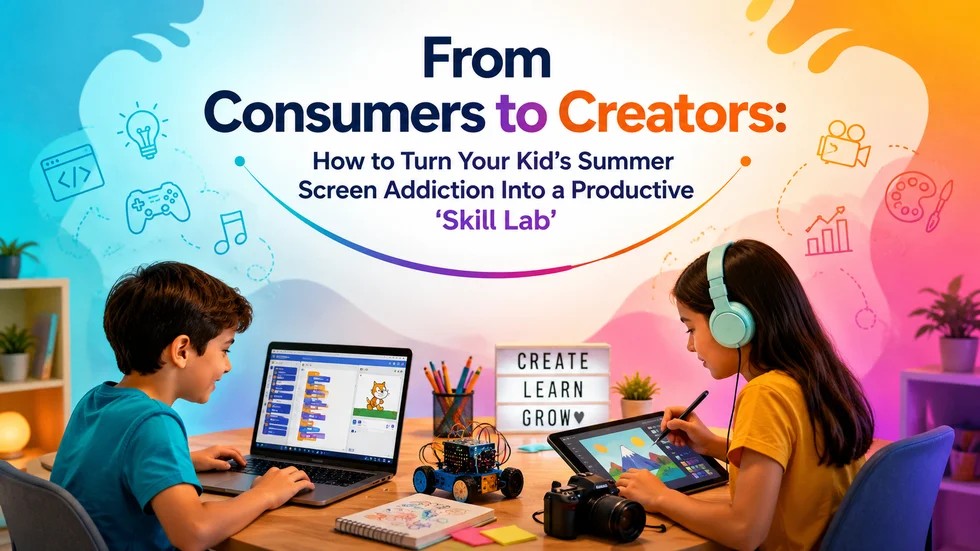
A Skill Lab is not a fancy term for a computer. It is a mindset. It turns the bedroom into a studio. The living room into a workspace.
Why does this work? Because kids want to play. Let them play productively.
- Cognitive growth: Coding demands logic. Video editing demands detail. These are hard skills.
- Creative release: Digital tools open doors to music, graphics, story.
- Career prep: Information literacy and content creation are the new reading and writing.
- Emotional armor: Finishing a project feels good. It builds a tolerance for frustration. A defense against the mindless scroll.
Parents report it reduces the academic slide too. But it is bigger than grades. It is about agency.
How to Build It (Without Going Crazy)
You cannot just throw a laptop at a kid and say “get busy.” You need structure. But not the rigid kind. The creative kind.
1. Assess and Limit
Start honest. Track the current usage. Cut it by half. Not overnight. Slowly.
Carve out two hours a week for pure creation. Call it lab time. Set Tech-Free Zones. Dinner tables. Bedrooms. Lead by example. Kids mimic us. If you are on your phone during dinner, they will too. If you cook, they will help.
2. Choose Creation Tools
Stop with the endless games. Start with the building blocks.
- Ages 6-10: Scratch Jr. or Tinkercad. Learn to code a sprite or model a 3D shape. Stop-motion apps are great here too.
- Ages 11+: Scratch. Canva. CapCut. Beginner Python. They want to look professional. Help them look it.
3. Mix Real and Digital
Code is not just for screens. Code a path for a robot. Then build that path with cardboard.
Design a photo collection digitally. Then print them and paste them in a scrapbook. Film a nature doc outdoors, but edit it inside. Blend the worlds. Movement matters.
4. Themed Challenges
Give it shape. A week long sprint.
- Story Week: Animate a short fable.
- Maker Week: Build an app for a hobby they already have.
- Eco-Lab: Make an infographic on climate change.
Set milestones. Celebrate the finish line. No screen rewards. Go for ice cream instead. Or a hike. Something that takes the eyes off the pixel glow.
5. Show It Off
Humans need audience. Host a skill showcase. Invite grandparents.
Join local maker groups. Find safe, moderated online communities. Talk about safety. Talk about critical thinking. Teach them to spot fake news while they edit their videos.
The Long Game
This will not change overnight.
Kids will revert. They will get distracted. They will prefer TikTok to Python. Patience. Monitor progress. Keep a journal of what they learn. Review it bi-weekly. Focus on effort. Never on perfection.
We are raising digital natives. They will work online. Create online. Connect globally. We cannot unplug them from reality. We have to teach them how to navigate it.
The conversation shifts. It stops being about “too much” time. It becomes “better” time.
Turning addiction into agency. Distraction into direction.
It is a slow climb. But the view from the top is worth it. Or maybe not. Maybe it just feels like a Tuesday where the Wi-Fi is finally on and someone actually built something.