Early 2000s classrooms were quiet. Simple, too. A single desktop sat in the corner like a monument to Accelerated Reader quizzes. A lab down the hall held the keyboarding lessons, weekly rituals that felt like waiting for a train. When the laptop carts arrived on wheels, we thought we saw the future. We did. Or maybe we just saw clutter.
My principal understood something most districts forgot: patience. She gave every teacher a laptop. Her only instruction? Keep it on your desk. Turn it. Do nothing else. That was it. Most schools didn’t follow suit. They scrambled. Technology rolled in fast, usually just to keep pace, rarely for pedagogy.
So the debates started. Cursive or typing? Labs or one-to-one devices? The questions multiplied as the years did. Kids grew up digital native. Teachers lagged behind, no matter the professional development hours logged. Districts added software on top of software. Learning management systems turned into control centers. Each tool worked well alone. Together they were noise. Pure static.
COVID sped things up, sure. But it didn’t cause the fatigue. It exposed it. By 2021 nine out of ten schools had a new digital platform. Fewer than half provided support to actually use them. Teachers were drowning. Parents were confused. Kids were distracted by design.
We missed the point. How?
No Rules, No Reason
Why are we using this? That question matters more than the tool itself. Is it for learning? Accessibility? Or just innovation theater? Turning a worksheet into a PDF is not innovation. It’s digitization with a capital D.
Tech should help students think. Solve. Create. Guardrails exist to limit the screen time to when it actually helps. Unstructured access kills retention. It kills focus. Teachers need to own the “when” and the “why.” Not the admin. Not the vendor. The person in the room.
Digitizing worksheets is not innovation
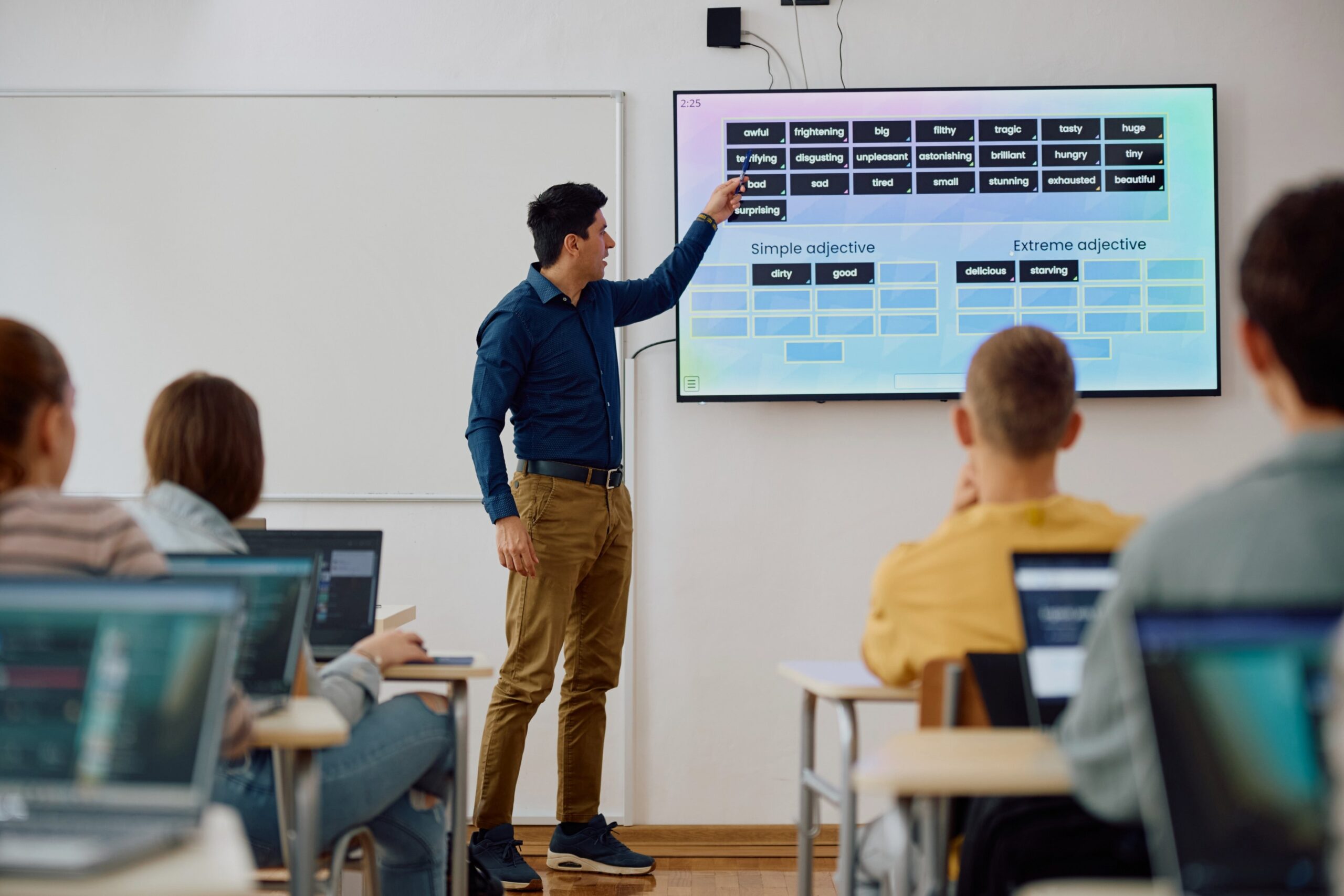
Start small. If you have 1:1 devices set the norms on day one. Visual cues work better than nagging. A simple sign saying GO or CLOSED tells kids exactly what to do. Model the login sequence first. Spend thirty seconds showing them how so they aren’t lost troubleshooting during the actual lesson. Keep the focus on ideas.
And for heaven’s sake, start class on paper. A notebook. A bell-ringer. Analog signals to the brain that thinking comes first. Devices stay closed until needed.
In elementary school, don’t let every station have a screen. Kids need tactile feedback. They need word walls. Partners. Books. Tech should be one part of rotation, not the whole meal. Stamina builds when kids can put screens away.
Too Many Toys, Too Little Wisdom
Redundancy is expensive. And stupid.
Gimkit or Kahoot? Choose one. You can’t run both well. Three reading apps claiming personalized learning? Drop two.
The average district uses 2,700 tools annually. That isn’t a statistic. That’s a breakdown of priorities.
Pick one tool. Master it. Really master it. Watch videos. Ask kids who usually figure it out anyway. Attend the training. Coherence beats novelty. Cognitive load drops when everyone speaks the same language.
Administrators need to look at data, not wishful thinking. Check usage logs. Cut what nobody opens. Budget for impact. Not volume.
Stolen Agency
Force fails. Always. When tech doesn’t fit the learner it becomes a wall, not a window. Teachers know what their kids need. Give them the room to decide.
Let kids choose. Digital or print? Some eyes hurt with screens. Others focus better with font resizing tools. Both are valid. Option creates ownership. Ownership creates effort.
Administrators, watch the room. Really look. How long does it take to log in? Where do students get stuck? Is the tech supporting the goal or interrupting it? Use those observations to coach, not police. Let teachers pick the right tool for the right day.
The Balance is Lost
We went too far. We saturated classrooms with software until teachers became IT support staff. Students became tab-switchers. Parents became digital sheriffs.
Blended learning works. Heavy tech learning creates noise. Students need concrete experiences. Abstract thinking. Human contact. Automation isn’t a replacement for connection.
Technology should support learning rather than drive it
Clarity helps. PD on a new platform doesn’t mean mandatory use if it breaks the flow. If it feels wrong, ask why. Protect instructional time. If a digital task takes twice as long as a paper one, use paper. Model the workflow beforehand. Prevent the scramble.
Build in screen-free zones. Discussion. Pair share. Just talk to each other. Keep the cognitive load on the subject, not the interface.
AI Is Here, Now
It took us years to integrate email. AI arrived in a month. It’s already foundational.
We have to adapt. Or fall behind. Districts need to treat AI as a partner, not a cheat sheet. Train teachers to use it for lesson planning. Teach kids to use it ethically. Encourage experiments. Low stakes. Draft an email. Plan a trip. See what it can do without fear.
Resources are free. Microsoft, Google, Code.org—they offer paths. Walk them.
But mostly, just be open.
The train didn’t leave the station. It’s just sitting there, engine running, while we argue over the seat assignment. Edtech didn’t fail us. We implemented it without vision. Without balance. Without humanity.
We can fix it. We can go back to the principal’s approach: slow, intentional, human. Systems where tech supports the teacher, not drives her.
The future isn’t about more apps. It’s about smarter choices.