


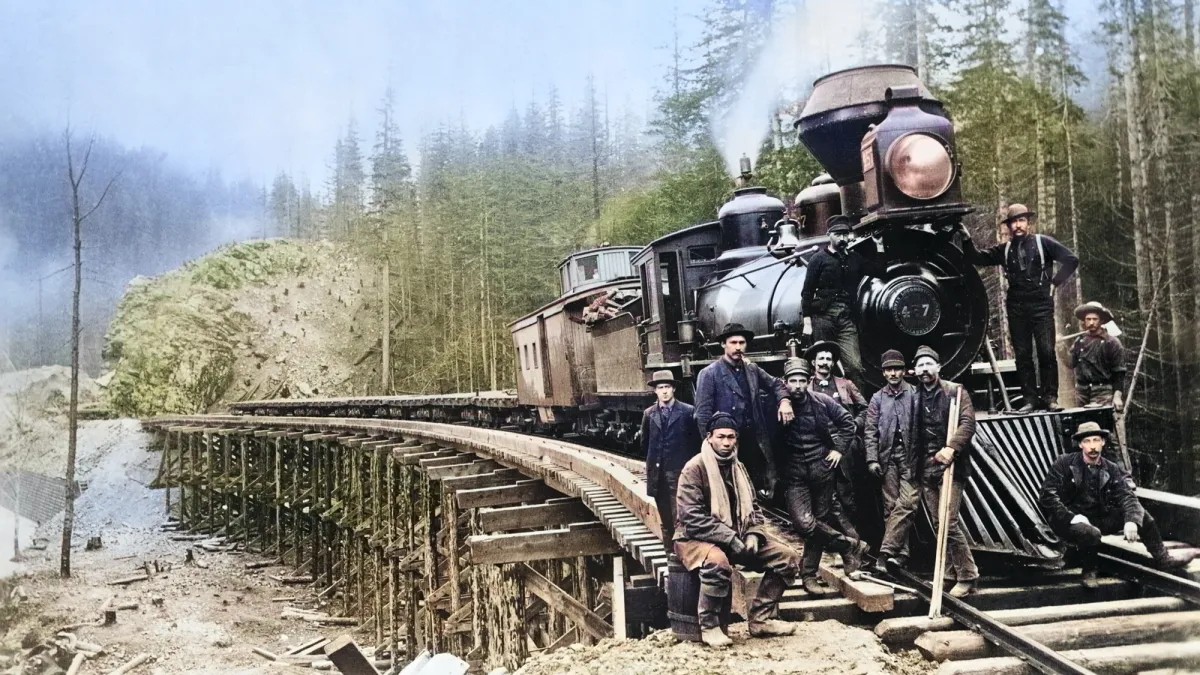
The history of modern transportation was fundamentally rewritten in the 19th century by the roar of steam engines and the expansion of iron rails. What began as a singular British invention quickly evolved into the backbone of the American economy, transforming a collection of distant territories into a unified, industrial powerhouse.
From Invention to Continental Expansion
The journey began in 1804 when British inventor Richard Trevithick debuted the first steam-powered locomotive. While the technology originated in the UK, it was the United States that embraced and scaled the concept with unprecedented speed.
The expansion followed a rapid trajectory:
– 1830: The Baltimore and Ohio Railroad launched as North America’s first railroad, initially powered by horses across a mere 13 miles.
– The Mid-19th Century: Steam technology took hold, leading to a period of explosive growth. At one point, the U.S. boasted over 9,000 miles of steam-powered track—surpassing the combined mileage of the rest of the world.
– 1902: The network reached a staggering scale, with over 200,000 miles of track crisscrossing the nation.
The Architects of the Rail Empire
This era of rapid expansion was not merely a feat of engineering, but also one of aggressive business consolidation. Figures like Cornelius Vanderbilt played a pivotal role, building massive commercial empires by merging and controlling various railroad lines, particularly across the Northeast.
This consolidation was essential for creating a reliable, interconnected system, but it also signaled the shift from local transport to a centralized national infrastructure. The railroad didn’t just move people; it moved the very foundation of American commerce.
A Changing Landscape
The transition from the 1800s to the modern era represents a total shift in how society moves. For much of the 19th and early 20th centuries, trains were the undisputed kings of travel, dictating the growth of cities and the flow of goods. Today, while rail remains a vital component of logistics, the rise of the automobile and air travel has fundamentally altered the dominance once held by the locomotive.
Exploring the visual history of this era provides more than just nostalgia; it offers a glimpse into the period when the “iron horse” first began to shrink the world and define the American identity.
The expansion of the American railroad system was more than a technological milestone; it was the primary engine that drove the nation toward industrialization and continental unity.


