


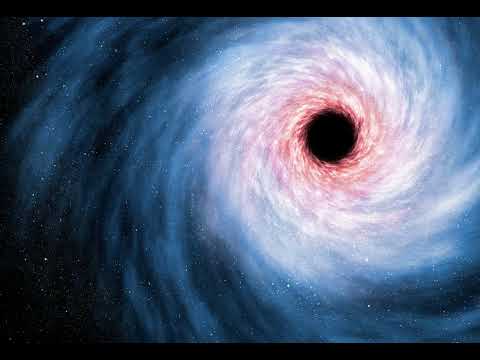
Astronomers have observed a star in the Andromeda galaxy (M31) seemingly disappear without a traditional supernova explosion, suggesting the direct formation of a black hole. This event, dubbed M31-2014-DS1, represents one of the best candidates yet for a “failed supernova” – a rare phenomenon where a massive star collapses into a black hole without the expected bright outburst.
The Mystery of Black Hole Formation
Despite decades of study, the exact mechanisms behind black hole formation remain unclear. Stars exceeding roughly eight times the mass of our Sun are expected to collapse, either exploding as supernovae or directly imploding into black holes. The latter, a failed supernova, is difficult to observe because it lacks the bright signal of a supernova. This makes it challenging to confirm whether some black holes form this way.
This observation provides a rare opportunity to study the process in real-time. Astronomers searched archival data from the NEOWISE infrared space telescope to find candidates in nearby galaxies, eventually discovering M31-2014-DS1, a star that brightened in 2014 before fading into darkness by 2022.
Supporting Evidence and Observations
Follow-up observations using the Hubble Space Telescope and ground-based instruments revealed a dim, reddish cloud where the star once stood. This suggests the star’s outer layers dispersed as it collapsed, obscuring the newly formed black hole. Analysis of data from the James Webb Space Telescope (JWST) and the Chandra X-ray Observatory further supports this model, indicating a black hole of approximately five solar masses surrounded by a gas and dust cloud.
The new data also supports earlier observations of another candidate failed supernova, NGC 6946-BH1, providing a more consistent picture of this elusive process.
Remaining Uncertainties and Alternative Explanations
While compelling, the failed supernova interpretation isn’t without debate. Some astronomers suggest alternative explanations, such as a stellar merger where two stars collide and merge without a supernova. Ruling out these scenarios requires careful analysis and future observations.
One key prediction is that a black hole will eventually go dark as surrounding dust dissipates, while a stellar merger will continue to emit light. However, this process may take decades, potentially exceeding the operational lifespan of current observatories like JWST.
The Future of Failed Supernova Research
To confirm these findings and refine our understanding, astronomers emphasize the need for more observations. Next-generation facilities such as the Vera C. Rubin Observatory in Chile and the Nancy Grace Roman Space Telescope will be crucial for discovering additional candidates and distinguishing between failed supernovae and other events.
“We’re entering an era where we’ll get many more opportunities to study this phenomenon,” says Suvi Gezari, an astronomer at the University of Maryland.
This discovery underscores the ongoing quest to unravel the mysteries of black hole formation, a fundamental question in astrophysics. The vanishing star in Andromeda serves as a tantalizing clue, urging further investigation and promising new insights into the lifecycle of massive stars.


