Recent research demonstrates that seismic activity significantly boosts microbial populations in subsurface environments, with potential implications for understanding life on Earth and beyond. A team of scientists studying Yellowstone National Park has shown that earthquakes don’t just fracture rock – they also create a boom in underground microbial life by increasing hydrogen production.
The Hidden World Beneath Our Feet
Approximately 30% of all life on Earth exists without sunlight, relying instead on chemosynthesis to survive. These organisms thrive by consuming hydrogen created through reactions between water and rock. Earthquakes dramatically accelerate this process. When the ground shakes, rocks fracture, exposing fresh surfaces for chemical reactions and altering water flow paths. This leads to increased hydrogen production, which in turn fuels microbial growth.
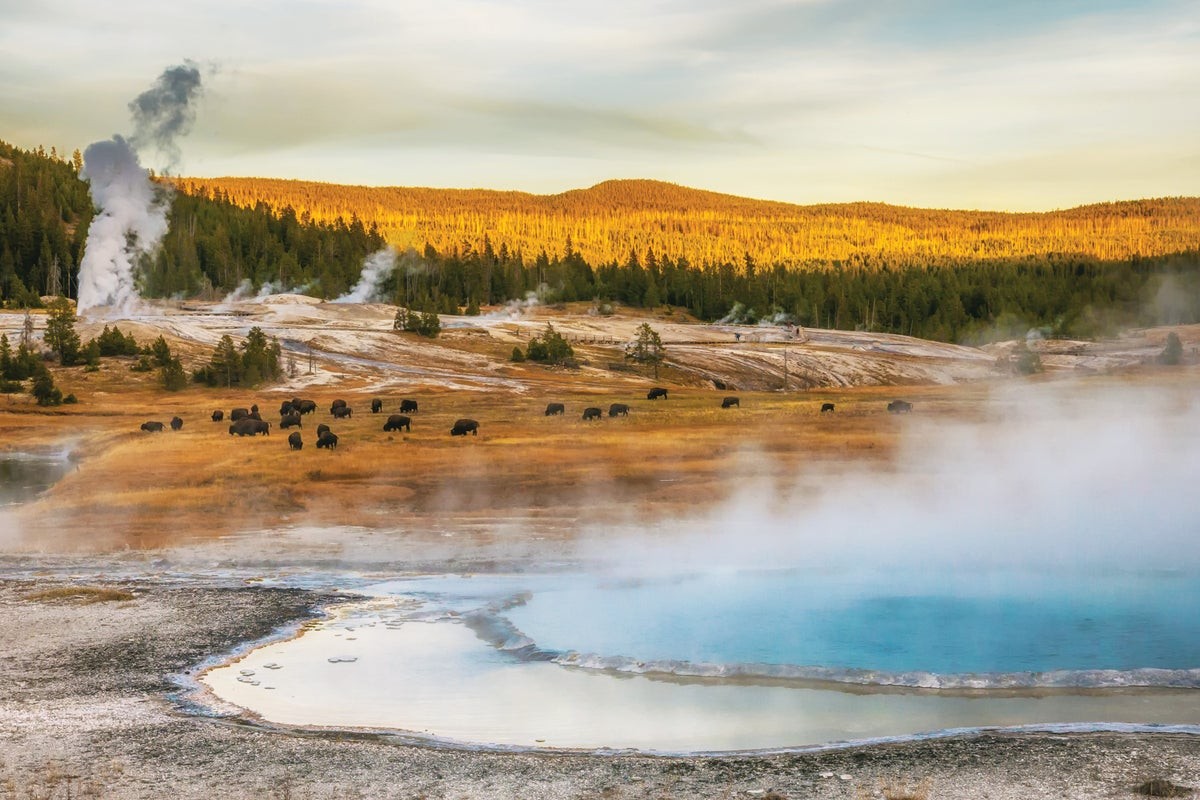
The study, published in PNAS Nexus, tracked the effects of a rare earthquake swarm on microbial activity at a 100-meter-deep borehole in Yellowstone. Researchers spent seven months making repeated trips to the site, overcoming logistical hurdles and equipment failures to collect rock, gas, and microbe samples. Their timing was impeccable: they captured the rise and fall of a powerful swarm consisting of 2,182 earthquakes, a phenomenon that occurs in Yellowstone only every five to ten years.
A 6.5x Microbial Surge
During the earthquake swarm, microbial life at the borehole increased by 6.5 times before returning to baseline levels as tremors subsided. Hydrogen concentrations also spiked, and the composition of microbial communities shifted. “All the pieces fit together nicely,” explained Eric Boyd, Montana State University geomicrobiologist and lead author of the study. “We put all of these data together, and we’re like, holy cow!”
Implications for Astrobiology
These findings aren’t limited to Yellowstone. Scientists believe they may offer clues for where to look for life on other planets and moons. Steven D’Hondt, a researcher at the University of Rhode Island, suggests that seismically active locations are the most promising places to find subsurface life elsewhere in the solar system.
However, some experts remain skeptical about the immediate applicability to Mars. Caroline Freissinet, an astrobiologist at LATMOS in France, points out that while the Yellowstone study is valuable for Earth-based understanding, Mars’ harsh subsurface conditions may not support similar activity over billions of years.
The Future of Subsurface Research
The Yellowstone study was a groundbreaking project, proving that monitoring subsurface life in response to natural events is feasible. Boyd’s team is now developing automated samplers triggered by earthquakes to accelerate data collection. This research highlights the complex interplay between geological activity and the persistence of life in extreme environments, both on Earth and beyond.