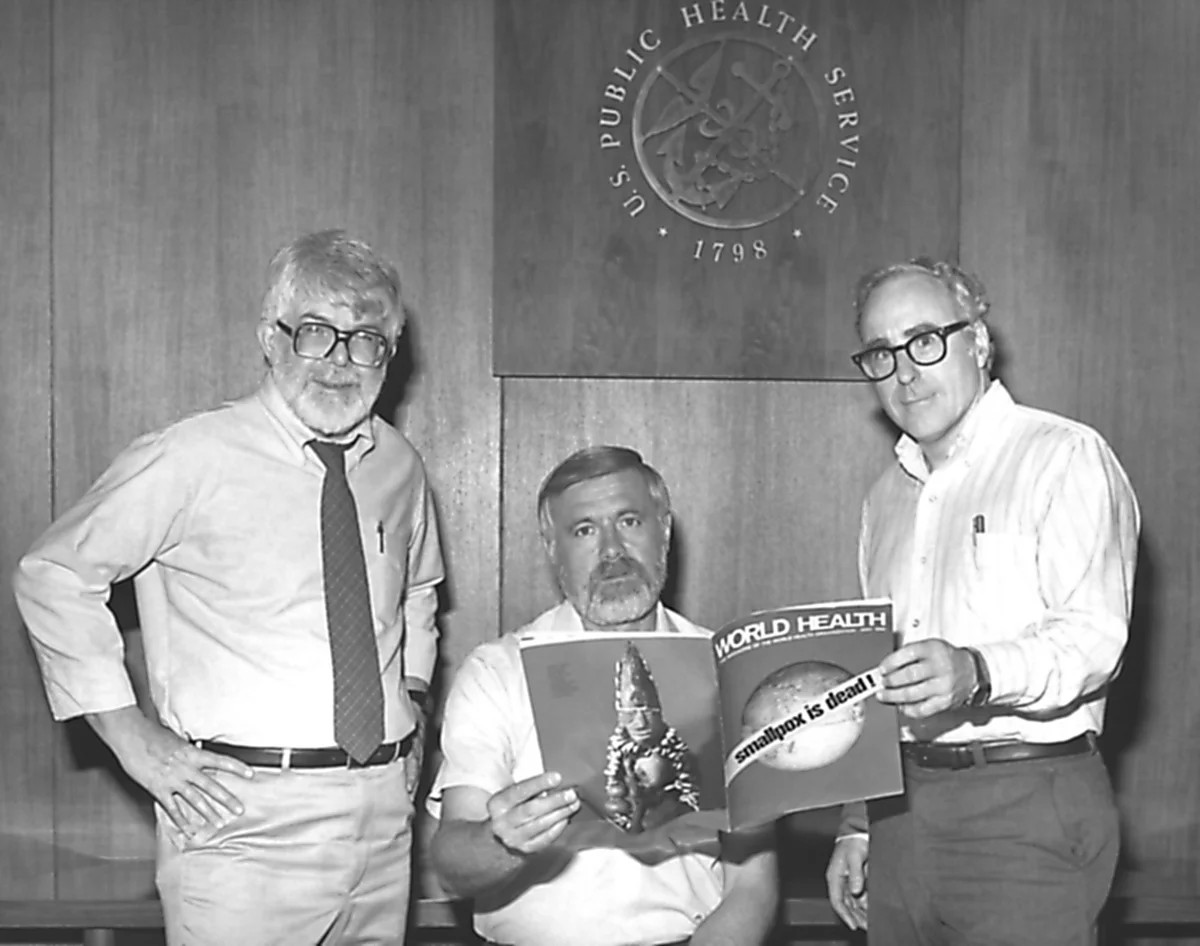
William Foege, a pivotal figure in the global elimination of smallpox, has died at the age of 89. The Task Force for Global Health, an organization he co-founded, confirmed his passing on Saturday. Foege’s work stands as one of the most significant public health achievements in history, preventing what would have otherwise been hundreds of millions of deaths.
The Smallpox Victory: A Historic Achievement
Foege led the U.S. Centers for Disease Control and Prevention’s (CDC) Smallpox Eradication Program during the 1970s. Before the World Health Organization (WHO) officially declared smallpox eradicated in 1980, the disease was brutally efficient in its lethality – killing roughly one-third of those infected.
The program’s success wasn’t just a matter of science; it was a triumph of coordinated international effort. Teams worked in remote regions, often facing logistical nightmares and political resistance, to administer vaccines and contain outbreaks. The CDC confirms that no new naturally occurring smallpox cases have been recorded since 1977, a testament to the program’s lasting impact.
Beyond Smallpox: A Lifetime Dedicated to Public Health
Foege’s contributions extended far beyond smallpox. He later served as director of the CDC and held senior advisory roles at the Bill & Melinda Gates Foundation, continuing to champion vaccine-preventable disease control.
In 2012, President Barack Obama awarded Foege the Presidential Medal of Freedom, acknowledging his extraordinary service to humanity.
The Ongoing Fight: Polio and Future Threats
Foege remained active in advocating for global health initiatives until late in life. He co-authored an article in Scientific American in 2013 with epidemiologist Larry Brilliant, asserting that polio eradication was “closer than ever.” While polio has yet to be fully eliminated, the campaign continues.
In a rare late-career action, Foege joined several former CDC directors in 2025 to publicly criticize the policies of Robert F. Kennedy, Jr., the current Secretary of Health and Human Services, calling his tenure “unlike anything we had ever seen at the agency.”
Foege’s legacy is a reminder that focused scientific effort, combined with global collaboration, can overcome even the most deadly diseases. His work not only saved countless lives but also set a precedent for future public health interventions.