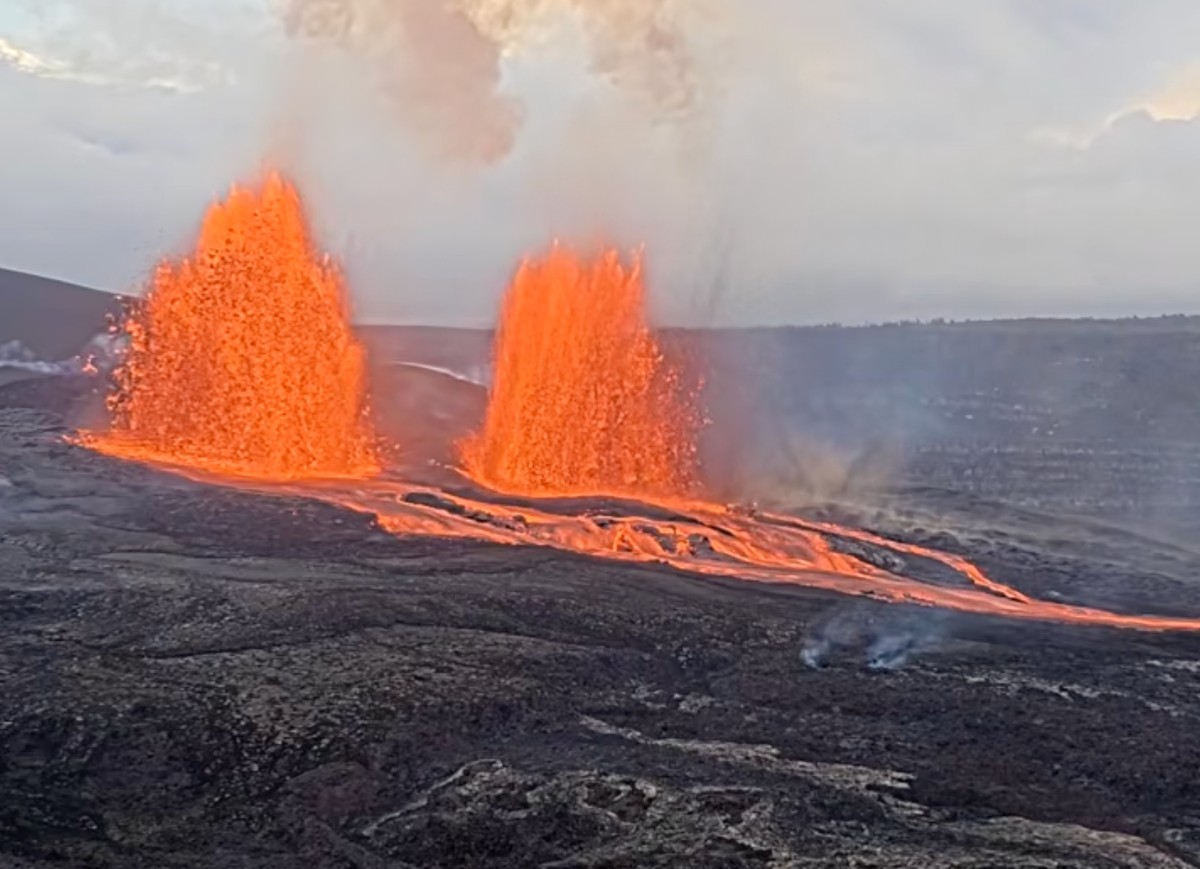
The Kīlauea volcano on Hawaii’s Big Island erupted on Tuesday, unleashing a spectacular display of lava fountains reaching heights of up to 1,300 feet. The U.S. Geological Survey (USGS) reported that the nine-hour eruption involved “significant heat and ash” emissions, alongside the ejection of volcanic materials over a wide area.
Eruption Details and Impact
The eruption resulted in approximately six inches of tephra – a mixture of volcanic glass particles, rocks, and ash – accumulating near the volcano, even reaching a nearby golf course. Fine, strand-like volcanic glass known as “Pele’s hair” was carried by wind currents as far as the city of Hilo, roughly 30 miles away.
The USGS estimates that Kīlauea released around 16 million cubic yards of lava during the event, creating an ash plume that soared above 30,000 feet in the atmosphere. This demonstrates the volcano’s ongoing activity and the potential for significant atmospheric disturbance.
Frequent Activity Since 2024
Kīlauea has been in a state of near-constant eruption since December 2024, with Tuesday’s event marking its 43rd “eruptive episode” in that timeframe. This sustained activity highlights the volcano’s dynamic nature and the importance of continued monitoring by the USGS.
The frequency of these eruptions underscores Hawaii’s geological volatility and the need for ongoing preparedness measures in the region. While Kīlauea’s activity is monitored closely, volcanic behavior remains unpredictable, and future eruptions are likely.