This week’s scientific breakthroughs span the vastness of space, the depths of human evolutionary history, the efficacy of mental health interventions, and the surprising capabilities of artificial intelligence.
🚀 Mars: A Record Discovery of Organic Molecules
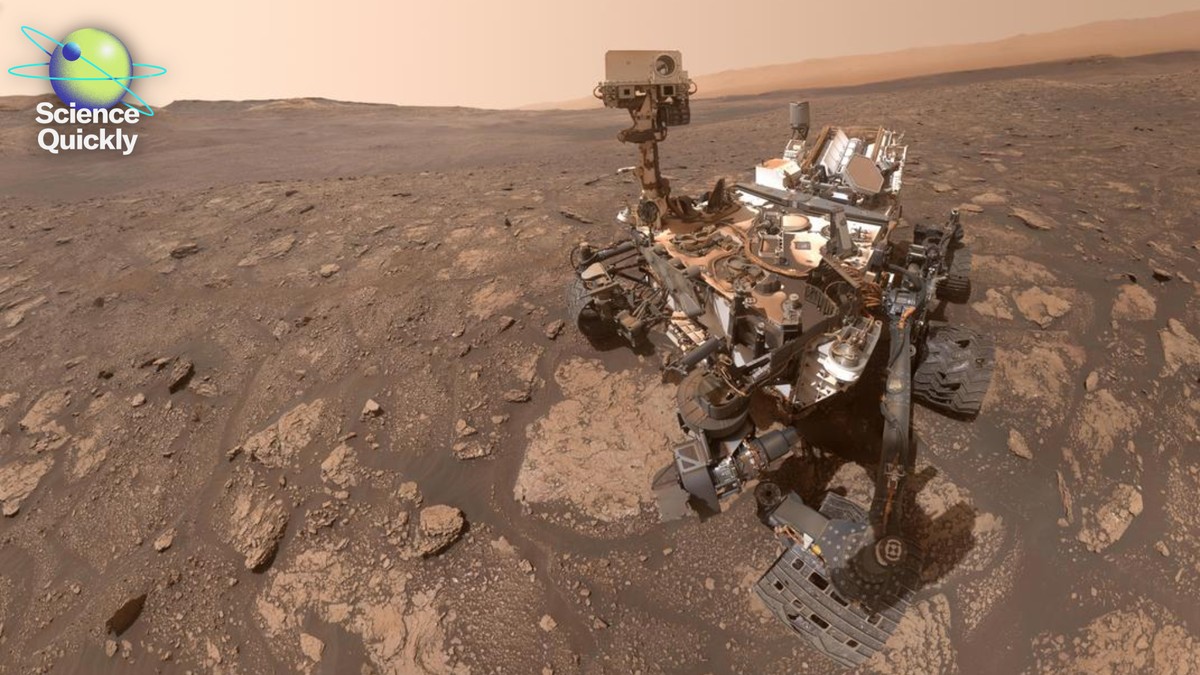
NASA’s Curiosity rover has provided some of the most compelling evidence yet regarding the potential for past life on Mars. New analyses of rock samples from Mount Sharp —a region believed to have once been covered by liquid water—have revealed a diverse collection of 21 different carbon-containing molecules.
This discovery is significant for several reasons:
– Unprecedented Diversity: This is the most diverse set of Martian organic molecules ever detected.
– Biological Building Blocks: Seven of these molecules had never been seen on Mars before, including nitrogen heterocycles, which are essential precursors to RNA and DNA.
– Survival Against the Odds: The bedrock dates back roughly 3.5 billion years. Given Mars’ thin atmosphere and intense radiation, scientists were uncertain if any chemical signatures from that ancient, habitable era could even survive to be detected today.
While these organic molecules do not prove that life existed on Mars, they confirm that the fundamental chemical building blocks necessary for life were present during a period when the planet was much more hospitable.
🦟 Evolution: Did Malaria Shape Human Migration?
New research published in Science Advances suggests that our ancestors’ movements were not just driven by climate change, but by infectious disease.
By using computer models to track mosquito populations and their epidemiological impact, researchers found a strong correlation between malaria transmission risks and human migration patterns between 74,000 and 5,000 years ago. Essentially, the need to avoid malaria may have dictated where human populations settled and how they dispersed across the globe. This implies that disease has been a silent architect of human population dynamics and social structures for tens of thousands of years.
☎️ Mental Health: The Impact of the 988 Lifeline
A recent study in the Journal of the American Medical Association offers promising evidence that the U.S. government’s investment in the 988 Suicide & Crisis Lifeline is saving lives, particularly among young people.
Following the transition to the easy-to-remember “988” number in 2022 and a $1.6 billion investment in crisis support, researchers observed a significant trend:
– Targeted Impact: While overall lifeline usage has doubled, adolescents and young adults (ages 15–34) are the primary users.
– Lower Mortality Rates: In this age group, the number of observed suicide deaths was significantly lower than what statistical models had projected based on previous trends.
– Comparative Success: The study noted that in states with the highest increase in 988 calls, the drop in suicide rates was most pronounced. Furthermore, similar data from England—where no such investment was made—did not show a comparable decrease in youth mortality.
These findings underscore the critical importance of funding accessible, well-publicized mental health resources.
🎙️ AI: The Surprising Clarity of Voice Clones
In the realm of artificial intelligence, a new study in the Journal of the Acoustical Society of America has uncovered a counterintuitive phenomenon regarding AI voice cloning.
While it is common knowledge that AI can now mimic a human voice using only a few seconds of audio, researchers found that these clones might actually be more intelligible than the humans they are imitating.
“The researchers expected machine-replicated speech to be difficult for people to understand… they actually found that clones consistently got higher scores than humans in that regard.”
The study has left researchers puzzled, as they are still working to understand why synthetic voices are perceived as clearer or easier to process than natural human speech. This raises interesting questions about the future of communication and how we perceive “authenticity” in an era of perfect digital replicas.
Summary: From the discovery of complex organic chemistry on Mars to the life-saving impact of crisis hotlines and the evolving influence of disease on human history, science continues to reveal how biological and technological forces shape our existence.