


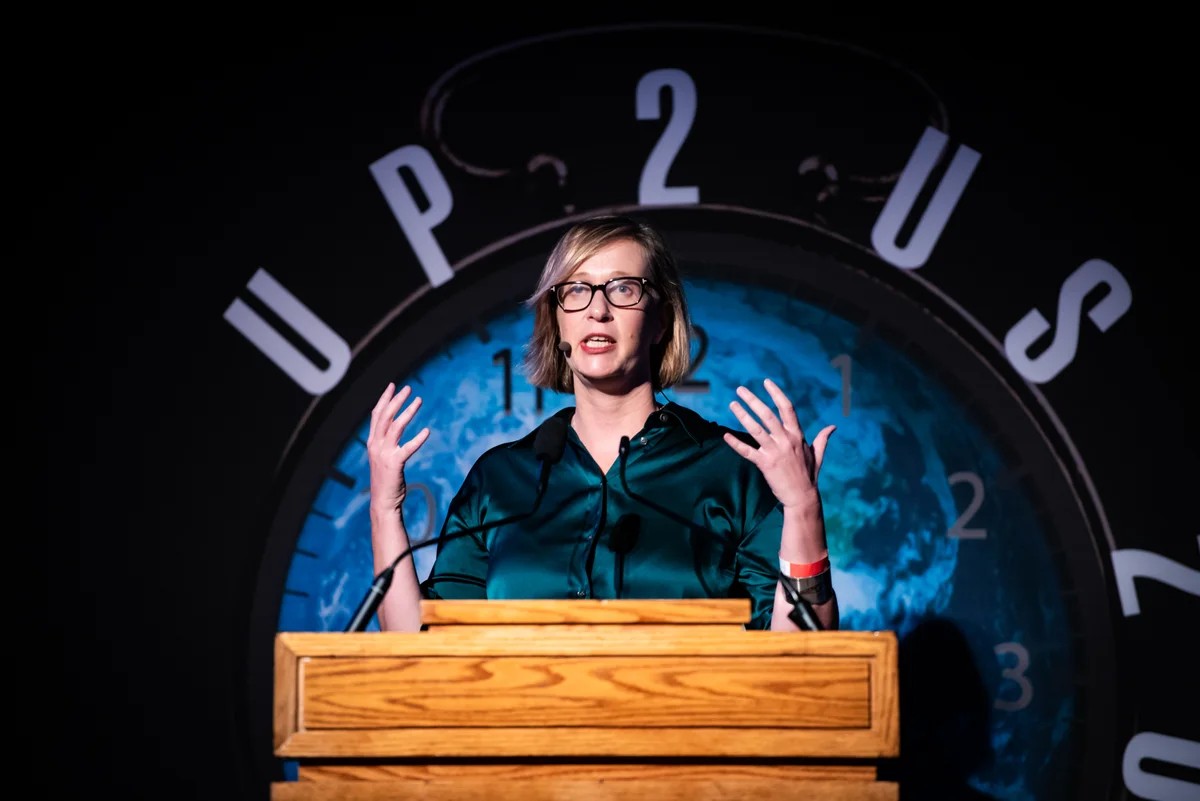
A prominent climate scientist, Kate Marvel, has resigned from NASA, citing a growing hostility toward scientific truth within the U.S. federal government. Her departure is part of a larger exodus: over 10,000 PhD-holding scientists, engineers, and mathematicians have left federal service since 2017, according to Science magazine. Marvel’s resignation underscores a deeper trend of political interference in scientific research, extending beyond climate science to critical fields like cancer and vaccine development.
The Shift in Priorities
Marvel, formerly with NASA’s Goddard Institute for Space Sciences (GISS), explained her decision in a resignation letter, stating she “never expected that science itself would come under attack.” She emphasized that this wasn’t merely about disagreement with conclusions but a fundamental undermining of the pursuit of truth – a process she equates to journalism, history, and art. This attack, she argues, isn’t isolated; the Trump administration’s targeting of pediatric cancer research, Parkinson’s studies, and vaccine programs demonstrated a broader disregard for scientific integrity.
Operational Challenges at NASA
The scientist detailed how operational realities at NASA had become increasingly untenable. Research grants were uncertain, programs faced arbitrary cuts, and even basic infrastructure was jeopardized: the GISS team was evicted from its New York City lease and forced to operate from university libraries.
Marvel illustrated these issues with specific examples: a proposal to future-proof the electric grid against climate-induced changes in solar availability, and a study on the hypothetical impacts of geoengineering, were both sidelined despite positive peer reviews. This created an environment of constant uncertainty, where scientists couldn’t plan long-term projects or trust funding stability.
The Broader Implications
Marvel’s departure isn’t just a personal decision; it reflects a systemic problem. The U.S. has historically been a global leader in scientific advancement, fueled by bipartisan support and robust funding. Yet, she argues, that consensus has eroded, leading to a situation where even basic research is at risk.
“What I did not expect was that [the Trump administration] would go after pediatric cancer research first. That they would go after Parkinson’s research first. And they would go after vaccines, the greatest invention of humanity.”
This shift has wider consequences. If the U.S. abandons its commitment to scientific rigor, it risks losing its competitive edge in innovation and forfeiting its role as a trusted source of knowledge on critical global issues like climate change.
Moving Forward
Marvel remains committed to science but seeks a platform where she can pursue research and speak openly about its implications, even if that means challenging political narratives. She intends to focus on applied science that informs critical decisions, stating bluntly: “I live on Earth, and so I don’t want to see this particular future.”
Her departure serves as a stark warning: the erosion of scientific integrity isn’t just an abstract policy debate; it’s a tangible threat to our ability to understand and address the world’s most pressing challenges.


