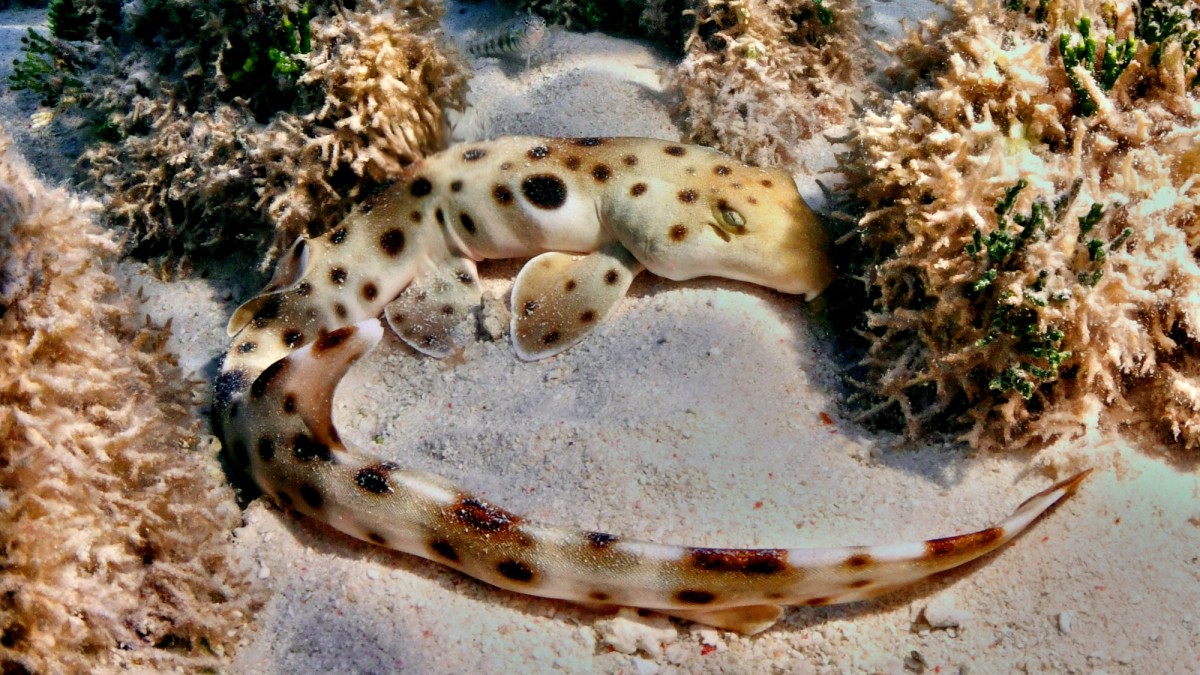
Researchers have discovered that epaulette sharks, known as “walking sharks” for their ability to move on land and seafloor, reproduce without experiencing the expected surge in energy expenditure. A new study published in Biology Open reveals that these sharks maintain remarkably stable metabolic rates even during the complex process of egg development and laying.
Challenging Reproduction Assumptions
Traditionally, reproduction is considered a massive energy investment for most species. Scientists expected a significant increase in metabolic activity when sharks produce eggs, but the epaulette sharks showed no such spike. As Jodie Rummer, a marine biologist at James Cook University, explains, “We expected that when sharks make this complex egg, their energy use would shoot up. But there was no uptick in energy use, it was completely flat.” This suggests these sharks have evolved to optimize energy use during reproduction in a way previously unseen in chondrichthyan fishes (sharks, rays, skates, and chimaeras).
How the Study Was Conducted
The study involved captive epaulette sharks, where researchers monitored their oxygen consumption – a direct measure of metabolic rate. They also tracked shifts in blood chemistry and hormones during egg-laying. The results consistently showed stability, challenging fundamental assumptions about shark physiology.
Resilience Under Stress
This discovery has important implications for understanding how sharks respond to environmental stressors. Many species prioritize survival over reproduction when conditions worsen. However, epaulette sharks may continue to produce eggs even under major stress, suggesting exceptional resilience. Healthy shark populations are vital for healthy reefs and ecosystems, making this resilience particularly encouraging.
Long-Term Significance
The findings reinforce the understanding that sharks have demonstrated remarkable endurance to climate shifts throughout history. Researchers plan to investigate how wild epaulette sharks fare in egg production to gain a more comprehensive view of their resilience.
This work challenges the narrative that when things go wrong—such as warming oceans—that reproduction will be the first thing to go, said Rummer. The epaulette shark’s unique ability to reproduce without significant energy strain underscores their potential to endure environmental changes, offering hope for reef ecosystems facing growing threats.