By combining medieval literature with the chemical analysis of tree rings, scientists have uncovered evidence of a solar event so powerful it dwarfs the most intense storms recorded in modern history. This discovery not only rewrites our understanding of solar cycles but also serves as a warning about the unpredictable nature of our sun.
The Intersection of Literature and Science
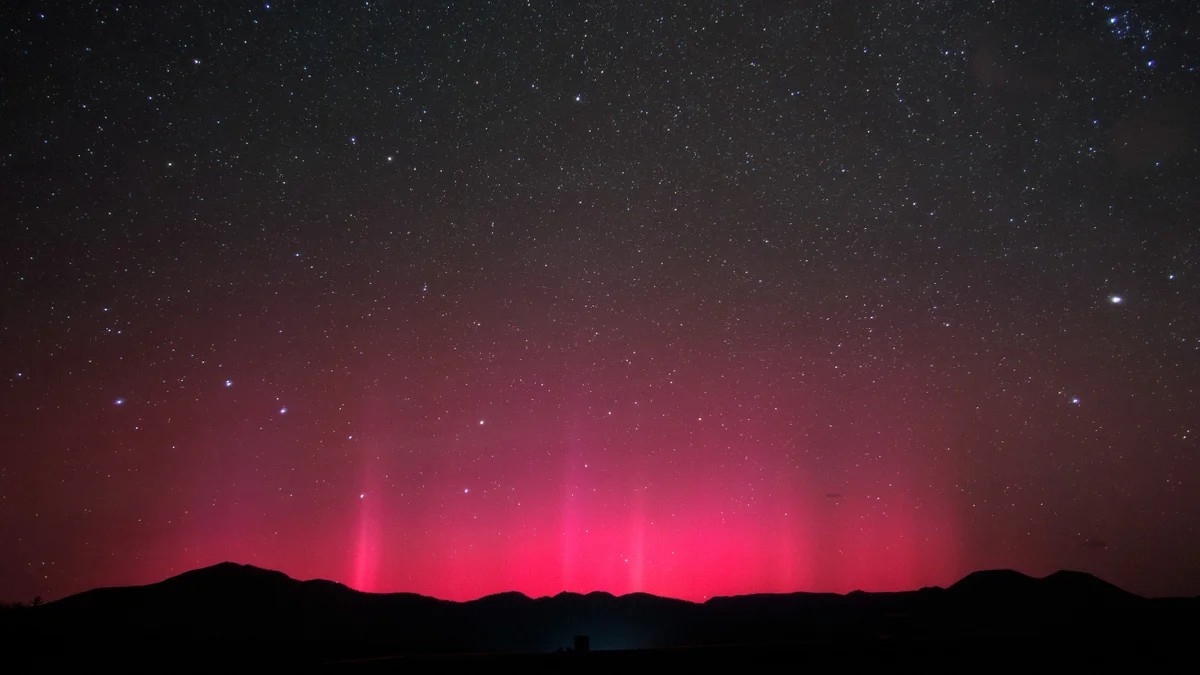
In the winter of 1204, a Japanese noble named Fujiwara no Sadaie recorded a rare sight in his diary, Meigetsuki : red and white stripes stretching across the northern sky for three consecutive nights. While these poetic descriptions of auroras might seem like mere historical curiosities, they serve as vital “bookmarks” for astrophysicists.
Hiroko Miyahara, a physicist at the Okinawa Institute of Science and Technology, and her team used these historical accounts to narrow down specific timeframes for investigation. By looking for “chemical time stamps” in the environment, they were able to bridge the gap between ancient observations and modern physics.
How Trees Record Solar History
The connection between a diary entry and a tree ring lies in the behavior of cosmic rays. When the sun undergoes violent activity, such as a coronal mass ejection, it sends high-energy particles toward Earth. As these particles hit our atmosphere, they trigger nuclear reactions that produce rare isotopes, most notably carbon-14.
- The Process: Trees absorb this radioactive carbon-14 during their growth.
- The Record: This isotope becomes locked into the tree’s annual growth rings.
- The Challenge: While massive solar storms leave obvious spikes in carbon-14, smaller events are difficult to distinguish from natural background noise without a specific date to target.
A Discovery That Defies Modern Records
After analyzing texts from Asia and Europe, the research team focused on the period between 1196 and 1211 C.E. Interestingly, the famous three-day aurora of 1204 did not leave a significant carbon-14 spike. Instead, the team discovered a massive surge occurring between 1200 and 1201 C.E.
This spike was corroborated by Chinese and Korean texts describing both auroras and sunspots. The scale of this event is staggering: researchers calculated that this 13th-century storm was 14 times larger than the solar storm of February 23, 1956—the most intense event ever recorded in the modern era.
“If this happened today, it would cause us lots of trouble,” warns Miyahara. Such a storm could cripple satellite communications, disrupt power grids, and damage global technological infrastructure.
Redefining Solar Cycles
The study also revealed fundamental differences in how the sun behaved centuries ago. By analyzing the data, the team found that:
- Shorter Cycles: In the 13th century, solar cycles lasted only seven to eight years, significantly shorter than the 11-year cycles observed today.
- Unexpected Activity: While powerful storms are expected during a “solar maximum” (peak activity), the literature suggests that unusual and significant storms also occurred during “solar minimums” (periods of low activity).
This finding challenges the traditional assumption that we only need to worry about solar volatility when the sun is at its most active.
Why This Matters
This research demonstrates the power of interdisciplinary science. By using dendrochronology (the study of tree rings) alongside historical linguistics, scientists are building a more complete map of solar behavior that stretches far beyond the reach of modern electronic sensors.
The discovery of intense storms during periods of low solar activity suggests that our sun is even more unpredictable than previously thought. As we become increasingly dependent on satellite and electrical technology, understanding these ancient “black swan” events is crucial for preparing for future solar volatility.
Conclusion: By pairing ancient chronicles with tree-ring analysis, researchers have identified a prehistoric solar storm far more powerful than any modern equivalent, revealing that even during periods of low solar activity, the sun can produce devastatingly intense events.