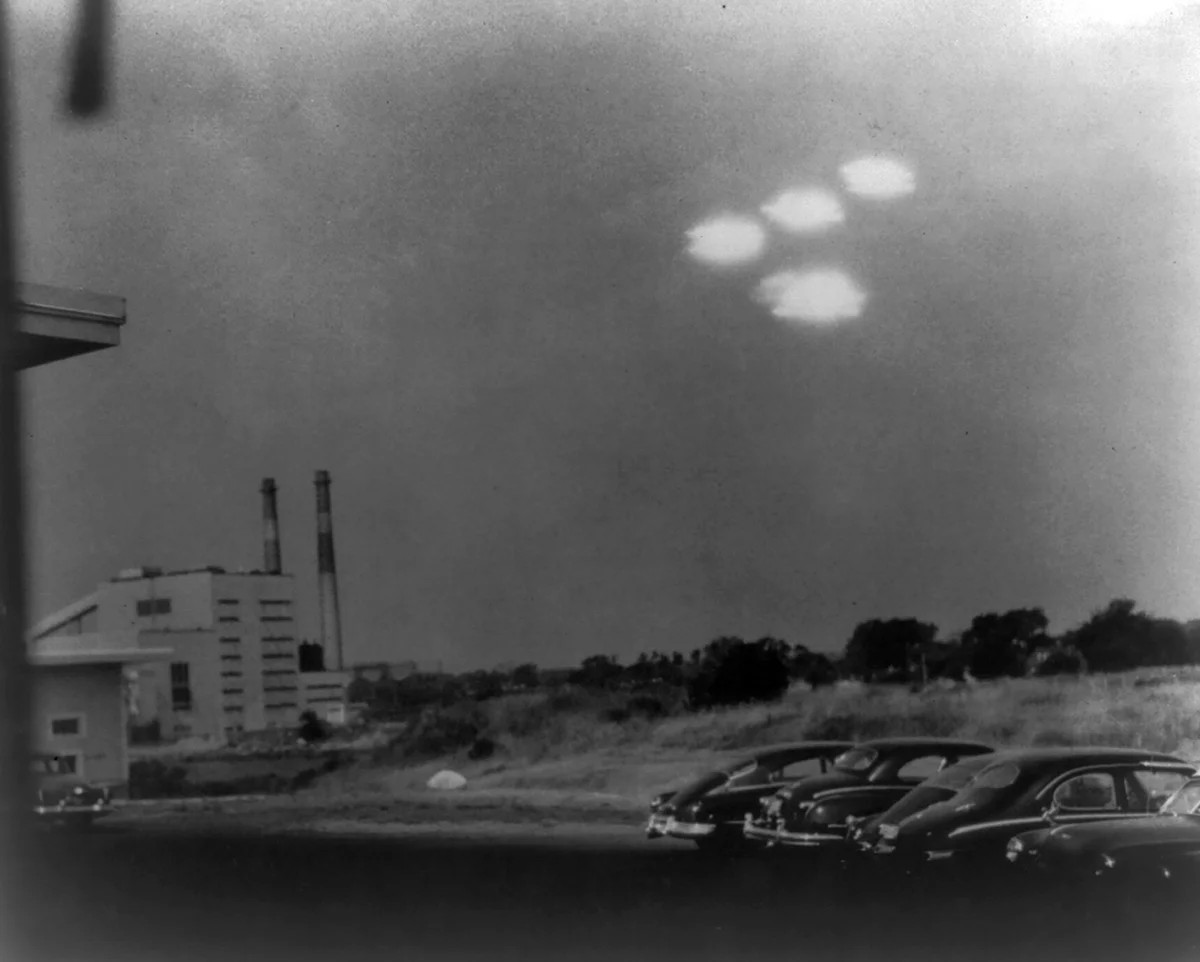
Former President Donald Trump announced his intention to declassify government files related to unidentified aerial phenomena (UAPs), commonly known as UFOs, extraterrestrial life, and related investigations. The move, publicized on his Truth Social platform, comes after Barack Obama discussed the possibility of alien life in a recent podcast interview, though he claimed to have seen no evidence during his presidency. Trump framed his order as a response to Obama’s alleged disclosure of “classified information” and suggested it could even help the former president evade legal scrutiny.
This announcement is occurring against a backdrop of heightened public interest in UAPs, fueled by Pentagon reports and congressional hearings. However, the timing also coincides with the controversial release of heavily redacted files related to disgraced financier Jeffrey Epstein, further complicating the narrative.
The Scientific Perspective on Extraterrestrial Life
Experts in astrobiology emphasize that while the universe’s vastness makes the existence of extraterrestrial life statistically probable, concrete evidence remains elusive. Bill Diamond, CEO of the SETI Institute, points out that the sheer scale of space and time makes contact unlikely, yet mathematically unavoidable. Sean Kirkpatrick, former director of the Pentagon’s All-Domain Anomaly Resolution Office (AARO), confirms that no U.S. government investigation has ever yielded proof of alien visitation despite decades of study.
NASA’s UAP panel, led by astrophysicist Federica Bianco, has similarly found no evidence of phenomena violating the laws of physics that would necessitate extraterrestrial intervention. Many sightings can be attributed to misidentified aircraft, atmospheric anomalies, or sensor errors.
The Search for Life Beyond Earth
Despite the lack of definitive proof, the scientific pursuit of extraterrestrial life continues. Projects like Harvard’s Galileo Project, led by Avi Loeb, deploy telescopes to study UAPs, while the SETI Institute searches for electromagnetic signals from alien civilizations. NASA is investing billions in missions like Europa Clipper and Dragonfly to explore potentially habitable environments on Jupiter’s moon Europa and Saturn’s moon Titan.
However, the Mars Sample Return program, designed to bring Martian soil back to Earth for analysis, was recently defunded amid budgetary concerns, highlighting the financial and logistical challenges of space exploration. Observations from the James Webb Space Telescope have also hinted at possible biosignatures on distant exoplanets, though these findings remain controversial.
Political Motivations and Skepticism
Critics argue that Trump’s declassification order is a distraction tactic designed to divert attention from political and societal crises. Astrophysicist Bianco suggests the timing is deliberate, intended to manipulate public discourse rather than reveal genuine alien secrets.
Despite the skepticism, former NASA administrator Thomas Zurbuchen urges continued scientific investigation of unexplained phenomena, emphasizing the importance of open-minded research without undue stigma.
Conclusion: Trump’s announcement reflects a complex interplay between political maneuvering, public fascination with UFOs, and ongoing scientific efforts to understand the universe. While the declassification process may yield little new information, it underscores the enduring human desire to uncover whether we are truly alone in the cosmos.